
How a fatal rare bird hunt at landfill led to 'patient zero' catching hantavirus
A Dutch ornithologist's fatal visit to a landfill in Argentina is being traced as the start of the MV Hondius hantavirus cluster. Authorities believe he contracted the Andes strain of hantavirus by inhaling virus particles from rat droppings at the landfill, a rare variant capable of spreading between humans.
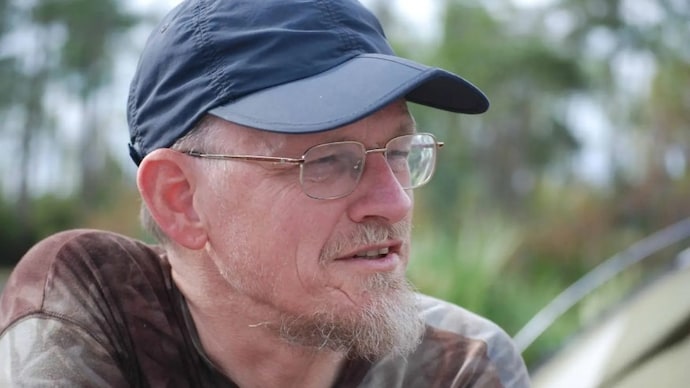

Driven by a lifelong passion for rare birds, Dutch ornithologist Leo Schilperoord ventured into a foul-smelling landfill on the outskirts of Argentina’s Ushuaia city, a mountain of rotting waste shunned even by locals. He hoped to catch a glimpse of the elusive Darwin’s caracara bird. Days later, the trip would turn fatal.
According to a report by The New York Post, Schilperoord, 70, has been identified as “patient zero” in the deadly hantavirus outbreak linked to the cruise ship MV Hondius. Authorities suspect he inhaled virus particles from rat droppings at the landfill, a known hotspot for the Andes strain of hantavirus – the only form known to spread between humans.
“Patient zero” in this hantavirus outbreak refers to the first identified person believed to have contracted and potentially spread the infection within the cluster linked to the cruise ship. Investigators are tracing subsequent infections back to Leo, who became the first person to fall ill and die, which is why he is being described as “patient zero.”
Leo and his wife, Mirjam Schilperoord, 69, had been on a five-month birdwatching journey across South America. The couple, from the Dutch village of Haulerwijk, were seasoned bird enthusiasts who had travelled across the world documenting rare species.
On March 27, after returning to Argentina, they visited the Ushuaia landfill, a site frequented by birdwatchers. The site attracts rare scavenger birds, including the white-throated caracara, also called Darwin’s caracara after Charles Darwin. Local guide Gaston Bretti told Ansa Latina newspaper that birdwatchers often visited the dump despite its hazardous conditions,
“It is common for birdwatchers to visit landfills because there are many birds there. It’s a mountain of waste that today far exceeds the limit initially established by the authorities,” Bretti said.
Four days later, the couple boarded the MV Hondius with more than 100 passengers, many of them scientists and birdwatchers. On April 6, Leo developed fever, headache, stomach pain and diarrhoea. He died aboard the ship five days later.
On April 24, Mirjam disembarked with her husband’s body on the Atlantic island of Saint Helena before attempting to fly back to the Netherlands via South Africa. However, she became critically ill during transit, collapsed at the airport and died the next day, with hantavirus confirmed on May 4, according to The New York Post.
The tragedy shocked their small hometown, where tributes described the couple as passionate adventurers whose lives revolved around birds and travel.
The MV Hondius docked at Spain’s Canary Islands on Sunday for a tightly managed repatriation operation after extensive health screenings. Authorities evacuated 94 passengers and crew members from 19 countries via special flights. Following refuelling, the cruise ship was set to sail for the Netherlands later today with only a skeleton crew remaining onboard.
Health authorities have confirmed eight hantavirus cases linked to the outbreak, while two others are being treated as probable infections. The cases involve citizens from six countries, with three deaths reported so far – two confirmed and one probable.
Despite the spread across multiple nationalities, global health agencies have said the overall public health risk remains low and stressed that the situation is not comparable to the Covid-19 pandemic.