
Iran war 2.0? Making sense of West Asia's last 24 hours
As Washington pushed diplomacy and Trump urged restraint, West Asia moved in the opposite direction. Hezbollah fire into northern Israel, retaliatory strikes in Lebanon, Iranian missile barrages, and Houthi threats reopened multiple fronts, testing an already fragile ceasefire.
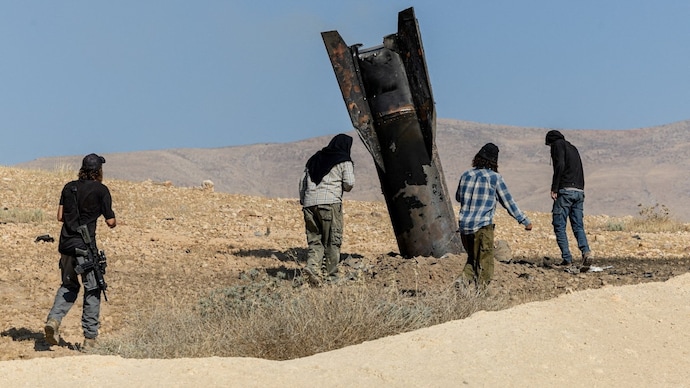
The latest sequence appears to have begun with Hezbollah striking northern Israel. (Photo: Reuters)


New Delhi,UPDATED: Jun 8, 2026 21:19 IST
“It’s me who calls the shots, not Bibi,” US President Donald Trump told the Financial Times’ Edward Luce, insisting Washington remained in control of the West Asia crisis. The remarks came after Trump reportedly urged Israeli Prime Minister Benjamin Netanyahu to refrain from striking Iran, even as he maintained Washington remained “very close” to securing a deal with Tehran’s Islamic regime.
Yet events on the ground appeared to be moving in the opposite direction.
India Today’s Open Source Intelligence (OSINT) team pieces together a chronology of events from the last 24 hours to understand what may have triggered the latest round of exchanges and who struck what sites across the expanding conflict theatre.
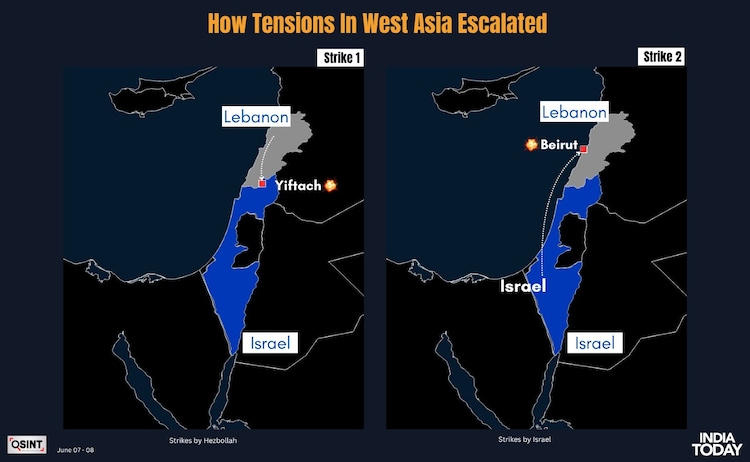
Over the last 24 hours, multiple fronts that had remained uneasy or intermittently active slipped back into another cycle of escalation. The latest sequence appears to have begun with Hezbollah striking northern Israel, including the Yiftach area, marking the first such attack since Trump claimed to have brokered a ceasefire between Israel and Hezbollah just a week earlier.
Israel responded with retaliatory strikes on Hezbollah-linked sites in Beirut’s Dahiyeh district and parts of southern Lebanon, signalling that the Hezbollah-Israel front had once again turned active.
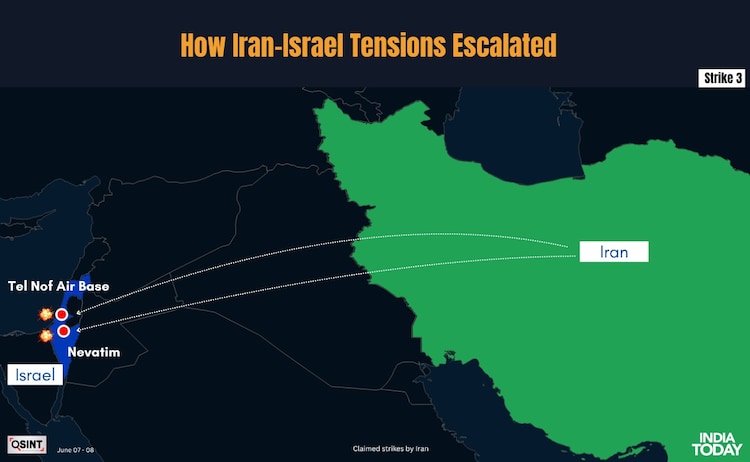
The confrontation soon widened beyond Lebanon. For the first time since the April 8 ceasefire, multiple rounds of fire were exchanged between Israel and Iran, reopening a conflict theatre many believed had entered a phase of uneasy containment.
WHO STRUCK WHERE IN THE LAST 24 HOURS
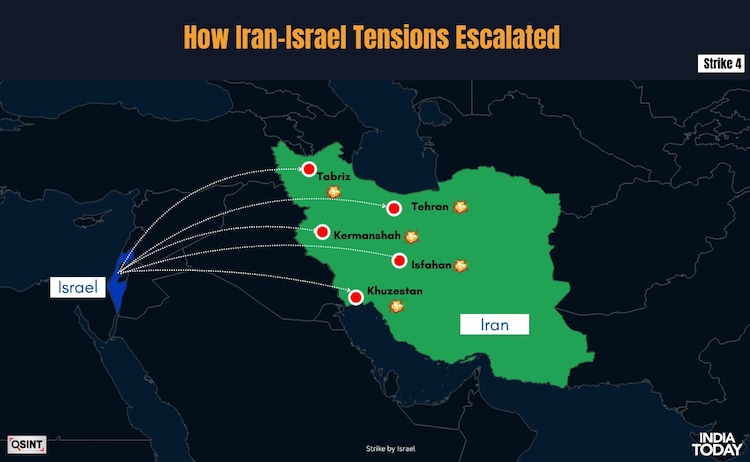
What can increasingly be described as “Iran War 2.0” appears to be unfolding, as a paused Israel-Iran confrontation resumes, albeit with one important exception: the United States, while seemingly pursuing a diplomatic solution, has yet to enter the theatre as a direct firing party.
The latest sequence appears to have begun on Israel’s northern frontier. Israel said it intercepted two Hezbollah projectiles launched from Lebanese territory toward the Yiftach area in northern Israel, close to the border communities of Yiftach and Ramot Naftali. The attack marked the first such Hezbollah fire since a US-backed ceasefire was announced days earlier, lending the exchange significance beyond the battlefield.
Both locations lie close to Israel’s border with Lebanon in the country’s north, overlooking southern Lebanon and forming part of a sensitive frontier zone associated with Israeli troop deployments, artillery activity, and border surveillance.
In response, Israel struck Beirut’s Dahiyeh district and parts of southern Lebanon. The southern suburb of the Lebanese capital is widely regarded as one of Hezbollah’s principal strongholds, hosting key political, logistical, and organisational infrastructure associated with the group, one of the most significant militias within Iran’s Axis of Resistance.
The confrontation, however, did not remain confined to the Hezbollah-Israel front.
Iran’s Islamic Revolutionary Guard Corps (IRGC) claimed to have targeted what it described as “vital installations” at Israel’s Nevatim and Tel Nof air bases, along with the Ramat David area in northern Israel, under what it called “Operation Nasr” (Victory).
The sites are strategically important to Israel’s air power architecture, with Nevatim serving as a key air base for advanced aircraft, including F-35 fighter jets. Israeli authorities, however, have not publicly confirmed any successful strike or damage at these facilities, maintaining that incoming missiles were intercepted.
Israel initially said it intercepted 11 missiles launched from Iran before reporting retaliatory strikes across Tehran, Isfahan, Tabriz, Kermanshah, and parts of western and central Iran, including the strategically important Mahshahr petrochemical complex.
The exchange quickly widened. An Israeli military official later said Iran had fired “almost 30 ballistic missiles” at Israel across multiple waves, signalling that the confrontation was slipping into a broader cycle of retaliation.
Israeli officials also said the Air Force targeted Iranian air defence systems rebuilt after the previous phase of conflict, though no locations for those strikes were publicly specified beyond western and central Iran.
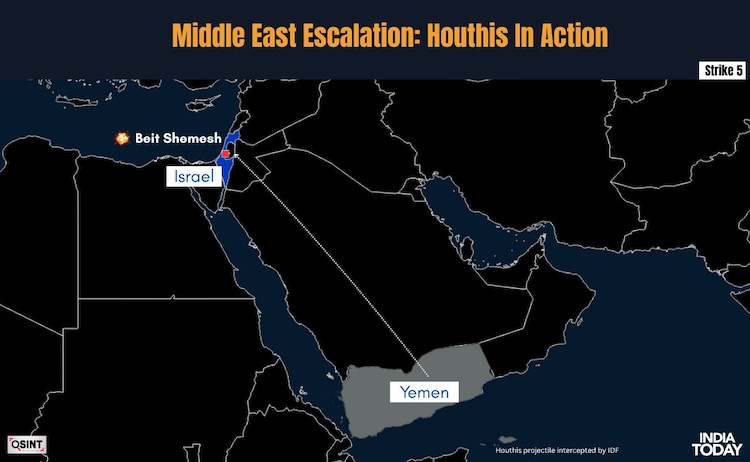
Further south, Yemen also entered the escalation cycle, with a Houthi missile launched toward Israel and later intercepted near Beit Shemesh. The Iran-aligned group subsequently announced a renewed prohibition on Israeli-linked vessels accessing the Red Sea, warning that any such ships would be treated as “legitimate targets”.
The Houthis, formally known as Ansar Allah, are among the key Iran-aligned militias that form part of Tehran’s broader “Axis of Resistance”, a loose regional network of armed groups that includes Hezbollah in Lebanon and other allied factions across West Asia.
However, even as the exchange widened, Washington continued to signal hope for de-escalation. In a fresh statement, Trump claimed that both Israel and Iran were seeking an “immediate ceasefire”, adding that final negotiations on peace were progressing, though he warned that “ignorance or stupidity” could still derail the process.
Additionally, Iran’s top operational military command, Khatam al Anbiya, announced a “cessation of armed forces operations”, signalling what appeared to be at least a temporary pause in Tehran’s military activity, while warning of harsher retaliation if hostilities continue, particularly in Lebanon.
Yet the renewed flare-up suggests the current escalation may not have emerged in isolation.
The ceasefire may have paused the first phase of the West Asia conflict, but it never fully quietened one critical front. For Tehran, Hezbollah remained too strategically important to be detached from any wider regional confrontation. Israel, by contrast, has long sought to treat the Hezbollah front as a separate theatre, a distinction the events of the last 24 hours appear to be increasingly testing.
- Ends