
Has Netanyahu gone rogue as Trump tries to tie Israel's hands against Iran?
US President Donald Trump is pushing for a peace deal to prevent a wider conflict. However, Israel carried out strikes on June 6 at Hezbollah's Beirut stronghold despite Trump's calls for restraint. War has broken out again with Iran joining in. Is Israeli PM Benjamin Netanyahu defying Trump?
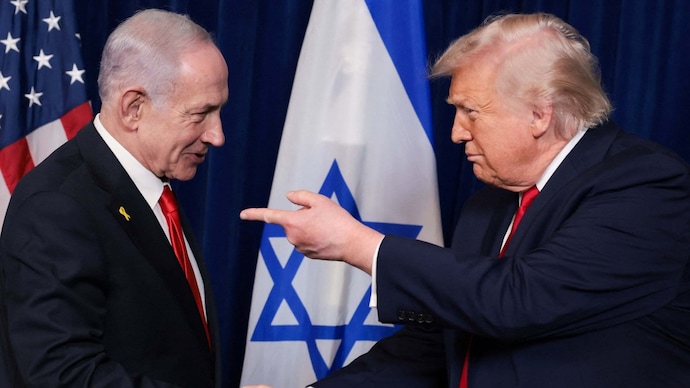

Just days after the President of the United States (POTUS), Donald Trump, publicly declared that he was "calling all the shots" on Iran and insisted that Israel would have to accept any agreement Washington reached with Tehran. However, Israeli Prime Minister Benjamin Netanyahu appears to be sending out a very different message, regardless of the American pressure.
The latest round of Israeli-Iranian attacks on each other with drones and missiles, which started on Sunday, has exposed what could be the deepest strategic divide yet between Trump and Netanyahu since the start of the regional war on February 28.
While Trump is racing to secure a ceasefire and a nuclear understanding with Iran, Israel has resumed direct military action against Hezbollah and Iranian targets. This raises a question. Has Netanyahu effectively gone rogue against his partner in the war for 100 days, Donald Trump?
The tensions between the US and Israel became visible even before Jerusalem's latest strikes inside Iran.
ISRAEL'S ACTION AGAINST HEZBOLLAH A STICKING POINT?
The reported broader understanding with Iran, though contested, was that military action on all fronts, including Israel's offensive in Lebanon against Hezbollah, will be halted.
On June 6, Israel carried out an airstrike on Hezbollah's stronghold in the heart of Lebanon, Beirut's southern suburb of Dahiyeh, targeting the Iranian proxy group's infrastructure. The operation was reportedly conducted without prior coordination with the White House, and it came despite Trump's public efforts to prevent a fresh escalation in Lebanon.
Before the June 6 strike, Trump had declared on Truth Social that there would be "no troops going to Beirut" following a phone conversation with Netanyahu. According to the UK-based BBC, the US also reportedly informed mediators, including Qatar, that Washington had instructed Israel to stand down.
Netanyahu's decision to carry out strikes on Lebanon comes even as he faced backlash over Trump's order to halt attacks.
Naftali Bennett, Netanyahu's challenger in the elections slated for October, accused the Israeli PM of surrendering to Trump on issues of national security. He attacked Netanyahu, saying that the government had lost control of Israeli sovereignty. The opposition parties have pressed for attacks against Hezbollah, and days later, Israeli warplanes struck Beirut anyway, clearly defying Trump's appeal.
Netanyahu appears to be cornered by attacks at home in an election year.
The Israeli attack killed at least two people and wounded several others, according to Lebanon's state-run National News Agency (NNA). Trump subsequently expressed frustration, telling Fox News he was "not happy" with the strikes and later making clear that Lebanon was not supposed to be part of the broader negotiations he was pursuing with Iran.
IRAN GOES BALLISTIC AGAINST ISRAEL
After Israel attacked Iran's proxy outfit Hezbollah, Tehran responded exactly as it had warned it would earlier.
On June 7, Tehran fired around 10 missiles toward northern Israel, triggering air raid sirens and sending residents rushing into shelters. According to the Israeli authorities, the Iranian strikes caused no significant damage or casualties in Israel.
The Iranian drones and missiles have surely shattered hopes that the fragile April ceasefire between Israel and Iran's regional network of allies would hold.
After Iran's moment, now it was Israel's time to strike back.
On June 8, Israeli fighter jets struck military targets in western and central Iran, including locations near Tehran, Isfahan, and Tabriz. The Israel Defense Forces (IDF) said the operation targeted military infrastructure belonging to what it called the "Iranian terror regime". Israeli Ambassador to the US, Yechiel Leiter, stated that Iran had fired 11 ballistic missiles earlier and that Israel was targeting missile launch sites and other strategic facilities.
The strikes marked Israel's first direct attack on Iran since the April 8 ceasefire.
WHITE HOUSE DISTANCES ITSELF FROM ISRAELI MILITARY ACTIONS
The US president has spent weeks insisting that a diplomatic breakthrough with Iran was imminent. Even as Iranian missiles were being launched toward Israel, Trump claimed that an agreement could be signed within days. His administration's primary concern has increasingly shifted toward preventing wider regional instability, ensuring the Strait of Hormuz remains open, and avoiding another spike in global energy prices.
The White House has repeatedly distanced itself from Israeli military actions. Following the latest strikes, a US official told Axios news that the United States had no involvement in the operation.
This denial was significant, as it suggested not merely a lack of participation but, potentially, a lack of prior approval of Trump by Netanyahu.
The emerging developments point to a growing discomfort between the US and Israel. Trump appears determined to avoid further escalation and secure a diplomatic breakthrough through an Iran deal, as the US has suffered a lot in the war.
Netanyahu, meanwhile, claims and continues to view Iran's nuclear programme and missile capabilities as an existential threat that cannot be managed through negotiations alone.
The visible disagreements between Netanyahu and Trump have become increasingly personal between the two leaders of countries that have been long-term allies.
WHO IS ACTUALLY CALLING THE SHOTS, TRUMP OR NETANYAHU?
Trump has repeatedly denied accusations that Netanyahu dragged the US into the broader Middle East conflict with Iran. Yet news reports from Israeli and US media suggest relations between the two leaders have deteriorated sharply.
According to The Times of Israel report, Trump has become increasingly impatient with Netanyahu, whom he reportedly views as willing to risk a wider war that could derail American objectives.
Trump's political interests currently favour de-escalation of the Iran war, not expansion of it, due to the fallout he is facing in the country. The Trump administration is seeking an agreement with Tehran, however imperfect experts may consider it. In contrast, Netanyahu appears convinced that every delay by the US only allows Iran more time to strengthen its military and nuclear capabilities.
This clash of priorities is now playing out in real time between Washington and Jerusalem.
The latest developments suggest that Trump's "don't retaliate" message has left Netanyahu facing a choice between complying with American demands and preserving Israel's traditional doctrine of military self-reliance. Judging by Israel's actions in Beirut and now inside Iran, Netanyahu has chosen to maintain Israel's traditional doctrine and what the US president wants.
From Washington's viewpoint, the Israelis appear to be undermining delicate diplomacy. From Jerusalem's perspective, Netanyahu might simply be acting on the belief that no foreign leader, not even the POTUS, can dictate Israel's response to threats from Iran.
The other probability is that Trump and Netanyahu are playing the good cop, bad cop with mutual agreement. In the fog of war, the reality isn't clear.
What is clear is that the latest missile exchanges between them have reignited a conflict that Trump was trying to freeze. And as Iranian missiles once again head toward Israel and Israeli jets return to Iranian skies, the question is no longer whether tensions exist between Trump and Netanyahu. It is whether the world's most powerful president still has the leverage to restrain Israel to the extent he might want to. Though the US is Israel's most important ally, Netanyahu has to keep his political survival in mind too.