Sensex down 1,000 points: Why is the stock market down today?
The stock market saw a sharp sell-off, with the Sensex falling over 1,500 points and the Nifty dropping over2%, slipping below the 22,200 mark.
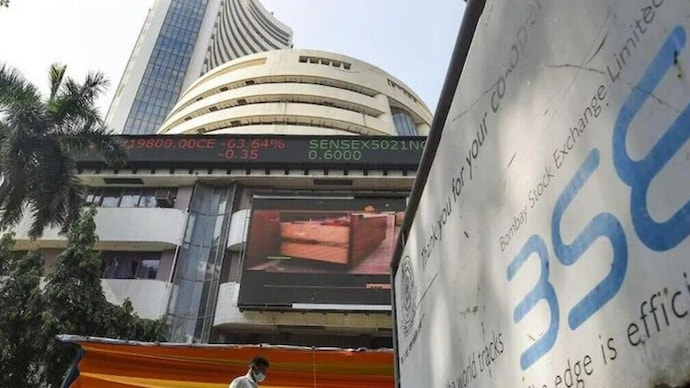
Domestic equity markets extended their sharp decline on Thursday, with benchmark indices falling over 2% in early trade as a spike in crude oil prices, escalating tensions in West Asia and sustained foreign investor outflows weighed heavily on sentiment.
The BSE Sensex plunged 1,557 points, or 2.13%, to 71,576.35 at around 10:10 am, while the Nifty 50 dropped 495 points, or 2.19%, to 22,183.60, slipping well below the 22,200 mark.
Market breadth remained weak, signalling a broad-based risk-off mood across sectors. About Rs 10 lakh crore in investor wealth eroded within hours of trading.
CRUDE OIL PRICES RISE AGAIN
The sell-off was triggered by a sharp rise in global crude prices after remarks by former US President Donald Trump signalled a possible escalation in the Iran conflict, raising fears of supply disruptions in a region critical to global energy markets.
Brent crude jumped around 5% to $105 per barrel, while the US 10-year bond yield firmed to 4.36%, tightening global liquidity conditions.
For India, the implications are immediate and significant. Higher crude prices widen the trade deficit, push up input costs across industries and exert pressure on the rupee, creating a negative feedback loop for equities.
BANKS, CYCLICALS AND AVIATION LEAD DECLINE
Selling pressure was visible across index heavyweights, with financials and cyclicals leading the downturn.
State Bank of India fell 3.7% to Rs 979.95, while HDFC Bank, ICICI Bank and Axis Bank declined between 1.4% and 2.2%. Financial stocks remain particularly sensitive to foreign flows and currency volatility, both of which have turned adverse.
Among cyclicals, Larsen & Toubro dropped 3.7% to Rs 3,473.40, while Reliance Industries fell 2.7% to Rs 1,332.50, reflecting pressure on energy-linked and capex-heavy plays.
Aviation stocks were among the worst hit, with InterGlobe Aviation plunging 4.17% to Rs 4,006.40 as rising aviation turbine fuel costs threaten margins.
Pharma stocks also saw sharp cuts, with Sun Pharmaceutical Industries falling over 4% to Rs 1,657.60, indicating broad-based de-risking rather than sector-specific weakness.
IT stocks offered limited support. HCL Technologies was largely flat, down just 0.07%, while Infosys and TCS saw relatively modest declines, supported by their export orientation and sensitivity to a weaker rupee.
FPI OUTFLOWS AND MACRO RISKS ADD PRESSURE
Foreign portfolio investor selling continued to weigh on sentiment. According to V K Vijayakumar of Geojit Investments, FPIs pulled out Rs 8,331 crore on April 1, intensifying pressure on both equities and the rupee.
The combination of elevated crude prices, persistent capital outflows and a weakening currency is raising concerns about a widening current account deficit and tighter financial conditions.
From a technical standpoint, the market structure remains fragile. Anand James of Geojit Investments noted that the Nifty’s failure to hold above 22,770 signals underlying weakness, with the index now at risk of testing lower levels around 21,900.
Broader markets also reflected the stress, with mid- and small-cap stocks declining alongside large caps, reinforcing the shift in investor sentiment.
With crude prices elevated and geopolitical tensions showing no signs of easing, markets are likely to remain volatile in the near term. Investors will closely track developments in West Asia, oil price trends and foreign fund flows for further direction.
Domestic equity markets extended their sharp decline on Thursday, with benchmark indices falling over 2% in early trade as a spike in crude oil prices, escalating tensions in West Asia and sustained foreign investor outflows weighed heavily on sentiment.
The BSE Sensex plunged 1,557 points, or 2.13%, to 71,576.35 at around 10:10 am, while the Nifty 50 dropped 495 points, or 2.19%, to 22,183.60, slipping well below the 22,200 mark.
Market breadth remained weak, signalling a broad-based risk-off mood across sectors. About Rs 10 lakh crore in investor wealth eroded within hours of trading.
CRUDE OIL PRICES RISE AGAIN
The sell-off was triggered by a sharp rise in global crude prices after remarks by former US President Donald Trump signalled a possible escalation in the Iran conflict, raising fears of supply disruptions in a region critical to global energy markets.
Brent crude jumped around 5% to $105 per barrel, while the US 10-year bond yield firmed to 4.36%, tightening global liquidity conditions.
For India, the implications are immediate and significant. Higher crude prices widen the trade deficit, push up input costs across industries and exert pressure on the rupee, creating a negative feedback loop for equities.
BANKS, CYCLICALS AND AVIATION LEAD DECLINE
Selling pressure was visible across index heavyweights, with financials and cyclicals leading the downturn.
State Bank of India fell 3.7% to Rs 979.95, while HDFC Bank, ICICI Bank and Axis Bank declined between 1.4% and 2.2%. Financial stocks remain particularly sensitive to foreign flows and currency volatility, both of which have turned adverse.
Among cyclicals, Larsen & Toubro dropped 3.7% to Rs 3,473.40, while Reliance Industries fell 2.7% to Rs 1,332.50, reflecting pressure on energy-linked and capex-heavy plays.
Aviation stocks were among the worst hit, with InterGlobe Aviation plunging 4.17% to Rs 4,006.40 as rising aviation turbine fuel costs threaten margins.
Pharma stocks also saw sharp cuts, with Sun Pharmaceutical Industries falling over 4% to Rs 1,657.60, indicating broad-based de-risking rather than sector-specific weakness.
IT stocks offered limited support. HCL Technologies was largely flat, down just 0.07%, while Infosys and TCS saw relatively modest declines, supported by their export orientation and sensitivity to a weaker rupee.
FPI OUTFLOWS AND MACRO RISKS ADD PRESSURE
Foreign portfolio investor selling continued to weigh on sentiment. According to V K Vijayakumar of Geojit Investments, FPIs pulled out Rs 8,331 crore on April 1, intensifying pressure on both equities and the rupee.
The combination of elevated crude prices, persistent capital outflows and a weakening currency is raising concerns about a widening current account deficit and tighter financial conditions.
From a technical standpoint, the market structure remains fragile. Anand James of Geojit Investments noted that the Nifty’s failure to hold above 22,770 signals underlying weakness, with the index now at risk of testing lower levels around 21,900.
Broader markets also reflected the stress, with mid- and small-cap stocks declining alongside large caps, reinforcing the shift in investor sentiment.
With crude prices elevated and geopolitical tensions showing no signs of easing, markets are likely to remain volatile in the near term. Investors will closely track developments in West Asia, oil price trends and foreign fund flows for further direction.

