How war in the Middle East is disrupting the global economy
For oil-importing countries, it has amounted to a large and "sudden tax on income."
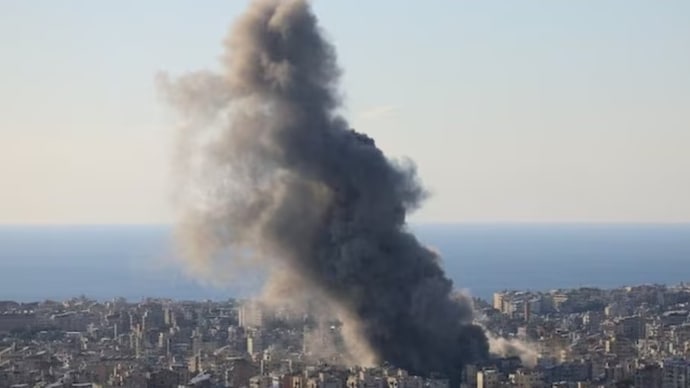


"Although the war could shape the global economy in different ways," said International Monetary Fund economists while assessing the global impact of the US–Israel conflict with Iran, "All roads lead to higher prices and slower growth".
This assessment, published on March 30, added that the closure of the Strait of Hormuz caused "the largest disruption to the global oil market in its history". For oil-importing countries, it has amounted to a large and "sudden tax on income". The IMF will release a detailed assessment on April 14–15.
Not just oil price shocks, the supply of key commodities such as fertiliser, aluminium, and helium has also been disrupted. This has triggered a food and energy crisis that the world has not seen in a long time.
FUEL RATIONING, CLOSURE OF SCHOOLS AND UNIVERSITIES
Many countries have resorted to emergency measures. From remote working and fuel rationing to restrictions on private vehicles and the closure of schools and universities, governments worldwide are taking steps to cushion the blow.
Pakistan has shut schools for two weeks and imposed a four-day workweek for government officials, while Nepal has started rationing LPG cylinders. The Philippines has declared a national energy emergency, urging officials and citizens to reduce fuel use and curb demand through energy audits. Sri Lanka has introduced QR code-based fuel rationing, along with the mandatory closure of government offices, schools and universities every Wednesday.
According to the International Energy Agency’s live tracker, as many as 26 countries have implemented measures to reduce fuel consumption. These include, among others, India, Egypt, Singapore, Indonesia, South Korea, Spain, Australia, Vietnam, and Thailand.
MOUNTING ECONOMIC LOSSES
Separately, a United Nations Development Programme report released Tuesday highlighted the severe economic impact of the one-month war on Gulf countries. It said that "a short-lived military escalation in the Middle East could generate profound and widespread socioeconomic impacts across the Arab States region".
The UNDP estimated that losses could range from USD 120 billion to USD 194 billion, or 3.7 to 6 per cent of the region’s GDP. Gulf Cooperation Council countries, including Bahrain, Kuwait, Oman, Qatar, Saudi Arabia, and the United Arab Emirates, could face losses of USD 103–168 billion, the report said.
The conflict is also expected to result in massive job losses across the region. The UNDP report projected that 2.5 to 3.5 million jobs could be lost: "With roughly 2.8 million people entering the labour force each year and only about 2.5 million typically finding employment, the projected increase in unemployment is equivalent to more than a full year of job creation capacity".
The spiralling job losses are likely to hit migrant workers particularly hard. According to Al Jazeera, the GCC countries host 35 million foreign nationals, including 9 million from India, 5 million each from Pakistan and Bangladesh, 1.2 million from Nepal, and about 6,50,000 from Sri Lanka.
The GCC region has long been a major source of remittances for South Asian countries. India alone receives nearly USD 50 billion annually from the region, while remittances account for close to 10 per cent of Pakistan’s GDP. Rising job losses are expected to have a significant impact on the remittance economies of South Asia.
"There could be a hit of maybe five per cent in terms of remittances" from the region to India due to the ongoing war, noted Bank of Baroda chief economist Madan Sabnavis.
The UNDP report warned that "economic disruptions could also affect wage stability and remittance flows to major labour-sending countries such as India, Pakistan, Bangladesh, and Egypt, creating potential spillover effects beyond the region".
"Although the war could shape the global economy in different ways," said International Monetary Fund economists while assessing the global impact of the US–Israel conflict with Iran, "All roads lead to higher prices and slower growth".
This assessment, published on March 30, added that the closure of the Strait of Hormuz caused "the largest disruption to the global oil market in its history". For oil-importing countries, it has amounted to a large and "sudden tax on income". The IMF will release a detailed assessment on April 14–15.
Not just oil price shocks, the supply of key commodities such as fertiliser, aluminium, and helium has also been disrupted. This has triggered a food and energy crisis that the world has not seen in a long time.
FUEL RATIONING, CLOSURE OF SCHOOLS AND UNIVERSITIES
Many countries have resorted to emergency measures. From remote working and fuel rationing to restrictions on private vehicles and the closure of schools and universities, governments worldwide are taking steps to cushion the blow.
Pakistan has shut schools for two weeks and imposed a four-day workweek for government officials, while Nepal has started rationing LPG cylinders. The Philippines has declared a national energy emergency, urging officials and citizens to reduce fuel use and curb demand through energy audits. Sri Lanka has introduced QR code-based fuel rationing, along with the mandatory closure of government offices, schools and universities every Wednesday.
According to the International Energy Agency’s live tracker, as many as 26 countries have implemented measures to reduce fuel consumption. These include, among others, India, Egypt, Singapore, Indonesia, South Korea, Spain, Australia, Vietnam, and Thailand.
MOUNTING ECONOMIC LOSSES
Separately, a United Nations Development Programme report released Tuesday highlighted the severe economic impact of the one-month war on Gulf countries. It said that "a short-lived military escalation in the Middle East could generate profound and widespread socioeconomic impacts across the Arab States region".
The UNDP estimated that losses could range from USD 120 billion to USD 194 billion, or 3.7 to 6 per cent of the region’s GDP. Gulf Cooperation Council countries, including Bahrain, Kuwait, Oman, Qatar, Saudi Arabia, and the United Arab Emirates, could face losses of USD 103–168 billion, the report said.
The conflict is also expected to result in massive job losses across the region. The UNDP report projected that 2.5 to 3.5 million jobs could be lost: "With roughly 2.8 million people entering the labour force each year and only about 2.5 million typically finding employment, the projected increase in unemployment is equivalent to more than a full year of job creation capacity".
The spiralling job losses are likely to hit migrant workers particularly hard. According to Al Jazeera, the GCC countries host 35 million foreign nationals, including 9 million from India, 5 million each from Pakistan and Bangladesh, 1.2 million from Nepal, and about 6,50,000 from Sri Lanka.
The GCC region has long been a major source of remittances for South Asian countries. India alone receives nearly USD 50 billion annually from the region, while remittances account for close to 10 per cent of Pakistan’s GDP. Rising job losses are expected to have a significant impact on the remittance economies of South Asia.
"There could be a hit of maybe five per cent in terms of remittances" from the region to India due to the ongoing war, noted Bank of Baroda chief economist Madan Sabnavis.
The UNDP report warned that "economic disruptions could also affect wage stability and remittance flows to major labour-sending countries such as India, Pakistan, Bangladesh, and Egypt, creating potential spillover effects beyond the region".

