Solid Hindu vote, fractured Muslim vote; did Bengal just invert India's electoral calculus?
The Muslim vote bloc, almost taken for granted as rock solid by the 'secular' parties, delivered a shock departure from conventional behaviour in the just-concluded Bengal elections.
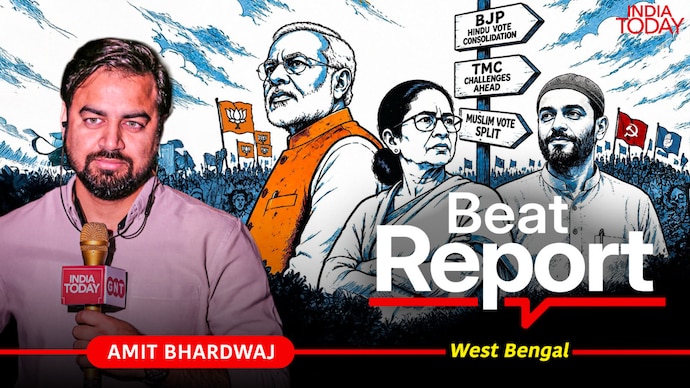
In the fractious electoral battles of India, dictated by caste and religious divisions, one universal truth has manifested itself repeatedly. The Hindu vote is fragmented by caste divisions whereas the Muslim vote is one rock solid bloc.
For decades, this fundamental understanding of voter behaviour has shaped India’s electoral politics. It ensured that parties that call themselves secular went into every election with a massive chunk of assured votes. Alternatively, it meant that the BJP went into every election with a "secular" handicap of anywhere between 20 percent to 40 percent vote share. A steep mountain to climb for any party, even if it's the largest in the world.
But that was till 2014 and the arrival of Narendra Modi on the national scene. That year, Modi stunned the nation, winning 282 seats - the first time a party won majority in over 25 years. That was the first sign of a successful consolidation of Hindu votes, cutting across castes. Since then, the BJP under Modi has demonstrated its ability to bring more castes under the Hindu umbrella, election after election.
But never as starkly as in the just-concluded Bengal elections. In this election, the BJP managed to consolidate the Hindu vote like never before, while the unthinkable happened at the other end of the political spectrum. In any election where the BJP is a major contender - which is almost every election these days - it was a given that the Muslims would vote en bloc for the party that is best placed to defeat the BJP, in this case, Mamata Banerjee’s Trinamool Congress (TMC). The Muslims have carried this strategic “must defeat BJP” burden for long. And more or less, that is what Mamata was banking on. Or even taken as a given.
But a stunning inversion happened. The Muslim vote fractured. It may have happened in a few earlier elections, but the rupture in Bengal 2026 was at scale. Parties that had no hope in hell of stopping the BJP - INC, AJUP, CPM, AIMIM, etc - made a hearty meal of the Muslim vote that Mamata would have taken as her earned political right.
Like mice gnawing at a safety-net - Mamata’s safety net - these parties unravelled the Muslim vote knot by knot. Let me illustrate a few examples, seat by Muslim-voter-dominated seat. But since this is a deep dive, be prepared for a long read. If you are in a hurry, you can check out this much-abridged version that I put out two days ago. Back to the long haul. We shall analyse the results in three segments: i) Seats Mamata lost to the BJP; ii) Seats she lost to non-BJP parties; and iii) Seats that she won, but with massively reduced margins.
SEATS MAMATA LOST TO THE BJP
Murshidabad has the highest Muslim population in West Bengal. The Beldanga assembly segment, part of Murshidabad, has an overwhelmingly high Muslim electorate. Bharat Kumar Jhawar won here on a BJP ticket. This seat gives you a sneak peek into what unfolded in many Assembly segments - a double whammy for Mamata; consolidation of the Hindu votes for the BJP and splintering of her own Muslim vote.
In 2021, the BJP polled 28.9 percent votes. Trinamool had clinched the seat with over 55 percent votes. The Congress - which was part of the Left-ISF alliance - polled a little over 13 percent. This year, the BJP pushed up its vote share by just three percentage points to 31.88. This is almost the entire Hindu voting population of Beldanga because it is supposed to be about 63% Muslim. But the TMC's vote share dived from 55% to 26%, ceding 20.4% to Humayun Kabir’s AJUP and 4.5% to the Congress (up from 13% to 17.5%). The Hindu vote tightened and the Muslim vote splintered.
In Kandi, part of Murshidabad, the TMC's sitting MLA Apurba Sarkar lost to the BJP. Kandi has a concentration of Muslim voters. But Sarkar’s vote share fell from 51% in 2021 to 31% in 2026. The BJP’s Gargi Das Ghosh posted just 5% more with 36.7%. The biggest dent to the TMC was caused by the AIMIM polling 15.62%. The Congress inched up from 10.5% to 11.5%.
Jangipur is another Muslim-dominated seat (about 49%) that the BJP wrested from the TMC. The BJP vote share spiked from 22% in 2021 to 42% and the Congress upped it to 15% (about 31,000 votes). The TMC leaked votes to the Left alliance also. Result: the TMC lost by 10,542 votes.
The same story repeated itself in Uttar Dinajpur’s Karandighi where it was the Left Alliance that bled the TMC by hiking its vote share from four percent in 2021 to 18%: The BJP won with a 20,000 margin. TMC’s sitting MLA Gautam Paul’s share fell from 55% to 35%. Another case of Hindu vote consolidation for the BJP and fragmentation against the TMC.
In North 24 Parganas' Ashoknagar, the BJP defeated TMC's sitting MLA Narayan Goswami by little over 9,000 votes. The ISF polled nearly 29,000 votes here. The BJP defeated the TMC in Haripal assembly segment by less than 3,500 votes. Muzzaffar Ali, ISF candidate, garnered a little over 12,000 votes.
The TMC lost the Pandua seat to BJP by over 5,000 votes. While the TMC itself dropped 5,000 votes from 2021, the CPM’s Amjad Hossain SK hurt it further by polling 27,500 votes. And the hardest blow came from the BJP itself, by polling 30,000 more votes.
Murshidabad returned the BJP with an increased margin of 31,000 votes. The Muslim candidates from the Congress, Forward Bloc, AJUP polled more votes than the BJP’s margin in this seat.
SEATS MAMATA LOST TO NON-BJP PARTIES
Mamata did not bleed seats to the BJP alone or just in Murshidabad-Malda—Muslim majority areas—but also in seats of South 24 Parganas. Non-BJP parties—Congress, CPM and Indian Secular Front (ISF)—hurt Mamata across all the Muslim-dominated areas. This simple static illustrates it best: Only 29 candidates of the Congress who contested across the state polled more than 20,000 votes. Twenty-three of them were Muslims. This shows that while the Congress was not in contest for most part, its strongest performance came in Muslim areas—a deadly blow to Mamata.
Similarly, the CPM had 14 Muslim candidates crossing the 20,000 mark and 23 candidates of the ISF polled more than 10,000 votes. It polled 10,700 votes in Ketugram and a little over 20,000 in Jagatballavpur. The TMC lost both seats to the BJP by 6,000 votes. The ISF’s Nawsad Siddique retained the Bhangar seat in South 24 Parganas with a comfortable margin.
The CPM re-opened its tally in West Bengal in 2026. Its only MLA from Domkal seat is Mostafijur Rahman. The Congress' Motab Shaik won from Farakka and Julfikar Ali clinched Raninagar. Humayun Kabir, the AJUP founder, won from both seats he had contested, from Rejinagar and Nowda.
Humayun Kabir’s AJUP—dismissed as a serious contender before the polls—surprised Mamata. Kabir won both his seats; Rejinagar by nearly 59,000 votes and Nowda by over 27,000 votes, pushing TMC to a humiliating third place in both.
In Hariharpara, the AJUP became the main contender for the TMC. It witnessed a three-way split in Muslim votes between the TMC, AJUP and CPM. In 2021, the TMC polled 47% votes here.
In Farakka, the battle was between the Congress and the BJP. The TMC was again pushed to the third position. Congress’ Motab Shaikh won the seat with a margin of 8,193 votes. The Congress also won Raninagar by a narrow margin of 2,701 votes over the TMC. Here again, the CPM’s Jamal Hossain polled 48,587 votes. In 2021, the TMC raked in 60% but not so this time.
Domkal, the Muslim majority seat, was clinched by CPM’s Mostafijur Rahman by a margin of over 16,000 votes. The Congress polled nearly 30,000 votes and the AJUP got over 7,000 votes.
SEATS THAT TMC WON, BUT JUST
The breaching of Mamata’s Muslim bastion is visible in the seats that her party won. In Jalangi, the TMC’s victory margin dropped to 21,000 in 2026 from a whopping 80,000 plus votes in 2021. Importantly, the Left and Congress had fought 2021 polls in an alliance. If you put the Congress and CPM votes together, they have polled over 1,00,000 votes in 2026, which is more than the votes polled by the TMC’s newly elected MLA Babar Ali (88,684). Even the AJUP candidate on this seat polled nearly 5,000 votes. The split in the Muslim vote bank is evident.
In Bhagawangola, the TMC’s margin in 2021 was over 1,00,000 votes but dropped by nearly half to 56,000. The CPM polled nearly 50,000 votes and the Congress over 29,000 votes. The Congress’ Muslim candidates similarly ate into the TMC’s vote share in Nalhati and Ratua also.
In Kaliganj, the Muslim candidates of the CPM and the AJUP polled nearly 23,000 and 16,000 votes respectively. The Congress’ Shaikh Kabil Uddin polled over 4,000 votes. While the TMC managed to retain Kaliganj, compared to 2021, its vote share has reduced from 53 percent to 40 percent.
Even in the Muslim fortress of Malda's Sujapur, the TMC’s vote share fell by 23%. Major gainers are the Congress and the ISF – both had fielded Muslim candidates on the seat. The BJP vote share has largely remained. This pattern continues in Malatipur, Raghunathganj, where Muslim voters are believed to constitute over 70 percent of the electorate.
SO WHAT WENT WRONG FOR MAMATA?
Experts point out that it was presumed that the Muslim voters in West Bengal would back the TMC en bloc as elections in 2026 happened in the backdrop of the Special Intensive Review (SIR). The fear around losing the voting rights and consequently the danger of being left out from the social welfare schemes seemed real in the minority community discourse. However, this presumption seems to have proven wrong.
Dr Mohammad Reyaz, Assistant Professor at Kolkata's Aliah University, said the 2021 state polls had happened in the backdrop of the CAA-NRC protests. The TMC benefitted from it. He cited reasons such as the anger over Mamata’s stand on the Waqf Board Bill, her refusal to address the issue of the OBC quota for Muslims and the general disenchantment over lack of development and jobs.
“In Muslim majority seats, 90% of Hindu votes went to the BJP," says Reyaz, creating a double blow for Mamata. He argued that the TMC's focus on curtailing the expansion of the ISF didn't go well with the followers of the Furfura Sharif. "It was seen as oppression of the ISF. It created perception amongst Furfura Sharif sympathisers that Mamata was more focused on containing the ISF even in Bhangar instead of fighting the BJP aggressively."
Experts such as Reyaz and Abdul Matin, Assistant Professor at Jadavpur University, underline that the TMC Supremo tried to capture the minority vote bank by showing the fear of the BJP. It did work in 2021. But the treatment as a "captive vote bank" is not being taken positively by the community.
Matin said that the split in Muslim votes was a regional factor in the state. "Malda, Murshidabad, Uttar Dinajpur and some pockets of South 24 Parganas witnessed this trend. Murshidabad used to be the Congress bastion. Mamata Banerjee had demolished Congress in these pockets. Malda Muslims went to the Congress, TMC and the Left-ISF alliance. The Beldanga story happened because of this split. The impact of the SIR and large scale name deletions in this region impacted the TMC as well," Matin said.
"In South 24 Parganas, the TMC didn't lose because the Muslim votes got split. It has more to do with the consolidation of the Hindu votes in favour of the BJP," Matin said.
Both Reyaz and Matin pointed out the Soft Hindutva optics by the TMC in the past five years didn't leave a positive impact on the Muslim voters.
So, have Muslim voters of Bengal abandoned the burden of “defeating the BJP"?
Khalid Anis Ansari, Associate Professor of Sociology, Azim Premji University, responding on this question said, "There is an assumption that Muslims vote en bloc. But in Bengal, there was a split this time around.”
Ansari pointed out that while regional parties bank on the Muslim vote, they do not do enough to take on the Hindu majoritarianism of the BJP. “Muslims feel these parties are not doing enough. While they bank on Muslim votes, they don't take the right-wing Hindu majoritarianism head on. They fear it won't go well with the Hindu voters. That's a paradox with regional parties,” he said.
Whatever the reasons, this trend of solid Hindu vote consolidation and parallel disintegration of the Muslim vote is an inversion of known voting patterns in India. Political parties will be taking a hard look at this new phenomenon for the next high-stakes battle that’s round the corner: the Uttar Pradesh Assembly election in early 2027. And beyond, of course.
In the fractious electoral battles of India, dictated by caste and religious divisions, one universal truth has manifested itself repeatedly. The Hindu vote is fragmented by caste divisions whereas the Muslim vote is one rock solid bloc.
For decades, this fundamental understanding of voter behaviour has shaped India’s electoral politics. It ensured that parties that call themselves secular went into every election with a massive chunk of assured votes. Alternatively, it meant that the BJP went into every election with a "secular" handicap of anywhere between 20 percent to 40 percent vote share. A steep mountain to climb for any party, even if it's the largest in the world.
But that was till 2014 and the arrival of Narendra Modi on the national scene. That year, Modi stunned the nation, winning 282 seats - the first time a party won majority in over 25 years. That was the first sign of a successful consolidation of Hindu votes, cutting across castes. Since then, the BJP under Modi has demonstrated its ability to bring more castes under the Hindu umbrella, election after election.
But never as starkly as in the just-concluded Bengal elections. In this election, the BJP managed to consolidate the Hindu vote like never before, while the unthinkable happened at the other end of the political spectrum. In any election where the BJP is a major contender - which is almost every election these days - it was a given that the Muslims would vote en bloc for the party that is best placed to defeat the BJP, in this case, Mamata Banerjee’s Trinamool Congress (TMC). The Muslims have carried this strategic “must defeat BJP” burden for long. And more or less, that is what Mamata was banking on. Or even taken as a given.
But a stunning inversion happened. The Muslim vote fractured. It may have happened in a few earlier elections, but the rupture in Bengal 2026 was at scale. Parties that had no hope in hell of stopping the BJP - INC, AJUP, CPM, AIMIM, etc - made a hearty meal of the Muslim vote that Mamata would have taken as her earned political right.
Like mice gnawing at a safety-net - Mamata’s safety net - these parties unravelled the Muslim vote knot by knot. Let me illustrate a few examples, seat by Muslim-voter-dominated seat. But since this is a deep dive, be prepared for a long read. If you are in a hurry, you can check out this much-abridged version that I put out two days ago. Back to the long haul. We shall analyse the results in three segments: i) Seats Mamata lost to the BJP; ii) Seats she lost to non-BJP parties; and iii) Seats that she won, but with massively reduced margins.
SEATS MAMATA LOST TO THE BJP
Murshidabad has the highest Muslim population in West Bengal. The Beldanga assembly segment, part of Murshidabad, has an overwhelmingly high Muslim electorate. Bharat Kumar Jhawar won here on a BJP ticket. This seat gives you a sneak peek into what unfolded in many Assembly segments - a double whammy for Mamata; consolidation of the Hindu votes for the BJP and splintering of her own Muslim vote.
In 2021, the BJP polled 28.9 percent votes. Trinamool had clinched the seat with over 55 percent votes. The Congress - which was part of the Left-ISF alliance - polled a little over 13 percent. This year, the BJP pushed up its vote share by just three percentage points to 31.88. This is almost the entire Hindu voting population of Beldanga because it is supposed to be about 63% Muslim. But the TMC's vote share dived from 55% to 26%, ceding 20.4% to Humayun Kabir’s AJUP and 4.5% to the Congress (up from 13% to 17.5%). The Hindu vote tightened and the Muslim vote splintered.
In Kandi, part of Murshidabad, the TMC's sitting MLA Apurba Sarkar lost to the BJP. Kandi has a concentration of Muslim voters. But Sarkar’s vote share fell from 51% in 2021 to 31% in 2026. The BJP’s Gargi Das Ghosh posted just 5% more with 36.7%. The biggest dent to the TMC was caused by the AIMIM polling 15.62%. The Congress inched up from 10.5% to 11.5%.
Jangipur is another Muslim-dominated seat (about 49%) that the BJP wrested from the TMC. The BJP vote share spiked from 22% in 2021 to 42% and the Congress upped it to 15% (about 31,000 votes). The TMC leaked votes to the Left alliance also. Result: the TMC lost by 10,542 votes.
The same story repeated itself in Uttar Dinajpur’s Karandighi where it was the Left Alliance that bled the TMC by hiking its vote share from four percent in 2021 to 18%: The BJP won with a 20,000 margin. TMC’s sitting MLA Gautam Paul’s share fell from 55% to 35%. Another case of Hindu vote consolidation for the BJP and fragmentation against the TMC.
In North 24 Parganas' Ashoknagar, the BJP defeated TMC's sitting MLA Narayan Goswami by little over 9,000 votes. The ISF polled nearly 29,000 votes here. The BJP defeated the TMC in Haripal assembly segment by less than 3,500 votes. Muzzaffar Ali, ISF candidate, garnered a little over 12,000 votes.
The TMC lost the Pandua seat to BJP by over 5,000 votes. While the TMC itself dropped 5,000 votes from 2021, the CPM’s Amjad Hossain SK hurt it further by polling 27,500 votes. And the hardest blow came from the BJP itself, by polling 30,000 more votes.
Murshidabad returned the BJP with an increased margin of 31,000 votes. The Muslim candidates from the Congress, Forward Bloc, AJUP polled more votes than the BJP’s margin in this seat.
SEATS MAMATA LOST TO NON-BJP PARTIES
Mamata did not bleed seats to the BJP alone or just in Murshidabad-Malda—Muslim majority areas—but also in seats of South 24 Parganas. Non-BJP parties—Congress, CPM and Indian Secular Front (ISF)—hurt Mamata across all the Muslim-dominated areas. This simple static illustrates it best: Only 29 candidates of the Congress who contested across the state polled more than 20,000 votes. Twenty-three of them were Muslims. This shows that while the Congress was not in contest for most part, its strongest performance came in Muslim areas—a deadly blow to Mamata.
Similarly, the CPM had 14 Muslim candidates crossing the 20,000 mark and 23 candidates of the ISF polled more than 10,000 votes. It polled 10,700 votes in Ketugram and a little over 20,000 in Jagatballavpur. The TMC lost both seats to the BJP by 6,000 votes. The ISF’s Nawsad Siddique retained the Bhangar seat in South 24 Parganas with a comfortable margin.
The CPM re-opened its tally in West Bengal in 2026. Its only MLA from Domkal seat is Mostafijur Rahman. The Congress' Motab Shaik won from Farakka and Julfikar Ali clinched Raninagar. Humayun Kabir, the AJUP founder, won from both seats he had contested, from Rejinagar and Nowda.
Humayun Kabir’s AJUP—dismissed as a serious contender before the polls—surprised Mamata. Kabir won both his seats; Rejinagar by nearly 59,000 votes and Nowda by over 27,000 votes, pushing TMC to a humiliating third place in both.
In Hariharpara, the AJUP became the main contender for the TMC. It witnessed a three-way split in Muslim votes between the TMC, AJUP and CPM. In 2021, the TMC polled 47% votes here.
In Farakka, the battle was between the Congress and the BJP. The TMC was again pushed to the third position. Congress’ Motab Shaikh won the seat with a margin of 8,193 votes. The Congress also won Raninagar by a narrow margin of 2,701 votes over the TMC. Here again, the CPM’s Jamal Hossain polled 48,587 votes. In 2021, the TMC raked in 60% but not so this time.
Domkal, the Muslim majority seat, was clinched by CPM’s Mostafijur Rahman by a margin of over 16,000 votes. The Congress polled nearly 30,000 votes and the AJUP got over 7,000 votes.
SEATS THAT TMC WON, BUT JUST
The breaching of Mamata’s Muslim bastion is visible in the seats that her party won. In Jalangi, the TMC’s victory margin dropped to 21,000 in 2026 from a whopping 80,000 plus votes in 2021. Importantly, the Left and Congress had fought 2021 polls in an alliance. If you put the Congress and CPM votes together, they have polled over 1,00,000 votes in 2026, which is more than the votes polled by the TMC’s newly elected MLA Babar Ali (88,684). Even the AJUP candidate on this seat polled nearly 5,000 votes. The split in the Muslim vote bank is evident.
In Bhagawangola, the TMC’s margin in 2021 was over 1,00,000 votes but dropped by nearly half to 56,000. The CPM polled nearly 50,000 votes and the Congress over 29,000 votes. The Congress’ Muslim candidates similarly ate into the TMC’s vote share in Nalhati and Ratua also.
In Kaliganj, the Muslim candidates of the CPM and the AJUP polled nearly 23,000 and 16,000 votes respectively. The Congress’ Shaikh Kabil Uddin polled over 4,000 votes. While the TMC managed to retain Kaliganj, compared to 2021, its vote share has reduced from 53 percent to 40 percent.
Even in the Muslim fortress of Malda's Sujapur, the TMC’s vote share fell by 23%. Major gainers are the Congress and the ISF – both had fielded Muslim candidates on the seat. The BJP vote share has largely remained. This pattern continues in Malatipur, Raghunathganj, where Muslim voters are believed to constitute over 70 percent of the electorate.
SO WHAT WENT WRONG FOR MAMATA?
Experts point out that it was presumed that the Muslim voters in West Bengal would back the TMC en bloc as elections in 2026 happened in the backdrop of the Special Intensive Review (SIR). The fear around losing the voting rights and consequently the danger of being left out from the social welfare schemes seemed real in the minority community discourse. However, this presumption seems to have proven wrong.
Dr Mohammad Reyaz, Assistant Professor at Kolkata's Aliah University, said the 2021 state polls had happened in the backdrop of the CAA-NRC protests. The TMC benefitted from it. He cited reasons such as the anger over Mamata’s stand on the Waqf Board Bill, her refusal to address the issue of the OBC quota for Muslims and the general disenchantment over lack of development and jobs.
“In Muslim majority seats, 90% of Hindu votes went to the BJP," says Reyaz, creating a double blow for Mamata. He argued that the TMC's focus on curtailing the expansion of the ISF didn't go well with the followers of the Furfura Sharif. "It was seen as oppression of the ISF. It created perception amongst Furfura Sharif sympathisers that Mamata was more focused on containing the ISF even in Bhangar instead of fighting the BJP aggressively."
Experts such as Reyaz and Abdul Matin, Assistant Professor at Jadavpur University, underline that the TMC Supremo tried to capture the minority vote bank by showing the fear of the BJP. It did work in 2021. But the treatment as a "captive vote bank" is not being taken positively by the community.
Matin said that the split in Muslim votes was a regional factor in the state. "Malda, Murshidabad, Uttar Dinajpur and some pockets of South 24 Parganas witnessed this trend. Murshidabad used to be the Congress bastion. Mamata Banerjee had demolished Congress in these pockets. Malda Muslims went to the Congress, TMC and the Left-ISF alliance. The Beldanga story happened because of this split. The impact of the SIR and large scale name deletions in this region impacted the TMC as well," Matin said.
"In South 24 Parganas, the TMC didn't lose because the Muslim votes got split. It has more to do with the consolidation of the Hindu votes in favour of the BJP," Matin said.
Both Reyaz and Matin pointed out the Soft Hindutva optics by the TMC in the past five years didn't leave a positive impact on the Muslim voters.
So, have Muslim voters of Bengal abandoned the burden of “defeating the BJP"?
Khalid Anis Ansari, Associate Professor of Sociology, Azim Premji University, responding on this question said, "There is an assumption that Muslims vote en bloc. But in Bengal, there was a split this time around.”
Ansari pointed out that while regional parties bank on the Muslim vote, they do not do enough to take on the Hindu majoritarianism of the BJP. “Muslims feel these parties are not doing enough. While they bank on Muslim votes, they don't take the right-wing Hindu majoritarianism head on. They fear it won't go well with the Hindu voters. That's a paradox with regional parties,” he said.
Whatever the reasons, this trend of solid Hindu vote consolidation and parallel disintegration of the Muslim vote is an inversion of known voting patterns in India. Political parties will be taking a hard look at this new phenomenon for the next high-stakes battle that’s round the corner: the Uttar Pradesh Assembly election in early 2027. And beyond, of course.

