As new Covid variant lurks, the pandemic dossier India must dust up
Public-health expert K. Srinath Reddy highlights the unforgettable lessons of the pandemic—a 'One Health' approach and community connectedness
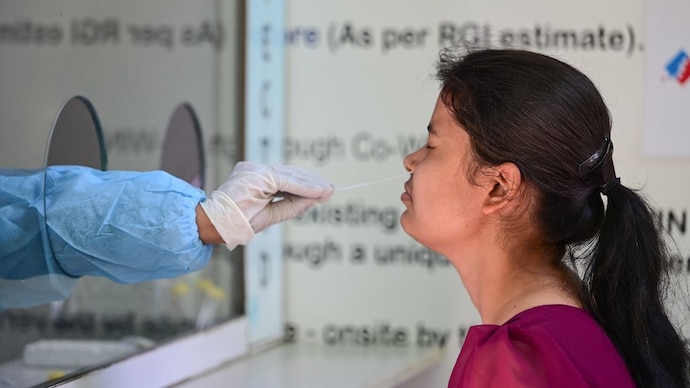
The Covid pandemic offered us many lessons. The virus spread not just through droplets but mostly by aerosols; yet the use of face masks should have been advised early. Superspreader events should have been avoided. The second wave was devastating because the Delta variant of the virus travelled with people.
Predictions based on linear models proved inaccurate as they did not anticipate the complexity of virus evolution, the uneven state of health-system responses across India and the variability in people’s willingness to accept public-health advisories. This gap between modelling and lived reality weakened preparedness.
Vaccines, though highly effective in reducing the severity of illness, did not entirely prevent infection. The respiratory tract lacked mucosal immunity, allowing the virus to infect even vaccinated individuals—something that was not clearly communicated to the public.
Similarly, the idea of ‘herd immunity’ was often misunderstood. What exists is better described as ‘herd protection’, wherein groups with high levels of acquired immunity can block transmission internally, but individuals moving into areas with low immunity remain vulnerable. Public communication on this distinction was inadequate.
The pandemic also underscored the centrality of primary care. Early detection through syndromic surveillance and testing, followed by isolation, contact tracing, treatment and immunisation, all depend on a strong primary-care system. Insufficient investment in this area, particularly in urban India, weakened the overall response.
At the same time, India demonstrated notable strengths. The country performed well in vaccine production and administration, developed robust digital platforms like CoWIN, and achieved effective inter-ministerial and Centre-State coordination. These successes offer a template for future public-health responses.
However, gaps remain. The health workforce must maintain a reserve capacity that can be rapidly mobilised during emergencies. More fundamentally, if an effective, equitable, empathetic and economically efficient health system does not exist in normal times, it becomes extremely difficult to mount a swift, strong and sustained response during crisis.
Finally, the pandemic highlighted the need for a ‘One Health’ approach—integrating microbial surveillance across wildlife, veterinary and human populations, along with wastewater monitoring. Equally important is community connectedness, which is essential for the success of any multi-sectoral public health response. These lessons must not be forgotten. The Covid virus remains a risk.
—The writer is a renowned public-health expert
Subscribe to India Today Magazine
The Covid pandemic offered us many lessons. The virus spread not just through droplets but mostly by aerosols; yet the use of face masks should have been advised early. Superspreader events should have been avoided. The second wave was devastating because the Delta variant of the virus travelled with people.
Predictions based on linear models proved inaccurate as they did not anticipate the complexity of virus evolution, the uneven state of health-system responses across India and the variability in people’s willingness to accept public-health advisories. This gap between modelling and lived reality weakened preparedness.
Vaccines, though highly effective in reducing the severity of illness, did not entirely prevent infection. The respiratory tract lacked mucosal immunity, allowing the virus to infect even vaccinated individuals—something that was not clearly communicated to the public.
Similarly, the idea of ‘herd immunity’ was often misunderstood. What exists is better described as ‘herd protection’, wherein groups with high levels of acquired immunity can block transmission internally, but individuals moving into areas with low immunity remain vulnerable. Public communication on this distinction was inadequate.
The pandemic also underscored the centrality of primary care. Early detection through syndromic surveillance and testing, followed by isolation, contact tracing, treatment and immunisation, all depend on a strong primary-care system. Insufficient investment in this area, particularly in urban India, weakened the overall response.
At the same time, India demonstrated notable strengths. The country performed well in vaccine production and administration, developed robust digital platforms like CoWIN, and achieved effective inter-ministerial and Centre-State coordination. These successes offer a template for future public-health responses.
However, gaps remain. The health workforce must maintain a reserve capacity that can be rapidly mobilised during emergencies. More fundamentally, if an effective, equitable, empathetic and economically efficient health system does not exist in normal times, it becomes extremely difficult to mount a swift, strong and sustained response during crisis.
Finally, the pandemic highlighted the need for a ‘One Health’ approach—integrating microbial surveillance across wildlife, veterinary and human populations, along with wastewater monitoring. Equally important is community connectedness, which is essential for the success of any multi-sectoral public health response. These lessons must not be forgotten. The Covid virus remains a risk.
—The writer is a renowned public-health expert
Subscribe to India Today Magazine

