How an expressway 'missing link' promises to redefine Mumbai-Pune travel
The highway alignment is expected to reduce Mumbai-Pune travel time by at least 30 minutes besides gifting an economic impact worth Rs 70,000 crore
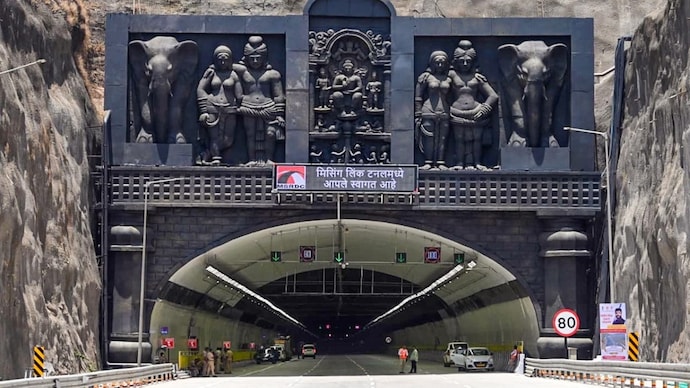
The project, which includes tunnels and bridges from Khopoli to Kusgaon near Lonavala, was inaugurated by chief minister Devendra Fadnavis and deputy chief ministers Eknath Shinde and Sunetra Pawar on May 1, which also marks the foundation day of the state of Maharashtra with Mumbai as its capital.
The expressway alignment is expected to reduce the distance between Mumbai and Pune by 13.3 km and a minimum of 30 minutes. Fadnavis said the project will not only reduce travel time and eliminate jams but also create an economic impact to the tune of Rs 70,000 crore.
The Rs 6,790 crore project will be executed by the Maharashtra State Road Development Corporation (MSRDC) and includes several firsts, such as two parallel tunnels with four lanes each. One of the tunnels (8.7 km long) will be 23.33 metres broad, the widest in the world as recognised by the Guinness World Records. This marks the second world record for Navayuga Engineering Company Limited (NECL), which executed work on the tunnel. The second tunnel will be 1.67 km long. Parts of these tunnels will run underground and beneath the Lonavala Lake.
The project also features India’s tallest cable-stayed highway bridge at 182 metres. Designed over three years using wind-tunnel modelling, the bridge is 950 metres long and engineered to withstand wind speeds of up to 250 km per hour. MSDRC officials said the new alignment was also expected to save fuel worth Rs 1 crore per day.
More crucially, the ‘missing link’ project will help commuters bypass a common stretch of the expressway and the old Mumbai-Bengaluru highway (NH-4) in the Ghat section. Here, the 10 lanes of the two roads (six lanes of expressway and four lanes of NH-4) narrow down to just six lanes. The steep gradients and landslides during monsoons lead to vehicles breaking down, which makes this a chronic chokepoint.
In February, traffic on the expressway was disrupted for around 32 hours after a tanker carrying highly inflammable propylene gas overturned near the Adoshi tunnel in the Ghat section. This was the longest traffic jam in the history of the expressway and left commuters stranded for over a day.
Work on the ‘missing link’ project began in August 2019 and has missed several deadlines. The latest one was December 2025.
The 95-km-long Mumbai-Pune Expressway, which was opened to traffic in 1999, has redefined road travel on this stretch. But it suffers from falling service levels due to rising traffic load and lack of timely capacity expansion. Over-speeding, lane indiscipline, poor enforcement of rules and overloading of commercial vehicles also lead to mishaps.
The expressway was constructed during the erstwhile Shiv Sena-BJP regime at a cost of Rs 2,136 crore and is regarded as a signature piece of linear infrastructure. At present, it caters to around 75,000 vehicles a day, of which a significant number comprises goods and transport vehicles. This soars to around 110,000 to 120,000 vehicles on weekends and holidays, leading to traffic jams and congestion.
A senior MSRDC official said their proposal to expand the expressway from six lanes to 10 lanes was at the final stages. The work, which is expected to begin later this year, will cost around Rs 14,000 crore, and is expected to take four years. This will see the expressway being widened from its present six lanes (three each way) to 10 lanes (five each way).
When clubbed with the capacity augmentation of the highway, which is expected to be completed later this year, this will ensure seamless travel from Mumbai to Pune and beyond. To compensate for the cost of the project, MSRDC is seeking that the concession period (toll collection tenure) be extended beyond 2045, instead of hiking toll charges.
Vehicular traffic on the stretch is showing an annual growth rate of around 8-9 per cent. The commissioning of the Navi Mumbai International Airport and proposed linear projects, such as the Pune Ring Road, Pune-Nashik Expressway and Pune-Sambhajinagar (Aurangabad) Expressway, are expected to drive up the numbers further, said MSRDC officials.
Subscribe to India Today Magazine
The project, which includes tunnels and bridges from Khopoli to Kusgaon near Lonavala, was inaugurated by chief minister Devendra Fadnavis and deputy chief ministers Eknath Shinde and Sunetra Pawar on May 1, which also marks the foundation day of the state of Maharashtra with Mumbai as its capital.
The expressway alignment is expected to reduce the distance between Mumbai and Pune by 13.3 km and a minimum of 30 minutes. Fadnavis said the project will not only reduce travel time and eliminate jams but also create an economic impact to the tune of Rs 70,000 crore.
The Rs 6,790 crore project will be executed by the Maharashtra State Road Development Corporation (MSRDC) and includes several firsts, such as two parallel tunnels with four lanes each. One of the tunnels (8.7 km long) will be 23.33 metres broad, the widest in the world as recognised by the Guinness World Records. This marks the second world record for Navayuga Engineering Company Limited (NECL), which executed work on the tunnel. The second tunnel will be 1.67 km long. Parts of these tunnels will run underground and beneath the Lonavala Lake.
The project also features India’s tallest cable-stayed highway bridge at 182 metres. Designed over three years using wind-tunnel modelling, the bridge is 950 metres long and engineered to withstand wind speeds of up to 250 km per hour. MSDRC officials said the new alignment was also expected to save fuel worth Rs 1 crore per day.
More crucially, the ‘missing link’ project will help commuters bypass a common stretch of the expressway and the old Mumbai-Bengaluru highway (NH-4) in the Ghat section. Here, the 10 lanes of the two roads (six lanes of expressway and four lanes of NH-4) narrow down to just six lanes. The steep gradients and landslides during monsoons lead to vehicles breaking down, which makes this a chronic chokepoint.
In February, traffic on the expressway was disrupted for around 32 hours after a tanker carrying highly inflammable propylene gas overturned near the Adoshi tunnel in the Ghat section. This was the longest traffic jam in the history of the expressway and left commuters stranded for over a day.
Work on the ‘missing link’ project began in August 2019 and has missed several deadlines. The latest one was December 2025.
The 95-km-long Mumbai-Pune Expressway, which was opened to traffic in 1999, has redefined road travel on this stretch. But it suffers from falling service levels due to rising traffic load and lack of timely capacity expansion. Over-speeding, lane indiscipline, poor enforcement of rules and overloading of commercial vehicles also lead to mishaps.
The expressway was constructed during the erstwhile Shiv Sena-BJP regime at a cost of Rs 2,136 crore and is regarded as a signature piece of linear infrastructure. At present, it caters to around 75,000 vehicles a day, of which a significant number comprises goods and transport vehicles. This soars to around 110,000 to 120,000 vehicles on weekends and holidays, leading to traffic jams and congestion.
A senior MSRDC official said their proposal to expand the expressway from six lanes to 10 lanes was at the final stages. The work, which is expected to begin later this year, will cost around Rs 14,000 crore, and is expected to take four years. This will see the expressway being widened from its present six lanes (three each way) to 10 lanes (five each way).
When clubbed with the capacity augmentation of the highway, which is expected to be completed later this year, this will ensure seamless travel from Mumbai to Pune and beyond. To compensate for the cost of the project, MSRDC is seeking that the concession period (toll collection tenure) be extended beyond 2045, instead of hiking toll charges.
Vehicular traffic on the stretch is showing an annual growth rate of around 8-9 per cent. The commissioning of the Navi Mumbai International Airport and proposed linear projects, such as the Pune Ring Road, Pune-Nashik Expressway and Pune-Sambhajinagar (Aurangabad) Expressway, are expected to drive up the numbers further, said MSRDC officials.
Subscribe to India Today Magazine

