Supreme Court upholds SIR, says it advances free and fair elections
The Supreme Court upheld the Election Commission's authority to conduct the Special Intensive Revision of electoral rolls, saying the exercise has a direct link to ensuring free and fair elections.
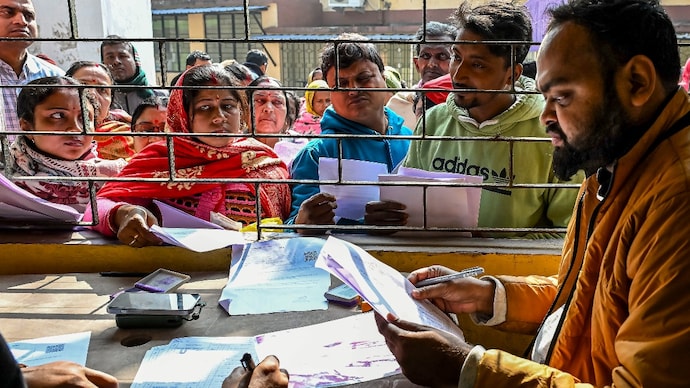


In a shot in the arm for the Election Commission of India, the Supreme Court on Wednesday upheld its Special Intensive Revision (SIR) of electoral rolls as "legally tenable", ruling that the exercise advances the constitutional imperative of free and fair elections.
The verdict comes just days before the third and final phase of the SIR begins on May 30 across 16 states and three Union Territories, where fresh verification and revision of voter rolls are set to be carried out by the poll panel.
A bench led by Chief Justice of India Surya Kant and Justice Joymalya Bagchi examined whether the EC had the powers under Article 326 of the Constitution, the Representation of the People Act, 1950, and related rules to conduct the exercise in its present form.
"We are equally satisfied that the object sought to be achieved by the SIR bears a direct nexus to the constitutional goal of free and fair elections," the Chief Justice said while pronouncing the verdict.
"The impugned SIR does not detract from the constitutional obligation of free and fair elections," the court added while upholding the exercise introduced in Bihar and later extended to other states.
The bench said the SIR did not override existing election laws. "Rather, it breathes life into the constitutional mandate under Article 324 within the precise statutory contours provided by Section 21(3)," it stated.
"Therefore, it cannot be said that the Commission has acted in excess of its statutory powers," it added.
The top court made it clear that the exercise could not be struck down merely because its procedure differed from the ordinary revision process.
The ruling was a setback for opposition parties, who have furiously opposed the revision process due to its timing and the fear of wrongful deletions.
SIR was first launched in Bihar in June 2025, five months before assembly polls in the state. Following the exercise, more than 60 lakh names, including deceased voters, were removed from electoral rolls. In West Bengal, around 90 lakh names were deleted ahead of assembly elections.
Under the process, voters not listed in the 2002 or 2003 electoral rolls were required to furnish documentary proof linking them to people whose names appeared in those legacy rolls. Initially, the EC recognised 11 documents for verification and excluded Aadhaar. In a relief to the public, the Supreme Court directed the poll panel to include Aadhaar among the acceptable documents.
Despite the Opposition's allegations of voter suppression and bias, the EC consistently defended the exercise as a constitutionally mandated verification drive aimed at maintaining the purity of electoral rolls and preventing non-citizens from voting.
In a shot in the arm for the Election Commission of India, the Supreme Court on Wednesday upheld its Special Intensive Revision (SIR) of electoral rolls as "legally tenable", ruling that the exercise advances the constitutional imperative of free and fair elections.
The verdict comes just days before the third and final phase of the SIR begins on May 30 across 16 states and three Union Territories, where fresh verification and revision of voter rolls are set to be carried out by the poll panel.
A bench led by Chief Justice of India Surya Kant and Justice Joymalya Bagchi examined whether the EC had the powers under Article 326 of the Constitution, the Representation of the People Act, 1950, and related rules to conduct the exercise in its present form.
"We are equally satisfied that the object sought to be achieved by the SIR bears a direct nexus to the constitutional goal of free and fair elections," the Chief Justice said while pronouncing the verdict.
"The impugned SIR does not detract from the constitutional obligation of free and fair elections," the court added while upholding the exercise introduced in Bihar and later extended to other states.
The bench said the SIR did not override existing election laws. "Rather, it breathes life into the constitutional mandate under Article 324 within the precise statutory contours provided by Section 21(3)," it stated.
"Therefore, it cannot be said that the Commission has acted in excess of its statutory powers," it added.
The top court made it clear that the exercise could not be struck down merely because its procedure differed from the ordinary revision process.
The ruling was a setback for opposition parties, who have furiously opposed the revision process due to its timing and the fear of wrongful deletions.
SIR was first launched in Bihar in June 2025, five months before assembly polls in the state. Following the exercise, more than 60 lakh names, including deceased voters, were removed from electoral rolls. In West Bengal, around 90 lakh names were deleted ahead of assembly elections.
Under the process, voters not listed in the 2002 or 2003 electoral rolls were required to furnish documentary proof linking them to people whose names appeared in those legacy rolls. Initially, the EC recognised 11 documents for verification and excluded Aadhaar. In a relief to the public, the Supreme Court directed the poll panel to include Aadhaar among the acceptable documents.
Despite the Opposition's allegations of voter suppression and bias, the EC consistently defended the exercise as a constitutionally mandated verification drive aimed at maintaining the purity of electoral rolls and preventing non-citizens from voting.

