From 'India Out' to India's help: Quiet shift in neighbourhood amid Iran war
The Iran war and the subsequent energy crisis have severely exposed the vulnerabilities of energy-importing countries like Bangladesh, the Maldives and Sri Lanka. The same countries witnessed an anti-India sentiment during varying periods. However, India, leaving the bitterness behind, has extended a helping hand.
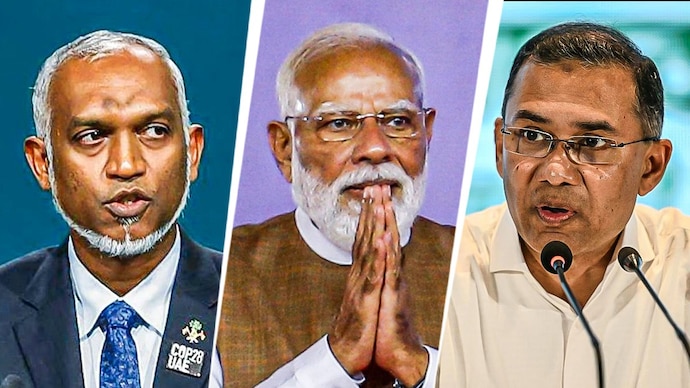
Until a few months ago, India faced a hostile neighbourhood. A couple of countries even saw a fervent "India Out" campaign. However, the tide seems to have turned amid an energy crisis due to the Iran war. It has fuelled a quiet shift in South Asia. The same neighbouring countries — Bangladesh, the Maldives, Sri Lanka — are now turning to India for urgent fuel supplies as energy shortages are starting to cripple normal life. India, however, seems to have set aside the bitterness and extended a helping hand, reinforcing its 'Neighbourhood First' approach.
Before we go further, the hard truth remains that 90% of the crude oil that passes through the Strait of Hormuz is destined for Asia. It has severely exposed the vulnerabilities of energy-importing countries like Pakistan, Bangladesh, India and Sri Lanka. However, Iran has allowed oil and LPG (cooking gas) tankers of "friend" India to transit Hormuz. It has come as a massive relief. But despite the crisis, India has already sent tonnes of fuel to Bangladesh and Sri Lanka and is considering a request from the Maldives. New Delhi has also continued uninterrupted deliveries to Bhutan and Nepal.
That the three countries had sought help from India was mentioned by MEA spokesperson Randhir Jaiswal during his weekly media briefing last week. He had said the decision would be taken on a case-by-case basis after assessing domestic availability and production levels. India presently is not in panic mode, having nearly two months of fuel availability.
The broader message is hard to miss: India remains indispensable for South Asia's energy security in times of crisis.
BANGLADESH'S INDIA OUTREACH
The crisis due to the Iran war is perhaps most visible in Bangladesh, which imports 95% of its oil and 30% of its gas.
With gas supplies down to a trickle, Bangladesh is now grappling with widespread power outages. Its textile and garment sector, the lifeline of its economy, is also under threat due to diesel shortages.
All universities across the country were shut to reduce electricity consumption. Operations at four of its five state-run fertiliser factories were also halted. Amid the crisis, the Tarique Rahman-led government approached India for help.
India acted swiftly, ramping up high-speed diesel deliveries through the India-Bangladesh Friendship Pipeline, which was operationalised in 2017. Much of it is being sent from the Numaligarh refinery in Assam.
On March 10, India sent 5,000 tonnes of diesel, which is part of a 15-year agreement. An additional 10,000 tonnes will be sent next week. A fresh consignment of 7,000 tonnes of diesel is also being sent.
The development comes at a time when a new government led by Tarique Rahman has signalled a reset in ties with India. The ties reached a nadir under interim chief Muhammad Yunus following the ouster of Sheikh Hasina in August 2024. A surge in anti-India sentiment and campaigns like "Boycott India" coincided with Bangladesh warming up to Pakistan.
However, the BNP government's outreach to India has put ties back on track. All eyes will also be on Bangladesh Foreign Minister Khalilur Rahman's visit to Delhi next week.
MALDIVES REACHES OUT TO INDIA
The shift is even more stark in the Maldives, which, until a year ago, was the fiercest critic of India. Ties hit rock bottom in 2024 after President Mohamed Muizzu, elected after an 'India Out' campaign, ordered the withdrawal of Indian military personnel and pivoted to China. However, geopolitical urgencies always trump rhetoric.
With the current energy crisis exposing the island nation's vulnerabilities, the Maldives has been forced to reach out to India. Behind it lies an underlying crisis -- its tourism-driven economy severely hit by flight disruptions due to the Middle East turmoil.
Moreover, like most of its South Asian peers, the Maldives is heavily dependent on fuel imports. Shortages of petrol, diesel, and LPG have already paralysed daily life.
New Delhi, which Muizzu recently called its "trusted partner" in a sudden change of heart, is currently examining the request from Male for petrol and aviation turbine fuel (ATF).
MEMORIES OF THE 2022 CRISIS IN SRI LANKA
For Sri Lanka, the current situation has revived the memories of its 2022 economic collapse. During that period, the island country leaned heavily on Chinese investments. Due to it, Colombo occasionally overlooked India's security concerns by allowing Chinese spy ships to dock at its ports.
The Iran war has once again shaken Lanka's recovering economy. The country imports 60% of its energy needs, much of it through the Strait of Hormuz. It has also declared no storage capacity beyond one month, forcing it to raise the price of fuel by 33%.
Amid the crisis, President Anura Kumara Dissanayake dialled PM Modi in mid-March. India, fulfilling its role as "first responder", quickly dispatched 20,000 metric tonnes of diesel and 18,000 metric tonnes of petrol on March 28.
"Grateful for India's swift support. 38,000 MT of fuel arrived in Colombo yesterday," Dissanayake tweeted on March 29.
So, what can we conclude? In recent years, the situation in India's neighbourhood has been volatile -- be it the "India Out" campaign in the Maldives, or the rise of anti-India sentiment in Bangladesh.
However, the Iran war and the subsequent energy crisis have underscored a harsh reality. Geography, rather than rhetoric, matters. India, thus, remains central to South Asia's energy security.
Until a few months ago, India faced a hostile neighbourhood. A couple of countries even saw a fervent "India Out" campaign. However, the tide seems to have turned amid an energy crisis due to the Iran war. It has fuelled a quiet shift in South Asia. The same neighbouring countries — Bangladesh, the Maldives, Sri Lanka — are now turning to India for urgent fuel supplies as energy shortages are starting to cripple normal life. India, however, seems to have set aside the bitterness and extended a helping hand, reinforcing its 'Neighbourhood First' approach.
Before we go further, the hard truth remains that 90% of the crude oil that passes through the Strait of Hormuz is destined for Asia. It has severely exposed the vulnerabilities of energy-importing countries like Pakistan, Bangladesh, India and Sri Lanka. However, Iran has allowed oil and LPG (cooking gas) tankers of "friend" India to transit Hormuz. It has come as a massive relief. But despite the crisis, India has already sent tonnes of fuel to Bangladesh and Sri Lanka and is considering a request from the Maldives. New Delhi has also continued uninterrupted deliveries to Bhutan and Nepal.
That the three countries had sought help from India was mentioned by MEA spokesperson Randhir Jaiswal during his weekly media briefing last week. He had said the decision would be taken on a case-by-case basis after assessing domestic availability and production levels. India presently is not in panic mode, having nearly two months of fuel availability.
The broader message is hard to miss: India remains indispensable for South Asia's energy security in times of crisis.
BANGLADESH'S INDIA OUTREACH
The crisis due to the Iran war is perhaps most visible in Bangladesh, which imports 95% of its oil and 30% of its gas.
With gas supplies down to a trickle, Bangladesh is now grappling with widespread power outages. Its textile and garment sector, the lifeline of its economy, is also under threat due to diesel shortages.
All universities across the country were shut to reduce electricity consumption. Operations at four of its five state-run fertiliser factories were also halted. Amid the crisis, the Tarique Rahman-led government approached India for help.
India acted swiftly, ramping up high-speed diesel deliveries through the India-Bangladesh Friendship Pipeline, which was operationalised in 2017. Much of it is being sent from the Numaligarh refinery in Assam.
On March 10, India sent 5,000 tonnes of diesel, which is part of a 15-year agreement. An additional 10,000 tonnes will be sent next week. A fresh consignment of 7,000 tonnes of diesel is also being sent.
The development comes at a time when a new government led by Tarique Rahman has signalled a reset in ties with India. The ties reached a nadir under interim chief Muhammad Yunus following the ouster of Sheikh Hasina in August 2024. A surge in anti-India sentiment and campaigns like "Boycott India" coincided with Bangladesh warming up to Pakistan.
However, the BNP government's outreach to India has put ties back on track. All eyes will also be on Bangladesh Foreign Minister Khalilur Rahman's visit to Delhi next week.
MALDIVES REACHES OUT TO INDIA
The shift is even more stark in the Maldives, which, until a year ago, was the fiercest critic of India. Ties hit rock bottom in 2024 after President Mohamed Muizzu, elected after an 'India Out' campaign, ordered the withdrawal of Indian military personnel and pivoted to China. However, geopolitical urgencies always trump rhetoric.
With the current energy crisis exposing the island nation's vulnerabilities, the Maldives has been forced to reach out to India. Behind it lies an underlying crisis -- its tourism-driven economy severely hit by flight disruptions due to the Middle East turmoil.
Moreover, like most of its South Asian peers, the Maldives is heavily dependent on fuel imports. Shortages of petrol, diesel, and LPG have already paralysed daily life.
New Delhi, which Muizzu recently called its "trusted partner" in a sudden change of heart, is currently examining the request from Male for petrol and aviation turbine fuel (ATF).
MEMORIES OF THE 2022 CRISIS IN SRI LANKA
For Sri Lanka, the current situation has revived the memories of its 2022 economic collapse. During that period, the island country leaned heavily on Chinese investments. Due to it, Colombo occasionally overlooked India's security concerns by allowing Chinese spy ships to dock at its ports.
The Iran war has once again shaken Lanka's recovering economy. The country imports 60% of its energy needs, much of it through the Strait of Hormuz. It has also declared no storage capacity beyond one month, forcing it to raise the price of fuel by 33%.
Amid the crisis, President Anura Kumara Dissanayake dialled PM Modi in mid-March. India, fulfilling its role as "first responder", quickly dispatched 20,000 metric tonnes of diesel and 18,000 metric tonnes of petrol on March 28.
"Grateful for India's swift support. 38,000 MT of fuel arrived in Colombo yesterday," Dissanayake tweeted on March 29.
So, what can we conclude? In recent years, the situation in India's neighbourhood has been volatile -- be it the "India Out" campaign in the Maldives, or the rise of anti-India sentiment in Bangladesh.
However, the Iran war and the subsequent energy crisis have underscored a harsh reality. Geography, rather than rhetoric, matters. India, thus, remains central to South Asia's energy security.

