India to help Nepal with cheap fertiliser even as PM Balen raises Lipulekh dispute
Nepal, under PM Balen Shah, has revived its push over the contested Lipulekh Pass. At the same time, India, which is absorbing soaring global fertiliser costs, is helping Nepal by supplying urea and DAP at below-market prices. New Delhi is providing Kathmandu a crucial economic lifeline at a time when Nepal is facing a fertiliser shortage ahead of the planting season.
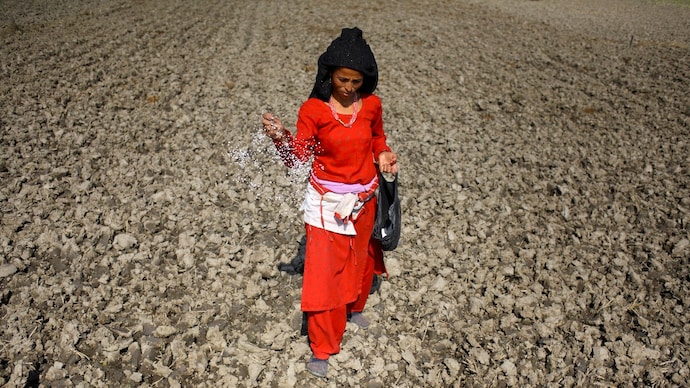
With the US-Iran war having driven up the price of fertilisers, an essential input in modern agriculture, India is reportedly stepping up to provide its Himalayan neighbour, Nepal, with fertilisers at below global prices, even as it is paying double the price to acquire the same.
This comes even as Nepal, under the leadership of Prime Minister Balen Shah, is raising up a diplomatic stink over the Lipulekh Pass, used by the pilgrims of the Kailash Manasarovar yatra. The pass has always been Indian territory, since the days of the British Raj, but Nepal has claimed it for three decades.
According to a report in the Nepal-based paper, The Kathmandu Post, the government on Monday granted in-principle approval to the Agriculture Inputs Company (a state-owned enterprise responsible for supplying the nation's farmers with inputs like fertilisers) to procure 80,000 tonnes of chemical fertiliser from India under a government-to-government (G2G) arrangement.
NEPAL FACES FERTILISER SHORTFALL AHEAD OF PLANTATION SEASON
This deal comes as Nepal faces a shortfall of fertiliser supplies ahead of the country's plantation season. While the government had projected a requirement of 250,000 tonnes of chemical fertilisers, it only had 171,000 tonnes in stock, with further contracts for 94,450 tonnes from private tenders unlikely to materialise, The Kathmandu Post reported.
Speaking to the paper, Ram Krishna Shrestha, joint secretary at the Ministry of Agriculture and Livestock Development, stated that given the current global prices of chemical fertilisers, "It is beyond the government's capacity to fully subsidise fertiliser at current global prices, as it would require nearly Rs 80 billion".
Currently, the price of urea and Di-ammonium Phosphate (DAP) is Rs 160 and Rs 162 per kg, respectively.
In response, the Agriculture Inputs Company, moved to sign a G2G agreement with India's state-owned Rashtriya Chemicals and Fertilisers Limited to acquire 60,000 tonnes of urea and 20,000 tonnes of DAP at below market prices. The G2G deal comes as the current amount of Rs 28.82 billion, allocated by Nepal to import half a million tonnes of fertiliser via private tenders, is no longer enough as the global price of these inputs keeps increasing, The Kathmandu Post reported.
The purchase is being made as part of an MoU signed between Delhi and Kathmandu in 2022, wherein India agreed to guarantee at least 30% of Nepal's annual fertiliser requirement, with volumes rising from 150,000 tonnes in the first year to 210,000 tonnes by the fifth year, reported The Kathmandu Post.
Should the deal go through, India will effectively supply Nepal with cheap fertilisers well below global market prices even as its own import bill is going through the roof.
According to a report by the news agency, Reuters, India last month signed deals to import a record 2.5 million metric tons of urea in a single tender, at nearly double the price paid two months ago, citing government sources. The report noted that prior to the start of the Iran war, India was buying urea at $508 per ton for west coast delivery and $512 per ton for east coast delivery. That figure has since then ballooned to $935 and $959 per ton, respectively.
INDIA TO SUPPLY CHEAP FERTILISER EVEN AS NEPAL RAISES CLAIMS ON LIPULEKH
Even as India gears up to sell Nepal vital fertilisers below prevailing prices, the mood in Kathmandu has taken a far more revanchist flavour as the Balen Shah government has revived claims on the Lipulekh Pass.
The Lipulekh Pass is a Himalayan pass on the border between the state of Uttarakhand in India and the Tibet region of China, near their tri-junction with Nepal. This pass links the Pithoragarh district of India with the Tibet Autonomous Region of China, and forms the last territorial point in India's territory. The Kailash Mansarovar Yatra traverses this pass.
Nepal has had ongoing claims to the southern side of the pass in the area known as Kalapani territory since 1996, which has been under Indian administration from the British colonial period.
It was these claims that were given a shot in the arm after the Balen Shah government's Ministry of Foreign Affairs lodged a protest against India on Sunday, criticising New Delhi for resuming the Kailash Mansarovar Yatra. The Yatra had been suspended in 2020 due to the Covid-19 pandemic. Last week, New Delhi announced that the pilgrimage via Lipuekh pass would resume after an agreement with China.
In its complaint that was sent to both New Delhi and Beijing, Kathmandu stressed that the territories of Limpiadhura, Lipulekh and Kalapani are part of Nepal, "a position on which the government remains clear and firm".
In response, India's Ministry of External Affairs issued a statement on Sunday stating, "India's position in this regard had been consistent and clear. Lipulekh Pass has been a long standing route for the Kailash Manasarovar Yatra since 1954 and the Yatra through this route has been going on for decades. This is not a new development".
The statement also said that, "As regards territorial claims, India has consistently maintained that such claims are neither justified nor based on historical facts and evidence. Such unilateral artificial enlargement of territorial claims is untenable. India remains open to a constructive interaction with Nepal on all issues in the bilateral relationship, including on resolving agreed outstanding boundary issues through dialogue and diplomacy".
The irony is palpable. While India gears up to sell fertiliser to Nepal below global prices even as it pays double for imports, Kathmandu is reviving old claims on rightfully Indian territories, the utility of which is limited to only giving fresh fuel to anti-New Delhi voices in the country.
With the US-Iran war having driven up the price of fertilisers, an essential input in modern agriculture, India is reportedly stepping up to provide its Himalayan neighbour, Nepal, with fertilisers at below global prices, even as it is paying double the price to acquire the same.
This comes even as Nepal, under the leadership of Prime Minister Balen Shah, is raising up a diplomatic stink over the Lipulekh Pass, used by the pilgrims of the Kailash Manasarovar yatra. The pass has always been Indian territory, since the days of the British Raj, but Nepal has claimed it for three decades.
According to a report in the Nepal-based paper, The Kathmandu Post, the government on Monday granted in-principle approval to the Agriculture Inputs Company (a state-owned enterprise responsible for supplying the nation's farmers with inputs like fertilisers) to procure 80,000 tonnes of chemical fertiliser from India under a government-to-government (G2G) arrangement.
NEPAL FACES FERTILISER SHORTFALL AHEAD OF PLANTATION SEASON
This deal comes as Nepal faces a shortfall of fertiliser supplies ahead of the country's plantation season. While the government had projected a requirement of 250,000 tonnes of chemical fertilisers, it only had 171,000 tonnes in stock, with further contracts for 94,450 tonnes from private tenders unlikely to materialise, The Kathmandu Post reported.
Speaking to the paper, Ram Krishna Shrestha, joint secretary at the Ministry of Agriculture and Livestock Development, stated that given the current global prices of chemical fertilisers, "It is beyond the government's capacity to fully subsidise fertiliser at current global prices, as it would require nearly Rs 80 billion".
Currently, the price of urea and Di-ammonium Phosphate (DAP) is Rs 160 and Rs 162 per kg, respectively.
In response, the Agriculture Inputs Company, moved to sign a G2G agreement with India's state-owned Rashtriya Chemicals and Fertilisers Limited to acquire 60,000 tonnes of urea and 20,000 tonnes of DAP at below market prices. The G2G deal comes as the current amount of Rs 28.82 billion, allocated by Nepal to import half a million tonnes of fertiliser via private tenders, is no longer enough as the global price of these inputs keeps increasing, The Kathmandu Post reported.
The purchase is being made as part of an MoU signed between Delhi and Kathmandu in 2022, wherein India agreed to guarantee at least 30% of Nepal's annual fertiliser requirement, with volumes rising from 150,000 tonnes in the first year to 210,000 tonnes by the fifth year, reported The Kathmandu Post.
Should the deal go through, India will effectively supply Nepal with cheap fertilisers well below global market prices even as its own import bill is going through the roof.
According to a report by the news agency, Reuters, India last month signed deals to import a record 2.5 million metric tons of urea in a single tender, at nearly double the price paid two months ago, citing government sources. The report noted that prior to the start of the Iran war, India was buying urea at $508 per ton for west coast delivery and $512 per ton for east coast delivery. That figure has since then ballooned to $935 and $959 per ton, respectively.
INDIA TO SUPPLY CHEAP FERTILISER EVEN AS NEPAL RAISES CLAIMS ON LIPULEKH
Even as India gears up to sell Nepal vital fertilisers below prevailing prices, the mood in Kathmandu has taken a far more revanchist flavour as the Balen Shah government has revived claims on the Lipulekh Pass.
The Lipulekh Pass is a Himalayan pass on the border between the state of Uttarakhand in India and the Tibet region of China, near their tri-junction with Nepal. This pass links the Pithoragarh district of India with the Tibet Autonomous Region of China, and forms the last territorial point in India's territory. The Kailash Mansarovar Yatra traverses this pass.
Nepal has had ongoing claims to the southern side of the pass in the area known as Kalapani territory since 1996, which has been under Indian administration from the British colonial period.
It was these claims that were given a shot in the arm after the Balen Shah government's Ministry of Foreign Affairs lodged a protest against India on Sunday, criticising New Delhi for resuming the Kailash Mansarovar Yatra. The Yatra had been suspended in 2020 due to the Covid-19 pandemic. Last week, New Delhi announced that the pilgrimage via Lipuekh pass would resume after an agreement with China.
In its complaint that was sent to both New Delhi and Beijing, Kathmandu stressed that the territories of Limpiadhura, Lipulekh and Kalapani are part of Nepal, "a position on which the government remains clear and firm".
In response, India's Ministry of External Affairs issued a statement on Sunday stating, "India's position in this regard had been consistent and clear. Lipulekh Pass has been a long standing route for the Kailash Manasarovar Yatra since 1954 and the Yatra through this route has been going on for decades. This is not a new development".
The statement also said that, "As regards territorial claims, India has consistently maintained that such claims are neither justified nor based on historical facts and evidence. Such unilateral artificial enlargement of territorial claims is untenable. India remains open to a constructive interaction with Nepal on all issues in the bilateral relationship, including on resolving agreed outstanding boundary issues through dialogue and diplomacy".
The irony is palpable. While India gears up to sell fertiliser to Nepal below global prices even as it pays double for imports, Kathmandu is reviving old claims on rightfully Indian territories, the utility of which is limited to only giving fresh fuel to anti-New Delhi voices in the country.

