I worked 9 am to 9 pm, 6 days a week: How it changed my work, mind and body
My mornings already begin with a one-year-old, a corporate-working husband, and a house that never really slows down. So, I pushed it further... I worked from 9 am to 9 pm, six days a week, and it changed more than just my schedule.
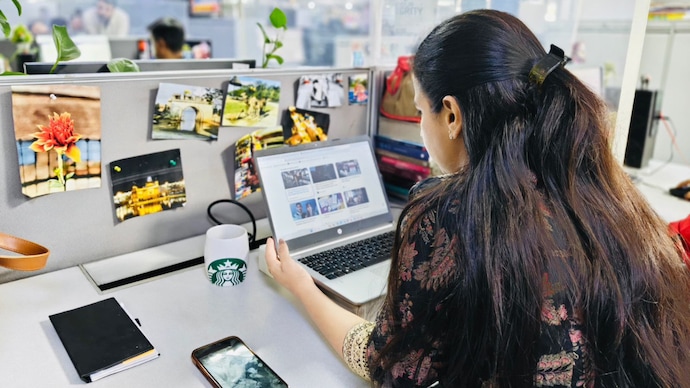
Once popularised in China, the 9-9-6 routine has recently found its way back into conversations closer home, especially after remarks from India’s tech veteran Narayana Murthy.
I decided to take it on as a personal challenge, not out of pressure or expectation, but to test myself, especially since my regular routine is a far more manageable 8 am to 5 pm, five days a week. Could pushing my limits actually make me more productive, or would it simply burn me out? As the days went on, a more uncomfortable question began to take shape.
Could anyone sustain this week after week, and more importantly, should they even try?
For me, this was not about ambition or ideology. It came from a familiar cycle at work, the kind that returns every year and quietly demands more. No one asked me to do it, there was no rule to follow, but after a decade in the same newsroom, you develop an instinct to step up when things get intense. So I turned it into an experiment and committed fully to the 9-9-6 routine for a week, just to see what it would really do.
That meant leaving home before my 18-month-old woke up, travelling 20 kilometres to work, and returning long after his bedtime, relying on my husband and in-laws to hold everything together. They did, without complaint.
The first few days felt surprisingly energising. There was an undeniable adrenaline rush in being everywhere, filing faster, staying ahead, and, for a brief moment, feeling indispensable.
But by day five, the cracks began to show. The exhaustion was no longer just physical. It crept into my mood, my patience, and my ability to switch off. What began as a short, controlled stretch started to feel like I was borrowing energy from parts of my life I could not afford to neglect.
Here is how the days unfolded.
DAY 1: NO LIGHTS, CAMERA...BUT ACTION!
To be honest, there was a personal reason why I took on the 9-9-6 routine. I wanted to test my own productivity and make sure nothing slipped through the cracks at work. In a newsroom that runs on speed and constant updates, it increasingly feels like you have to be "always on" just to stay relevant, and I wanted to see what that really does to me.
I wanted to take on more assignments, stay visible, and push myself harder. Somewhere in my mind was also the fear that if I didn’t step up, someone else would. Or maybe the dreaded AI would silently replace me.
At the time, the decision felt bold and motivating.
To make it by 9, I would leave home at 8:25 every morning, usually in an Uber auto. The commute had already become part of my workday, scrolling, scanning, making sure I didn’t miss anything important.
By the time I reached the office, I would grab a coffee and slip straight into work, still tracking updates as they came in.
At the same time, I found myself constantly multitasking, toggling between work and WhatsApp, which has unofficially become the newsroom’s real control room (you read that right).
Messages never really stopped, leads, updates, my editor's notes, all coming in at once, making it nearly impossible to switch off even for a moment. The pace felt relentless, but also strangely necessary, like the only way to keep up and stay relevant was to never fully step away.
DAY 2: PRODUCTIVE AND HOW
I was often the first to reach my bay. Most chairs were still empty, the usual newsroom noise hadn’t arrived yet, no chatter, no chaos, just silence and the soft glow of screens. In that stillness, the time felt entirely mine, and I found myself moving faster, thinking clearer, and getting more done.
The stillness wasn’t slow, it was powerful.
As the day picked up pace, I didn’t need to catch up, I was already in motion. I was faster, sharper, more responsive. Stories moved quicker, live blogs updated in seconds, and I felt constantly plugged into the pulse of the news cycle. One story flowed into another, and I stayed right at the centre of it all.
The output started pouring in, update after update, story after story. And with it came a quiet thrill. I felt happy, satisfied, almost energised by the pace. I wasn’t just keeping up. I was driving at a rhythm. The results too were showing up. My stories were performing well, I had more time to complete my special stories, and my HOD would call me often to praise the good work!
DAY 3-4: HELLO, ADJUSTMENT
Fatigue didn’t arrive suddenly or dramatically. It crept in quietly, a slow heaviness that followed me through the day and lingered on the ride back home. I noticed I was relying more on caffeine, not out of habit, but out of necessity. My sleep felt shorter, lighter, never quite deep enough to reset.
Mentally, I was still sharp, still responsive, but physically there was a quiet strain building, in the shoulders, in the eyes, in the pause before starting the next task.
It was subtle, but noticeable. The gaps between tasks felt heavier, just a few extra seconds before opening the next document. A longer stare at the screen before typing. Even getting started on Days 3–4 took more effort than before, as momentum now needed to be rebuilt every day.
Still, I pushed through, telling myself this was simply the price of staying ahead, that the pace demanded it, and slowing down meant falling behind. For now, the fatigue felt manageable, something to carry rather than confront.
DAY 5: TRADE-OFFS BEGIN
This was when the emotional cost began to show, not dramatically, but in small, uncomfortable ways. I started missing the moments with my one-year-old that I had always told myself I wouldn’t compromise on; the unplanned laughter, the quiet cuddles, even something as simple as watching him take a few unsteady steps without checking my phone.
At home too, things began to shift, and I had to remind myself that this was a challenge I had chosen, not something I was forced into. My husband, still managing his own corporate workload, started showing signs of impatience as he picked up more than his share without saying it out loud. Conversations with my in-laws became shorter, often squeezed in between calls or deadlines, and plans with friends were either postponed or quietly dropped.
I was showing up fully at work, but slowly disappearing at home. And the strangest part was that even when I got back, the workday didn’t really end, it just followed me into the living room, into dinner, and sometimes, into the few moments that were supposed to belong only to my family.
Some nights, I found myself opening the laptop again at 11:30 pm, finishing pending tasks, replying to messages, stretching the day longer than it was meant to be. The lines between office and home began to blur. Time that once belonged to family slowly turned into extensions of unfinished work.
DAY 6: THE SUDDEN DIP
The initial high began to wear off, and what replaced it was not momentum but irritability. I felt mentally foggy and physically drained. My patience thinned, small things began to get to me, and the long hours no longer felt empowering, they felt heavy. My body was tired, and my mind was not far behind.
This was the hardest phase.
My health started taking the hit I had been ignoring. Meals became irregular, sleep slipped out of routine, and I was running more on anxiety and deadlines than anything else. Eye strain, headaches, and a constant sense of fatigue became part of the day. There were moments when I had to take painkillers just to keep going.
But what hit harder was what followed me home. I was more irritable, snapping at small things, withdrawing from conversations. I wasn’t spending quality time with my child, and even when I was physically present, my mind was still at work, replaying tasks, anticipating calls, worrying about what I might have missed.
My family began noticing the change before I fully acknowledged it myself. They started asking questions – Why are you so stressed? Is everything okay at work? Why aren’t you eating properly? You don’t seem present.
Those questions lingered. They made me pause.
That’s when the realisation surfaced: this wasn’t just a busy week any more. It was beginning to affect my health, my mood, and the people around me.
And the question became unavoidable: is this sustainable?
DAY 7: THE MOMENT OF REFLECTION
By the end of the week, I found myself weighing the experience. In many ways, it worked. I was more productive, I handled more work, I even stayed visible and responsive. In today’s workplace, where replacement often feels just one step away, being active and available matters. But the cost was real, mental peace took a hit and health slipped.
It felt like a 60-40 situation, 60% growth, 40% personal cost. And 40% came from areas that matter the most.
WOULD I DO IT AGAIN?
Maybe, but not in the same way.
The 9-9-6 routine showed me both sides clearly. On one hand, there was productivity, sharper focus, and the satisfaction of being constantly on top of things. On the other, there was fatigue, irritability, missed family moments, and a mind that never truly switched off.
It felt like a trade-off, professional gains versus personal well-being. And while workplaces today demand constant availability, the cost of losing mental peace, health, and family time is too high. Productivity should improve life, not consume it.
Would I step up again during a demanding week? Yes.
Would I live like that continuously? No.
Somewhere between ambition and balance lies sustainability, and that’s the routine I’m choosing next.
Once popularised in China, the 9-9-6 routine has recently found its way back into conversations closer home, especially after remarks from India’s tech veteran Narayana Murthy.
I decided to take it on as a personal challenge, not out of pressure or expectation, but to test myself, especially since my regular routine is a far more manageable 8 am to 5 pm, five days a week. Could pushing my limits actually make me more productive, or would it simply burn me out? As the days went on, a more uncomfortable question began to take shape.
Could anyone sustain this week after week, and more importantly, should they even try?
For me, this was not about ambition or ideology. It came from a familiar cycle at work, the kind that returns every year and quietly demands more. No one asked me to do it, there was no rule to follow, but after a decade in the same newsroom, you develop an instinct to step up when things get intense. So I turned it into an experiment and committed fully to the 9-9-6 routine for a week, just to see what it would really do.
That meant leaving home before my 18-month-old woke up, travelling 20 kilometres to work, and returning long after his bedtime, relying on my husband and in-laws to hold everything together. They did, without complaint.
The first few days felt surprisingly energising. There was an undeniable adrenaline rush in being everywhere, filing faster, staying ahead, and, for a brief moment, feeling indispensable.
But by day five, the cracks began to show. The exhaustion was no longer just physical. It crept into my mood, my patience, and my ability to switch off. What began as a short, controlled stretch started to feel like I was borrowing energy from parts of my life I could not afford to neglect.
Here is how the days unfolded.
DAY 1: NO LIGHTS, CAMERA...BUT ACTION!
To be honest, there was a personal reason why I took on the 9-9-6 routine. I wanted to test my own productivity and make sure nothing slipped through the cracks at work. In a newsroom that runs on speed and constant updates, it increasingly feels like you have to be "always on" just to stay relevant, and I wanted to see what that really does to me.
I wanted to take on more assignments, stay visible, and push myself harder. Somewhere in my mind was also the fear that if I didn’t step up, someone else would. Or maybe the dreaded AI would silently replace me.
At the time, the decision felt bold and motivating.
To make it by 9, I would leave home at 8:25 every morning, usually in an Uber auto. The commute had already become part of my workday, scrolling, scanning, making sure I didn’t miss anything important.
By the time I reached the office, I would grab a coffee and slip straight into work, still tracking updates as they came in.
At the same time, I found myself constantly multitasking, toggling between work and WhatsApp, which has unofficially become the newsroom’s real control room (you read that right).
Messages never really stopped, leads, updates, my editor's notes, all coming in at once, making it nearly impossible to switch off even for a moment. The pace felt relentless, but also strangely necessary, like the only way to keep up and stay relevant was to never fully step away.
DAY 2: PRODUCTIVE AND HOW
I was often the first to reach my bay. Most chairs were still empty, the usual newsroom noise hadn’t arrived yet, no chatter, no chaos, just silence and the soft glow of screens. In that stillness, the time felt entirely mine, and I found myself moving faster, thinking clearer, and getting more done.
The stillness wasn’t slow, it was powerful.
As the day picked up pace, I didn’t need to catch up, I was already in motion. I was faster, sharper, more responsive. Stories moved quicker, live blogs updated in seconds, and I felt constantly plugged into the pulse of the news cycle. One story flowed into another, and I stayed right at the centre of it all.
The output started pouring in, update after update, story after story. And with it came a quiet thrill. I felt happy, satisfied, almost energised by the pace. I wasn’t just keeping up. I was driving at a rhythm. The results too were showing up. My stories were performing well, I had more time to complete my special stories, and my HOD would call me often to praise the good work!
DAY 3-4: HELLO, ADJUSTMENT
Fatigue didn’t arrive suddenly or dramatically. It crept in quietly, a slow heaviness that followed me through the day and lingered on the ride back home. I noticed I was relying more on caffeine, not out of habit, but out of necessity. My sleep felt shorter, lighter, never quite deep enough to reset.
Mentally, I was still sharp, still responsive, but physically there was a quiet strain building, in the shoulders, in the eyes, in the pause before starting the next task.
It was subtle, but noticeable. The gaps between tasks felt heavier, just a few extra seconds before opening the next document. A longer stare at the screen before typing. Even getting started on Days 3–4 took more effort than before, as momentum now needed to be rebuilt every day.
Still, I pushed through, telling myself this was simply the price of staying ahead, that the pace demanded it, and slowing down meant falling behind. For now, the fatigue felt manageable, something to carry rather than confront.
DAY 5: TRADE-OFFS BEGIN
This was when the emotional cost began to show, not dramatically, but in small, uncomfortable ways. I started missing the moments with my one-year-old that I had always told myself I wouldn’t compromise on; the unplanned laughter, the quiet cuddles, even something as simple as watching him take a few unsteady steps without checking my phone.
At home too, things began to shift, and I had to remind myself that this was a challenge I had chosen, not something I was forced into. My husband, still managing his own corporate workload, started showing signs of impatience as he picked up more than his share without saying it out loud. Conversations with my in-laws became shorter, often squeezed in between calls or deadlines, and plans with friends were either postponed or quietly dropped.
I was showing up fully at work, but slowly disappearing at home. And the strangest part was that even when I got back, the workday didn’t really end, it just followed me into the living room, into dinner, and sometimes, into the few moments that were supposed to belong only to my family.
Some nights, I found myself opening the laptop again at 11:30 pm, finishing pending tasks, replying to messages, stretching the day longer than it was meant to be. The lines between office and home began to blur. Time that once belonged to family slowly turned into extensions of unfinished work.
DAY 6: THE SUDDEN DIP
The initial high began to wear off, and what replaced it was not momentum but irritability. I felt mentally foggy and physically drained. My patience thinned, small things began to get to me, and the long hours no longer felt empowering, they felt heavy. My body was tired, and my mind was not far behind.
This was the hardest phase.
My health started taking the hit I had been ignoring. Meals became irregular, sleep slipped out of routine, and I was running more on anxiety and deadlines than anything else. Eye strain, headaches, and a constant sense of fatigue became part of the day. There were moments when I had to take painkillers just to keep going.
But what hit harder was what followed me home. I was more irritable, snapping at small things, withdrawing from conversations. I wasn’t spending quality time with my child, and even when I was physically present, my mind was still at work, replaying tasks, anticipating calls, worrying about what I might have missed.
My family began noticing the change before I fully acknowledged it myself. They started asking questions – Why are you so stressed? Is everything okay at work? Why aren’t you eating properly? You don’t seem present.
Those questions lingered. They made me pause.
That’s when the realisation surfaced: this wasn’t just a busy week any more. It was beginning to affect my health, my mood, and the people around me.
And the question became unavoidable: is this sustainable?
DAY 7: THE MOMENT OF REFLECTION
By the end of the week, I found myself weighing the experience. In many ways, it worked. I was more productive, I handled more work, I even stayed visible and responsive. In today’s workplace, where replacement often feels just one step away, being active and available matters. But the cost was real, mental peace took a hit and health slipped.
It felt like a 60-40 situation, 60% growth, 40% personal cost. And 40% came from areas that matter the most.
WOULD I DO IT AGAIN?
Maybe, but not in the same way.
The 9-9-6 routine showed me both sides clearly. On one hand, there was productivity, sharper focus, and the satisfaction of being constantly on top of things. On the other, there was fatigue, irritability, missed family moments, and a mind that never truly switched off.
It felt like a trade-off, professional gains versus personal well-being. And while workplaces today demand constant availability, the cost of losing mental peace, health, and family time is too high. Productivity should improve life, not consume it.
Would I step up again during a demanding week? Yes.
Would I live like that continuously? No.
Somewhere between ambition and balance lies sustainability, and that’s the routine I’m choosing next.

