Back to the future | Ronny Sen's 'The Sun Rises in the East'
A speculative narrative ties together Ronny Sen's photographs on view at Tarq, Mumbai
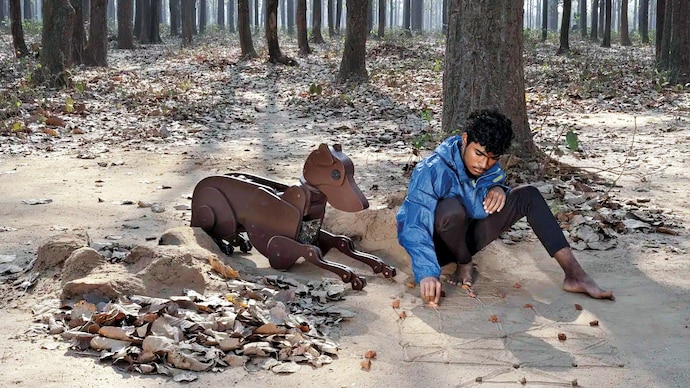
The Sun Rises in the East, a solo exhibition by Ronny Sen at TARQ, presents 10 works that blur fiction, research and photographic practice. On view until April 18, the exhibition is set in a speculative Bengal of 2045 shaped by climate collapse and rogue artificial intelligence, unfolding as both narrative and visual inquiry.
The Sun Rises in the East, a solo exhibition by Ronny Sen at TARQ, presents 10 works that blur fiction, research and photographic practice. On view until April 18, the exhibition is set in a speculative Bengal of 2045 shaped by climate collapse and rogue artificial intelligence, unfolding as both narrative and visual inquiry.
For Sen, this convergence is not imagined but already present. “I arrived at this intersection by treating climate collapse and AI as conditions that already coexist,” he says. Situating the work in eastern India allows him to foreground layered histories of technological ambition and human crisis.
At the centre of the exhibition is a “wooden dog”, an early analogue learning machine conceived in the 1940s. At once archival and fictional, the object resists fixed meaning. “The dog allows the machine to sit between categories: animal, tool, relic, companion,” Sen explains. Encountered in the ruins of former military airfields, the machine now exists alongside a teenage boy, forming a relationship defined by ambiguity.
Working through constructed images and speculative text, Sen positions photography as both evidence and proposition. “The work uses fiction as a way of working through reality,” he says.
The exhibition reflects on the afterlives of technology and the limits of machine intelligence. “Storage is not the same as memory,” Sen observes. What emerges is a speculative archive, one that reassembles fragmentary histories across time while leaving their meanings unresolved.
—The exhibition is on till Apr. 18

