The Forest for the trees | Arupjyoti Saikia & Mahesh Rangarajan's 'India's Forests'
A new anthology, edited by Arupjyoti Saikia and Mahesh Rangarajan, offers a reappraisal of Indian forests, from prehistory to the present, by leading scholars
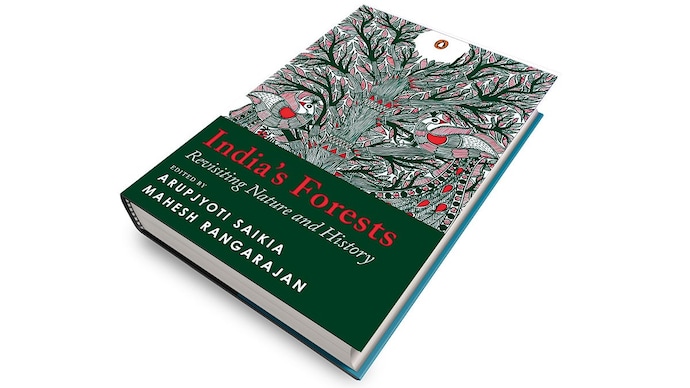
Reading India’s Forests along the arc of The Unquiet Woods, Ramachandra Guha’s seminal history of the Chipko protest, and the late ecologist Madhav Gadgil’s memoir, A Walk up the Hill, evokes a sense of continuity. Edited by Arupjyoti Saikia and Mahesh Rangarajan, this anthology of essays examines the forest as a repository of memory, wealth, tradition, lore and biodiversity, all the while reiterating the question: what are forests for?
Reading India’s Forests along the arc of The Unquiet Woods, Ramachandra Guha’s seminal history of the Chipko protest, and the late ecologist Madhav Gadgil’s memoir, A Walk up the Hill, evokes a sense of continuity. Edited by Arupjyoti Saikia and Mahesh Rangarajan, this anthology of essays examines the forest as a repository of memory, wealth, tradition, lore and biodiversity, all the while reiterating the question: what are forests for?
The utility of forests is a problem that occupied the Indian imagination millennia before the bulldozer brought it down to a day’s work. The foreword equates forests to green glaciers: both are receding. Like glaciers, forests modulate climate—subcontinental forests directly influence the South Asian monsoon. More visibly, they are disappearing in real time, usurped by urbanisation, industrial expansion and land grab, pressures accentuated by liberalisation.
The anthology’s historical reach is long. Kumkum Roy reads the Arthashastra as a document of fiscal imagination: the forest catalogued for its taxable yield—hides, tusks, roots, flowers, herbs—two millennia before the forest department existed. Upinder Singh reinforces this: forests were not on the margins of the state but within its ambit. Aloka Parasher Sen examines the upavanam, a cultivated medicinal garden that complicates the idea of what is ‘wild’. Shibani Roy challenges the fantasy of the pristine forest in the Indo-Gangetic plain. The colonial rupture—the Forest Department in 1864, the Forest Act of 1878—converted forests from a commons to a managed resource, a transition Guha recorded lucidly.
Hunting by rulers recurs as a theme, from caracals and the now-extinct cheetah to the live trapping of elephants. Sovereignty has always been performed in the forest. Maya Ratnam’s essay on the Baiga community examines people whose lives are inseparable from it, while the semi-nomadic Van Gujjars offer a parallel study in pastoralism as an ecological force. Mukul Sharma examines the politics of sacred groves and the Sarna—the indigenous faith of Jharkhand’s Adivasi communities—where the sacred and the political coexist uneasily. Sacred groves exist across India, from the devrai of Maharashtra to the kavu of Kerala, yet the essay overlooks them.
The arguments are scholarly and on occasion pedantic, but the book’s silences are telling. The Andaman biomes, the forests of Great Nicobar, the community forests of Arunachal Pradesh—whole forest worlds are unaccounted for. Their exclusion is a glaring limitation, particularly as the Forest (Conservation) Amendment Act of 2023 redraws the boundaries of what legally counts as forest in India. Perhaps that answers the question of what forests are for—albeit disturbingly.

