Soul seer | Raghu Rai (1942-2026)
Raghu Rai leaves behind a visual memory of India—its grief and its grace, its sacred and its scars. At once graphic and lyrical, he placed ordinary folk at the heart of the nation's story
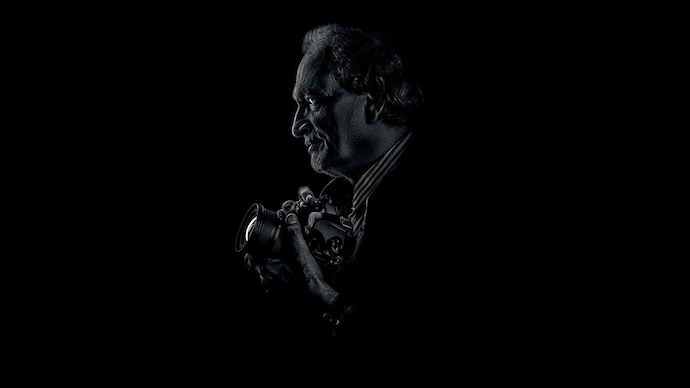
In the passing of Raghu Rai, 83, on April 26, India lost not merely an extraordinary lensman, but a worshipper of the spirit of India—one through whose gaze the world glimpsed this land’s luminous, emotional core. His lens drew in not just reflected light, but the ancient light of our culture, drenching the subject with an Indianness that was at once deeply intimate yet entirely universal.
In the passing of Raghu Rai, 83, on April 26, India lost not merely an extraordinary lensman, but a worshipper of the spirit of India—one through whose gaze the world glimpsed this land’s luminous, emotional core. His lens drew in not just reflected light, but the ancient light of our culture, drenching the subject with an Indianness that was at once deeply intimate yet entirely universal.
Just as a temple draws sanctity not from stone but through what it stirs inside you, Raghu Rai’s India is one where, amid all its paradoxes, its chaos and its milling multitudes, there lies a glow of quiet grace—an inherent ease of being that is its silent celebration, its sandalwood paste. With Rai gone, India has lost its most faithful visual chronicler, one who consecrated six decades of this country’s visual history through his lens.
To reduce Rai to the grammar of accolades is to diminish him. Yes, he was the first Indian admitted to Magnum Photos, nominated by the legend Henri Cartier-Bresson himself. Yes, he carried the Padma Shri, France’s Officier des Arts et des Lettres, and was feted by publications like Time, Life, National Geographic et al. But these are decorations placed upon a life, not the life itself. The life was something more austere, more radical: a daily act of seeking, a rigour that led him to go out into the field and, within its tumult and torpor, find the image that would make the fleeting permanent.
Those who worked alongside him at india today, where he served as its celebrated photo editor through the 1980s, will remember the ferocity with which he fought for his images. He resisted the hegemony of words, calling them “a wall of bricks” that needed “khirkiyan”, visual windows that let it breathe. “Without these,” he would say, “the reader is left in a sealed room, breathing recycled air.” He fought for double spreads, the uncropped photo, the image given room enough to breathe and be meaningful. He won more often than editors would care to admit, because you could not argue once you had seen how his images could elevate a space.
Photographs by Raghu Rai
And what those photographs could do with darkness was something else entirely. Rai’s black-and-white work operated in a tonal and emotional range that few Indian photographers of his generation—or since—have matched. His prints were marked with deep, architectural blacks: shadows that were not an absence but an intensification, a visual counterweight that lent the lit areas an almost unbearable luminosity. This was not merely the gift of a good eye. It was darkroom chemistry pursued with the obsession of an alchemist. In his silver prints, Rai extracted the minutest detail from his negatives, at times pushing the film until the grain itself became expressive. A study of the blacks in a Raghu Rai print reveals a man who understood light the way a musician understands silence. The woman praying against the backdrop of Jama Masjid under a stormy sky. The lone widow in stark contrast to a resplendent Durga idol at a Kolkata ghat. Two figures—contrasting in age and wealth status—crossing each other against a wall in Delhi’s Daryaganj. More than photographs, they are raga-like compositions, shaped by light, then frozen within it.
And he was, in the truest sense, a man in thrall to music. To see him photograph a Hindustani classical concert was to witness two performances simultaneously. While the maestro on stage surrendered to the raga, Rai submitted to its unfolding—his body swaying in ecstasy with an involuntary Wah! You may not see that exclamation, but it is the most prominent note running through his charged, atmospheric portraits of the greats. In his portraits of Bismillah Khan, Bhimsen Joshi and Mallikarjun Mansur, his subjects’ heads are often tilted upward, expressing fully submerged devotion. What is more remarkable is that even the visible surroundings, the mundane everyday elements, are composed like musical notes. These are images where Rai is not just recording devotion, but receiving it too.
What distinguishes Rai is a compositional quality that is simultaneously graphic and lyrical. His images of workers in settings of industrial grit and strain show their bodies in languid grace. Even in his political portraits—most memorably of Indira Gandhi—the visual hooks were of soft body language: the saree pallu pulled to signify power, hands extending in a mudra to suggest her humanity. In the haunting glass eyes of the half-buried child, the palpable human pain of the Bhopal gas tragedy is distilled by the hand caressing its forehead. This deliberate insistence on detail—the small human gesture that carries the weight of the epochal event, is the essential element of the Raghu Rai image.
His essential humanity runs through his frames, almost like a philosophical credo. He instinctively understood that the decisive emphasis does not reside in the momentous or the monumental alone. It is also found in more humble quarters—in the unshed tears of a refugee woman; in the hands of the old man at the ghat; in the child’s eye catching the light at the edge of a slum. Rai placed common folk—the undecorated and the perpetually overlooked—at the nerve centre of the nation’s memory of itself. In his image-world, the ordinary was never a backdrop. It was the protagonist.
HIS CREDO: NEVER EXCLUDE
This philosophical positioning found its most unexpected expression in his use of the panoramic camera for street photography. Where most photographers reach for the panoramic medium to capture landscape and spectacle, Rai turned it inward. The elongated frame in his hands became a way of holding a street corner and its inhabitants in a single, unbroken breath, without hierarchy. It gave him the democracy he was always seeking: no subject pressed to the edge, everyone held within the same unhurried attention. It was a technical paradox that only makes sense once you understand his deepest instinct, which was never to exclude.
That credo permeated everything that Rai did—through the 1971 photographs that gave the Bangladesh refugee crisis its human face, through the Taj Mahal series that returned that exhausted monument to mystery, through the decades of portraiture in which political leaders and street folk were accorded the same unbiased eye. When he photographed mourners at a Banaras ghat, the workers of Chawri Bazaar in Delhi, or followed Mother Teresa through the lanes of Calcutta, he seemed to be threading each visual into a sacred sutra, one that united all souls in a karmic destiny towards the infinite.
The visual metaphor, therefore, that naturally comes to mind for Raghu Rai’s lifework is that of a rosary—each photograph a bead, strung together unbroken, burnished smooth by the millions of eyes that have seen them. And threading it, a vision of India that was never ideological, never touristy, never propagandist—but always, always human.
He was a looming presence in the cultural life of Delhi—large in frame and in laughter, exacting in his standards, generous with the young who came seeking guidance. Three generations of Indian photographers carry his eye, his seeing in their own, whether they know it or not. In the way they hold the light. The way they resist the easy image. The way they wait. What Raghu Rai leaves behind is not merely a body of work. It is a visual memory of India—its grief and grace, its sacred and scars, its maharajas and migrants, its silence and clamour—all held imperishably within the amber of the photographic frame. The rosary has slipped from the hand that strung it. But the beads remain, each one—luminous, warm, asking us to look... really look... at this country we inhabit and so rarely see.
The eye closes. The images endure.

