E-sports | Girl gamers to the fore
Around 40 per cent of india's 500 million gamers are now estimated to be women, with many going pro, winning huge audiences, sponsorships and tournaments
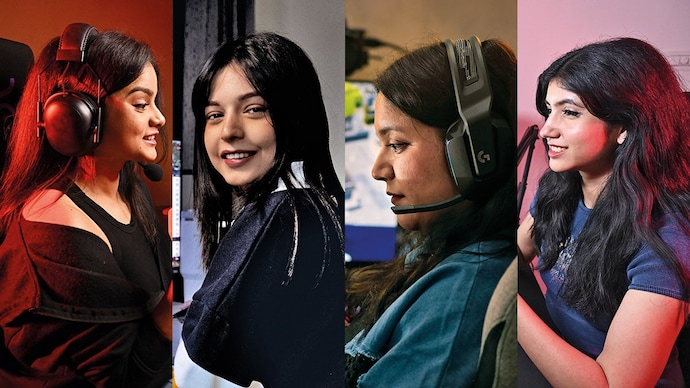
As kids, when Saloni Pawar, 26, used to see her elder brother Sukrut while away hours on the computer every day playing a gory shooter—CounterStrike 1.6—she would wonder, “What’s this stupid guy doing just killing people?” She preferred Barbie, a videogame she was an expert in and that featured far less bloodshed and more sunshine. One day, though, intrigued by her brother’s manic devotion to his game, she decided to give it a try; she was a natural. “Girls don’t even play videogames,” she remembered her brother remarking nervously, aghast at her high score.
As kids, when Saloni Pawar, 26, used to see her elder brother Sukrut while away hours on the computer every day playing a gory shooter—CounterStrike 1.6—she would wonder, “What’s this stupid guy doing just killing people?” She preferred Barbie, a videogame she was an expert in and that featured far less bloodshed and more sunshine. One day, though, intrigued by her brother’s manic devotion to his game, she decided to give it a try; she was a natural. “Girls don’t even play videogames,” she remembered her brother remarking nervously, aghast at her high score.
This may have been true a decade or two back. Today, female players are an integral part of India’s growing gaming ecosystem. According to Niko Partners’ India Gamer Behavior and Market Insights, of the estimated 500 million gamers in the country in late 2025, around 40 per cent are women, up from 22 per cent five years before. A FICCI-EY 2025 report confirms the trend, stating that the female fanbase in e-sports is rising, “fuelled by Bollywood collaborations and more female characters in games”. Aficionados such as Payal Dhare, 25—with a 4.6 million-plus subscriber count on YouTube—livestream their skills on the arenas of Battlegrounds Mobile India (BGMI), Grand Theft Auto V, Fall Guys and Call of Duty. Pros like Tarushika (a.k.a. Sheek), 24, who was part of the team that recently won the BGMI Series 2025, one of India’s biggest tournaments, are popularising the movement nationally.
Most female gamers, like Saloni, trace their interest to brothers. Payal recalls watching her cousins play back in Umranala in Chhindwara district, Madhya Pradesh, and begging for a turn. Mumbai-based Kaashvi Hiranandani (a.k.a. KaashPlays), 28, started as young as four with Atari and Nintendo, thanks to her elder brother who wanted her to play with him. “If he was playing a multiplayer game, I got the Player 2 remote,” she says.
SLAYING THE PATRIARCHY
But old taboos die hard. Even when young girls got a chance in the ring, they would have to combat prejudices in the form of “Oh, wow, you’re into gaming?” or “Hey, you’re better than other girls!”. It’s only as they grew up, recalls Kaashvi, that the “competitive spirit” of wanting to outdo each other superseded any inhibitions around naysayers. This hobby had its fair share of those in the family. Saloni remembers well how in her early days of gaming, her mother would barge into her room and turn off her livestreams with admonitions. Today, her parents encourage her to compete in cash tournaments but, back then, “it used to be a whole drama”, she laughs. Sonali Singh, a Hyderabad-based software developer in her late twenties, says, “My parents still think it is stupid, but because I have a career, they let me do whatever I want to.”
The online gaming community can be cruel, and especially so if you’re a woman. Remarks on attire or appearance, or mock-surprise at finding a girl gaming and not in the kitchen, are common. “They have a beauty standard they want to fit a girl gamer into,” says Tarushika. Sonali was once told that if she turned off her face cam, nobody would watch her stream. Says she, “When a woman loses a game, it’s because of her gender.” If she wins, reactions range from disbelief to admiration. Kaashvi’s claim to fame came after she defeated a top male gamer in Call of Duty. “He was streaming at the time and said, ‘She cannot be real, my opponent is a hacker’. Thankfully, I had recorded my perspective and uploaded it on YouTube.” The video went viral and motivated her to give up a high-paying finance job and take up gaming full-time. Top streamers can earn up to Rs 5-10 lakh a month, depending on how many online followers and brand deals they have.
“We come from a cultural mindset that believes ‘Ladki hone ke baavjood bhi (despite being a girl) she is winning’,” says Nimish Raut, global head of Esports: Partnerships & Special Projects at NODWIN Gaming. It’s this pervasive misogyny that has made popular streamers like Shagufta Iqbal, 30, (a.k.a Xyya) from Thane, prefer to hide their name or not use a mic in multiplayer rounds. Saloni has even seen a man quit a mixed team because he “cannot play with a woman”.
GAMING FOR A LIVING
Most female gamers, on the other hand, want to be judged by their talent instead of their gender. Tarushika doesn’t believe in standalone leagues or tournaments for women, adding that being in a female team can come with limited growth opportunities. “I felt I had more potential,” she says about one such team she was in. Says Shagufta, “Gaming is skill-based and there are no limitations in skill.” Raut feels that instituting gender-based leagues could bring more financial incentives for women gamers a la physical sports like football and cricket—“We can bring in partners who’d otherwise stay away from a very male-dominated sport”—but is reluctant. “If we do that, we are like any other sport,” he says. “The beauty of gaming is that it doesn’t have a gender barrier.”
But as it stands, competitions alone cannot provide female gamers with the financial security they need to go pro. Saloni emphasises the need of having a side gig if you plan on going all in as an e-sports athlete. Shagufta found that the small number of stable teams and tournaments in India meant it’s better to stream her rounds so she can grow an audience, get sponsorships and fatten her wallet. “Content creation gives me more freedom and helps popularise gaming,” she says. “That’s what I really want at the end of the day—to see the community grow.” E-sport organisations like S8UL, Revenant ESports, Godlike and Alpha Zegus have started representing more female gamers and some, like Payal, have even collaborated with players at the ICC T20 World Cup and with global influencers like Mr. Beast and IShow Speed; she even got an audience with Prime Minister Narendra Modi two years ago as part of a roundtable discussion on gaming. One of the most sought-after and highest-earning gaming creators, she was Streamer of the Year at the MOBIES Awards 2024, making her the first female gamer from India to win an international award.
But what comes first is always love of the game. Sonali puts in two to three hours daily. “When I am gaming, I want to relieve the stress I have had coding eight hours,” she says. Saloni, who has come a long way from her first cheque as a gamer when she was 16, jokes, “My parents won’t send me to Goa for a vacation, but will be okay if I go to Thailand for a tournament.” The bonus: today, she’s a much better gamer than her brother.

