China's big tech push, lessons for India | Viewpoint by B.V.R. Subrahmanyam & Debjani Ghosh
Beijing is pivoting from pursuing leadership in individual sectors to focusing on an integrated tech system to boost national productivity
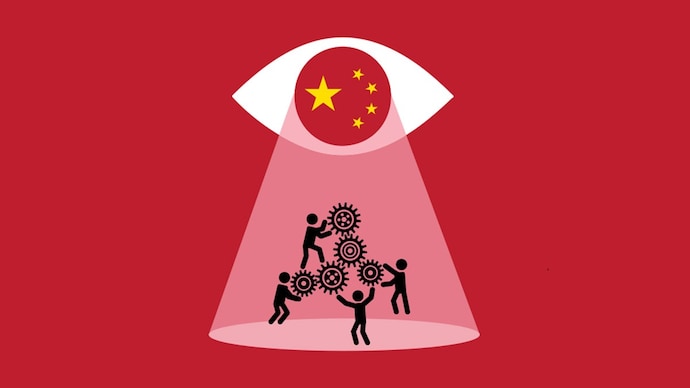


China approved its 15th five-year plan for national development on March 12 at the closing session of the National People’s Congress. It has triggered intense debate about the country’s economic trajectory, particularly with the revelation that it is no longer pursuing leadership in individual sectors; it is attempting to build an integrated technological system across the nation. This follows the 14th national plan’s focus on building a ‘modernised industrial system’ and achieving ‘greater self-reliance and strength in science and technology’, while advancing what Chinese policymakers call ‘new quality productive forces’.
China approved its 15th five-year plan for national development on March 12 at the closing session of the National People’s Congress. It has triggered intense debate about the country’s economic trajectory, particularly with the revelation that it is no longer pursuing leadership in individual sectors; it is attempting to build an integrated technological system across the nation. This follows the 14th national plan’s focus on building a ‘modernised industrial system’ and achieving ‘greater self-reliance and strength in science and technology’, while advancing what Chinese policymakers call ‘new quality productive forces’.
As per reports, the new plan commits to increasing spending on research and development by more than 7 per cent annually between 2026 and 2030. The central government’s science and technology budget this year is expected to rise roughly 10 per cent to about 426 billion yuan (around $62 billion). Official commentary highlights a continued focus on overcoming bottlenecks in areas such as integrated circuits, industrial machine tools, advanced instruments and materials, basic software and biomanufacturing.
From a technological perspective, many priorities stand out. Firstly, AI is planned to be embedded across sectors such as manufacturing, healthcare, logistics, education and public administration to drive productivity gains—the goal is to not just rely on scattered models.
Secondly, infrastructure tied to computing instruments, data markets (online stores where data is bought and sold) and AI is being treated as a foundational asset. The plan targets the digital economy’s core industries to reach roughly 12.5 per cent of the GDP by 2030. That goal is related to expanding such infrastructure across supply chains and public services.
Thirdly, since technological chokepoints are a strategic concern, Chinese policymakers continue to demand breakthroughs here, especially in areas where export controls could be imposed. In practice, this means building resilience across the full technology stack rather than relying on isolated advances in individual sectors.
Fourthly, government reports describe the plan’s focus on humanoid robotics, brain-computer interfaces and embodied AI as ‘future industries’. This push is linked to China’s demographic realities: a rapidly ageing population, labour shortages in certain sectorsand the need for productivity-enhancing automation.
Fifthly, energy policy is closely tied to industrial strategy. The plan targets non-fossil energy reaching around 25 per cent of consumption by 2030, retaining coal as a reliable source of power, and supporting industrial demands alongside advancing renewables.
Finally, the frontier technology portfolio itself is remarkably broad. Quantum technologies, 6G communications, biomanufacturing, nuclear fusion, reusable heavy-lift rockets and the ‘low-altitude economy’ (like drones and urban air mobility) are all highlighted as areas of future growth.
Taken together, these priorities reinforce China’s aim to integrate its technology ecosystem with upstream research, industrial production, infrastructure, capital, standards and the domestic market. Globally, this could imply competition with coordinated Chinese ecosystems, AI playing a central and crucial role. The country could gain enduring advantages, especially in cost-sensitive markets, and affect standards in the use of new technologies in industry and infrastructure.
India has made progress through mission-mode programmes in AI, quantum science and biotechnology, but these efforts still operate largely in silos. The next phase must be about connecting the dots—linking research, digital infrastructure, talent, industry adoption, capital and markets into national ecosystems that diffuse across the real economy. In other words, India’s technology strategy must evolve from sectoral missions to system-level capability, with frontier digital tools powering productivity, governance and innovation in a Viksit Bharat.
—Subrahmanyam is former CEO, NITI Aayog; Ghosh is a distinguished fellow at the think-tank

