Thomas Cup bronze, but no buzz: Chirag, Prannoy seek more respect for badminton
Chirag Shetty and HS Prannoy said India's Thomas Cup bronze returned with little recognition at home. They said the muted response makes it harder for players to stay motivated for team commitments.
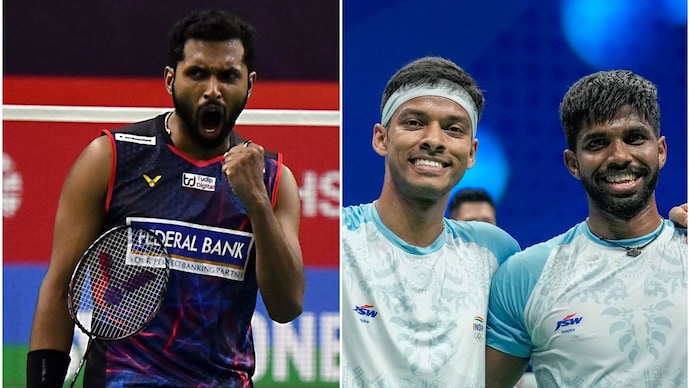
India’s Thomas Cup 2026 campaign ended with a bronze medal in Horsens, a result that, on paper, reads like another strong chapter in the country’s growing badminton story. But when the team returned home, the silence around that achievement said a lot more than the medal itself.
In an exclusive interaction with India Today through the Sports Authority of India (SAI), Chirag Shetty and HS Prannoy spoke honestly about the lack of recognition that followed India’s Thomas Cup bronze. For a team that had spent weeks chasing one of badminton’s biggest prizes, the response back home felt surprisingly flat.
“I didn’t expect people to come out to the airport and receive us. But having said that, the last time we won the Thomas Cup, I think we didn’t really share as much. Yes, we did get a reception. I landed in Mumbai, and there were plenty of people who came to receive us. We also met the Prime Minister and had a reception at his house, and we were felicitated by the association as well,” Chirag Shetty said.
And that feeling wasn’t just internal. It spilt onto social media too, where the now-viral Instagram post from the Satwik-Chirag caused a lot of buzz with a cryptic caption.
“Back home now. As usual, no one knows what happened over the past two weeks, and it seems like no one really cares.”
India’s run itself had its moments. Satwik-Chirag leading from the front, Lakshya Sen and Ayush Shetty stepping up before injuries disrupted the semi-final against France. A 0-3 loss ended the campaign, but not the effort. It was only India’s second Thomas Cup podium finish, and their first since the historic gold in 2022.
Yet, when the team landed back in India, there was no real sense of occasion. No buzz, no noise, no pause to acknowledge what had just been achieved.
“WE ARE NOT A SPORTING NATION YET”
There is a pattern here, and Chirag has seen it before.
Indian sport may be growing, with medals coming across disciplines and athletes achieving more than ever, but the recognition still does not feel equal beyond cricket.
Chirag has spoken about this earlier too. His comments after the T20 World Cup prize money announcements were never about comparing sports, but about the gap in how achievements in badminton and other disciplines are celebrated.
“I feel the way it should have been celebrated (India's Thomas Cup bronze), it didn’t get celebrated as much. The fans who actually follow badminton and understand the sport knew how big the tournament was, but the general public still didn’t really know the magnitude of the result. That sometimes makes me sad,” Chirag added.
He’s spoken before about how achievements in badminton, even at the highest level, don’t quite carry the same weight in the wider sporting ecosystem.
“I think we are not a sporting nation yet. Yes, we win a lot of medals, but we don’t celebrate our athletes the way we should. There is still a lot more that needs to be done. The government and sports bodies are already doing their bit but the ecosystem needs to start celebrating sporting achievements.”
WHY THE RECOGNITION IS A MUST
If Chirag framed the concern, Prannoy went a step further and explained what it does to players.
Badminton, by nature, is an individual sport. The Thomas Cup is one of the few moments when players come together as a team, put aside personal schedules, and commit to a collective goal for the country. That shift requires effort, sacrifice, and belief.
“If a group of players can go out there and win a Thomas Cup, it should be recognised for what it is. Unfortunately, the name itself — Thomas Cup — means many people don’t realise it’s essentially a World Cup," Prannoy said.
And that gap in understanding, he said, comes at a cost.
“When you achieve something like this and there isn’t enough recognition, it becomes very difficult for players to stay convinced and motivated every time. We spend two-and-a-half to three weeks preparing and playing as a team the question comes up — what is the value of doing this?”
“When there isn’t enough support from fans or recognition from the media, it becomes tough to keep doing this repeatedly. For senior players, convincing younger players to come together and do this for the country again becomes very difficult.”
And that is the part that stays.
Medals will come and go, and campaigns will eventually fade from memory. But what athletes often carry back home is the feeling of how those achievements were received.
HOW INDIA WON BRONZE IN THOMAS CUP 2026
This was only the second-ever Thomas Cup medal for the Indian men’s team, and the first since the historic gold in 2022, achieved by largely the same core of players. To come back into the podium places after returning empty-handed as defending champions in 2024 made this run even more significant.
Led by the experienced core of Satwik-Chirag and Prannoy, the team found rhythm through the group stages and knockouts, with contributions across singles and doubles. Lakshya Sen and Ayush Shetty added depth, stepping up when it mattered.
The 3-0 win in the quarterfinal against Chinese Taipei summed it up best. Big-match temperament, clarity in roles, and a team effort that pushed India into the last four of one of badminton’s toughest competitions.
There were setbacks too. Lakshya’s injury ahead of the semi-final against France disrupted the balance, and India couldn’t quite recover, going down 0-3 in the tie.
The semi-final loss to France, without Lakshya due to injury, ended the run. But it didn’t take away from what had already been achieved.
Which is why the players weren’t talking about the medal with disappointment.
They were talking about how little noise it made.
India’s Thomas Cup 2026 campaign ended with a bronze medal in Horsens, a result that, on paper, reads like another strong chapter in the country’s growing badminton story. But when the team returned home, the silence around that achievement said a lot more than the medal itself.
In an exclusive interaction with India Today through the Sports Authority of India (SAI), Chirag Shetty and HS Prannoy spoke honestly about the lack of recognition that followed India’s Thomas Cup bronze. For a team that had spent weeks chasing one of badminton’s biggest prizes, the response back home felt surprisingly flat.
“I didn’t expect people to come out to the airport and receive us. But having said that, the last time we won the Thomas Cup, I think we didn’t really share as much. Yes, we did get a reception. I landed in Mumbai, and there were plenty of people who came to receive us. We also met the Prime Minister and had a reception at his house, and we were felicitated by the association as well,” Chirag Shetty said.
And that feeling wasn’t just internal. It spilt onto social media too, where the now-viral Instagram post from the Satwik-Chirag caused a lot of buzz with a cryptic caption.
“Back home now. As usual, no one knows what happened over the past two weeks, and it seems like no one really cares.”
India’s run itself had its moments. Satwik-Chirag leading from the front, Lakshya Sen and Ayush Shetty stepping up before injuries disrupted the semi-final against France. A 0-3 loss ended the campaign, but not the effort. It was only India’s second Thomas Cup podium finish, and their first since the historic gold in 2022.
Yet, when the team landed back in India, there was no real sense of occasion. No buzz, no noise, no pause to acknowledge what had just been achieved.
“WE ARE NOT A SPORTING NATION YET”
There is a pattern here, and Chirag has seen it before.
Indian sport may be growing, with medals coming across disciplines and athletes achieving more than ever, but the recognition still does not feel equal beyond cricket.
Chirag has spoken about this earlier too. His comments after the T20 World Cup prize money announcements were never about comparing sports, but about the gap in how achievements in badminton and other disciplines are celebrated.
“I feel the way it should have been celebrated (India's Thomas Cup bronze), it didn’t get celebrated as much. The fans who actually follow badminton and understand the sport knew how big the tournament was, but the general public still didn’t really know the magnitude of the result. That sometimes makes me sad,” Chirag added.
He’s spoken before about how achievements in badminton, even at the highest level, don’t quite carry the same weight in the wider sporting ecosystem.
“I think we are not a sporting nation yet. Yes, we win a lot of medals, but we don’t celebrate our athletes the way we should. There is still a lot more that needs to be done. The government and sports bodies are already doing their bit but the ecosystem needs to start celebrating sporting achievements.”
WHY THE RECOGNITION IS A MUST
If Chirag framed the concern, Prannoy went a step further and explained what it does to players.
Badminton, by nature, is an individual sport. The Thomas Cup is one of the few moments when players come together as a team, put aside personal schedules, and commit to a collective goal for the country. That shift requires effort, sacrifice, and belief.
“If a group of players can go out there and win a Thomas Cup, it should be recognised for what it is. Unfortunately, the name itself — Thomas Cup — means many people don’t realise it’s essentially a World Cup," Prannoy said.
And that gap in understanding, he said, comes at a cost.
“When you achieve something like this and there isn’t enough recognition, it becomes very difficult for players to stay convinced and motivated every time. We spend two-and-a-half to three weeks preparing and playing as a team the question comes up — what is the value of doing this?”
“When there isn’t enough support from fans or recognition from the media, it becomes tough to keep doing this repeatedly. For senior players, convincing younger players to come together and do this for the country again becomes very difficult.”
And that is the part that stays.
Medals will come and go, and campaigns will eventually fade from memory. But what athletes often carry back home is the feeling of how those achievements were received.
HOW INDIA WON BRONZE IN THOMAS CUP 2026
This was only the second-ever Thomas Cup medal for the Indian men’s team, and the first since the historic gold in 2022, achieved by largely the same core of players. To come back into the podium places after returning empty-handed as defending champions in 2024 made this run even more significant.
Led by the experienced core of Satwik-Chirag and Prannoy, the team found rhythm through the group stages and knockouts, with contributions across singles and doubles. Lakshya Sen and Ayush Shetty added depth, stepping up when it mattered.
The 3-0 win in the quarterfinal against Chinese Taipei summed it up best. Big-match temperament, clarity in roles, and a team effort that pushed India into the last four of one of badminton’s toughest competitions.
There were setbacks too. Lakshya’s injury ahead of the semi-final against France disrupted the balance, and India couldn’t quite recover, going down 0-3 in the tie.
The semi-final loss to France, without Lakshya due to injury, ended the run. But it didn’t take away from what had already been achieved.
Which is why the players weren’t talking about the medal with disappointment.
They were talking about how little noise it made.

