Firing employees and replacing them with AI is illegal: China court tells companies
A Chinese court has ruled that companies cannot fire employees simply because AI can do their jobs. The decision came after a labour dispute in which a court sided with an employee replaced by AI, stating that automation alone is not valid legal grounds for dismissal.
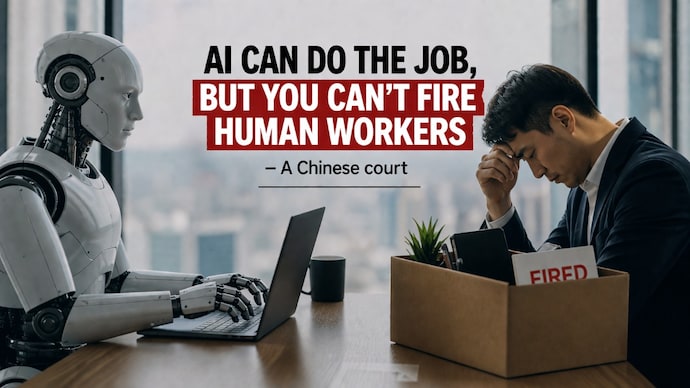
China has now made one thing clear to the companies in its countries: they cannot fire employees simply because AI can do their jobs. In a recent ruling, a Chinese court said replacing workers with artificial intelligence does not automatically justify the termination of the human workforce.
The ruling was issued by the Hangzhou Intermediate People’s Court. It favoured an employee in a labour dispute, after an AI-related technology company replaced part of his work with large language models and subsequently dismissed him. The court published the case on Tuesday as part of a set of "typical examples of protecting the rights of AI enterprises and workers" ahead of International Workers' Day on May 1.
What was the case?
It all started when an employee, surnamed Zhou, reportedly joined an AI-related company in 2022 as a quality assurance supervisor, earning 25,000 yuan a month. His role involved working closely with large language models, reviewing outputs, matching user queries, and filtering illegal or problematic content to ensure accuracy.
Over time, however, the company began using AI to take over parts of his work. And as for his role, the company attempted to reassign Zhou to a lower-level role with a reduced monthly salary of 15,000 yuan.
But, Zhou refused the reassignment, arguing that the new role and pay cut were unreasonable. The company then terminated his contract, citing organisational restructuring and reduced staffing needs, and offered compensation.
Zhou challenged both the dismissal and the compensation, taking the dispute to arbitration.
The arbitration panel ruled in his favour, calling the dismissal unlawful and backing his claim for additional compensation. The company then escalated the matter to court and later appealed to the Hangzhou Intermediate People’s Court.
However, the higher court also upheld the earlier ruling, stating that replacing a worker with AI does not automatically provide legal grounds for termination. Legal experts cited in the case material said the judgment makes it clear that companies cannot use AI adoption as a justification to end employment contracts.
Why does the Court say companies cannot dismiss employees?
A key question in the case was whether AI-driven job replacement counts as a "major change in circumstances" under China's Labour Contract Law — one of the conditions under which an employer may terminate a contract. The court said it does not.
During the appeal, the court found that the company had failed to prove that Zhou's role had become impossible to perform. It also ruled that offering him a significantly lower-paying position did not qualify as a reasonable reassignment. On those grounds, the termination was deemed unlawful.
Legal experts reportedly involved in the case said the ruling draws an important boundary. While companies can benefit from the efficiency gains that AI brings, they must also take responsibility for how those changes impact employees.
Put simply, the Chinese court has made it clear to the companies that adopting AI does not give employers a free pass to cut jobs or sidestep their obligations.
This is not an isolated case of employees taking companies to court in China over AI-driven job losses.
A similar dispute last year, reportedly involving a map data collector whose role was automated, reached the same conclusion. The court made it clear that AI replacement alone cannot justify dismissal. The Beijing Municipal Bureau of Human Resources and Social Security included that case in its set of typical arbitration rulings for 2025, published in December.
China has now made one thing clear to the companies in its countries: they cannot fire employees simply because AI can do their jobs. In a recent ruling, a Chinese court said replacing workers with artificial intelligence does not automatically justify the termination of the human workforce.
The ruling was issued by the Hangzhou Intermediate People’s Court. It favoured an employee in a labour dispute, after an AI-related technology company replaced part of his work with large language models and subsequently dismissed him. The court published the case on Tuesday as part of a set of "typical examples of protecting the rights of AI enterprises and workers" ahead of International Workers' Day on May 1.
What was the case?
It all started when an employee, surnamed Zhou, reportedly joined an AI-related company in 2022 as a quality assurance supervisor, earning 25,000 yuan a month. His role involved working closely with large language models, reviewing outputs, matching user queries, and filtering illegal or problematic content to ensure accuracy.
Over time, however, the company began using AI to take over parts of his work. And as for his role, the company attempted to reassign Zhou to a lower-level role with a reduced monthly salary of 15,000 yuan.
But, Zhou refused the reassignment, arguing that the new role and pay cut were unreasonable. The company then terminated his contract, citing organisational restructuring and reduced staffing needs, and offered compensation.
Zhou challenged both the dismissal and the compensation, taking the dispute to arbitration.
The arbitration panel ruled in his favour, calling the dismissal unlawful and backing his claim for additional compensation. The company then escalated the matter to court and later appealed to the Hangzhou Intermediate People’s Court.
However, the higher court also upheld the earlier ruling, stating that replacing a worker with AI does not automatically provide legal grounds for termination. Legal experts cited in the case material said the judgment makes it clear that companies cannot use AI adoption as a justification to end employment contracts.
Why does the Court say companies cannot dismiss employees?
A key question in the case was whether AI-driven job replacement counts as a "major change in circumstances" under China's Labour Contract Law — one of the conditions under which an employer may terminate a contract. The court said it does not.
During the appeal, the court found that the company had failed to prove that Zhou's role had become impossible to perform. It also ruled that offering him a significantly lower-paying position did not qualify as a reasonable reassignment. On those grounds, the termination was deemed unlawful.
Legal experts reportedly involved in the case said the ruling draws an important boundary. While companies can benefit from the efficiency gains that AI brings, they must also take responsibility for how those changes impact employees.
Put simply, the Chinese court has made it clear to the companies that adopting AI does not give employers a free pass to cut jobs or sidestep their obligations.
This is not an isolated case of employees taking companies to court in China over AI-driven job losses.
A similar dispute last year, reportedly involving a map data collector whose role was automated, reached the same conclusion. The court made it clear that AI replacement alone cannot justify dismissal. The Beijing Municipal Bureau of Human Resources and Social Security included that case in its set of typical arbitration rulings for 2025, published in December.

