India trumps US, becomes largest user base for ChatGPT Images 2.0 in 1 week
ChatGPT rolled out Images 2.0 last week. Now, the company confirmed that the tool has the highest number of users in India. From palm reading to generating anime-style transformations, the tool is being used for all fun and creative purposes.
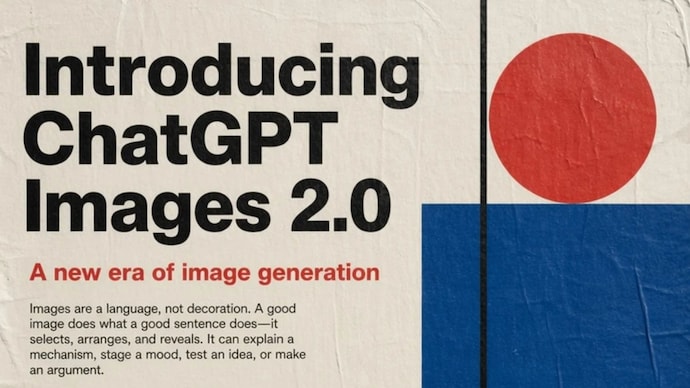
Last week, OpenAI rolled out ChatGPT’s Images 2.0, an upgraded version of its AI image generation tool — and it’s already gaining strong traction in India. The company says India now has the highest number of users for the new feature. Earlier, the country ranked second in overall ChatGPT usage following the United States, but when it comes to image generation, it has now moved ahead to take the top spot.
How ChatGPT’s Images 2.0 is being used
Images generated using ChatGPT’s Images 2.0 are making waves across social media. Users are widely sharing their creations, results, and even the prompts they used to recreate similar visuals. The tool is being used for everything from manga- and anime-style transformations to turning casual headshots into polished LinkedIn, creator, or even celebrity-style profile images, and more.
Among other popular uses, Indians are using the tool for a variety of fun purposes. For instance, some use the tool as a visual explainer for concepts like palm reading. By uploading a photo and prompting ChatGPT, the model can analyse the image, label key details, and present the results in a clean, infographic-style format. While the outputs are largely for entertainment and not scientifically accurate.
OpenAI says that Images 2.0 is “our first image model with thinking capabilities,” with the ability to search the web for real-time information, generate multiple distinct images from a single prompt, and double-check its own outputs when a thinking or pro mode is selected in ChatGPT.
OpenAI also says that Images 2.0 has an improved ability to render non-Latin scripts, including languages like Japanese, Korean, Hindi, and Bengali. However, the model’s knowledge is limited to December 2025, which may affect its accuracy when generating content based on more recent events.
Evolution of ChatGPT’s image models
In its early phase, ChatGPT generated images using DALLE 3. It later rolled out the GPT Image 1 model in March last year, followed by GPT Image 1.5 in December. Now, within just a few months, OpenAI has introduced its latest upgrade, GPT Image 2, with integrated reasoning, thinking and complex layouts. These developments highlight just how rapidly the AI industry is evolving. The momentum isn’t limited to OpenAI but is visible across the global AI landscape, from the US to China. AI models are advancing at a breakneck pace, with frequent upgrades pushing capabilities forward.
Last week, OpenAI rolled out ChatGPT’s Images 2.0, an upgraded version of its AI image generation tool — and it’s already gaining strong traction in India. The company says India now has the highest number of users for the new feature. Earlier, the country ranked second in overall ChatGPT usage following the United States, but when it comes to image generation, it has now moved ahead to take the top spot.
How ChatGPT’s Images 2.0 is being used
Images generated using ChatGPT’s Images 2.0 are making waves across social media. Users are widely sharing their creations, results, and even the prompts they used to recreate similar visuals. The tool is being used for everything from manga- and anime-style transformations to turning casual headshots into polished LinkedIn, creator, or even celebrity-style profile images, and more.
Among other popular uses, Indians are using the tool for a variety of fun purposes. For instance, some use the tool as a visual explainer for concepts like palm reading. By uploading a photo and prompting ChatGPT, the model can analyse the image, label key details, and present the results in a clean, infographic-style format. While the outputs are largely for entertainment and not scientifically accurate.
OpenAI says that Images 2.0 is “our first image model with thinking capabilities,” with the ability to search the web for real-time information, generate multiple distinct images from a single prompt, and double-check its own outputs when a thinking or pro mode is selected in ChatGPT.
OpenAI also says that Images 2.0 has an improved ability to render non-Latin scripts, including languages like Japanese, Korean, Hindi, and Bengali. However, the model’s knowledge is limited to December 2025, which may affect its accuracy when generating content based on more recent events.
Evolution of ChatGPT’s image models
In its early phase, ChatGPT generated images using DALLE 3. It later rolled out the GPT Image 1 model in March last year, followed by GPT Image 1.5 in December. Now, within just a few months, OpenAI has introduced its latest upgrade, GPT Image 2, with integrated reasoning, thinking and complex layouts. These developments highlight just how rapidly the AI industry is evolving. The momentum isn’t limited to OpenAI but is visible across the global AI landscape, from the US to China. AI models are advancing at a breakneck pace, with frequent upgrades pushing capabilities forward.

