Don't interfere: China fires warning shot at US over Hormuz blockade
Defence Minister Admiral Dong Jun's warning coincided with the start of the US naval blockade on Monday.
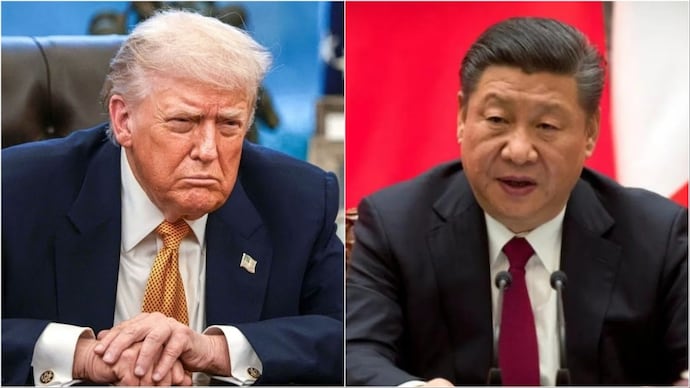
A senior Chinese official has warned the United States against imposing a blockade on the Strait of Hormuz and cautioned it not to interfere in China’s bilateral relations with Iran. Defence Minister Admiral Dong Jun's warning coincided with the start of the US naval blockade at 7:30 pm IST on Monday.
"We have trade and energy agreements with Iran; we expect others not to interfere in our affairs," Jun said, adding that the Strait of Hormuz remains open for China.
The waterway is extremely crucial for Beijing as it supplies nearly 40 per cent of its oil and at least 30 per cent of its LNG needs. Hence, China has been pushing for a ceasefire to secure the critical waterway in the Gulf.
According to some experts, Trump's naval blockade could be aimed at the Chinese yuan used by some vessels to transit the critical Gulf chokepoint – seen as a challenge to the decades-old petrodollar system and a means to sidestep US sanctions.
CHINA BACKS CEASEFIRE
Meanwhile, China's Foreign Ministry has reiterated its support for a ceasefire, arguing that the waterway's "safety, stability and unimpeded passage" serves the common interests of the international community.
“The root cause of disruptions to navigation through the strait lies in the conflict involving Iran, and the way to resolve this issue is to achieve a ceasefire and end hostilities as soon as possible,” SCMP quoted spokesperson Guo Jiakun as saying.
He also added that China is ready to play a positive and constructive role in ending the conflict in the Middle East – a region where China is competing with the US for influence.
TRUMP ANNOUNCES BLOCKADE
After high-stakes talks with Iran collapsed on April 11 without a breakthrough, US President Donald Trump announced that the American Navy would blockade maritime access to Iranian ports through the strategically vital Strait of Hormuz,
The US Central Command (Centcom) said the blockade would target all vessels entering or exiting Iranian ports. In a statement, Centcom added that the move would be “enforced impartially against vessels of all nations” using Iranian ports and coastal areas.
The US military said that the blockade would not impede neutral transit passage through the strait to or from non-Iranian destinations.
However, neutral vessels may still be subject to the right of visit and search to determine the presence of contraband cargo, while vessels entering or departing the blockaded area without authorisation would be subject to interception, diversion, and capture.
TRUMP VS CHINA OVER IRAN
China and the US have not been on the same page over the ongoing conflict. Following the start of hostilities on February 28, Beijing condemned the Israeli-US attack on Iran.
"The blatant killing of a sovereign leader and the incitement of regime change are unacceptable," China's state-run Xinhua news agency quoted Foreign Minister Wang Yi as saying on February 28.
The US has warned of "complications" if Beijing gets involved with Iran in a way that is counter to US interests.
Trump has also threatened Beijing with 50 per cent tariffs if it supplies weapons to Tehran. An intelligence assessment claimed that Beijing could be preparing shipments of air defence systems to Iran.
However, China has dismissed such reports as "groundless smears and malicious associations."
As tensions escalate over the US naval blockade, China has firmly opposed any move that could disrupt its strategic and energy interests in Iran. The standoff underscores deepening divisions between Washington and Beijing, even as calls for a ceasefire continue.
A senior Chinese official has warned the United States against imposing a blockade on the Strait of Hormuz and cautioned it not to interfere in China’s bilateral relations with Iran. Defence Minister Admiral Dong Jun's warning coincided with the start of the US naval blockade at 7:30 pm IST on Monday.
"We have trade and energy agreements with Iran; we expect others not to interfere in our affairs," Jun said, adding that the Strait of Hormuz remains open for China.
The waterway is extremely crucial for Beijing as it supplies nearly 40 per cent of its oil and at least 30 per cent of its LNG needs. Hence, China has been pushing for a ceasefire to secure the critical waterway in the Gulf.
According to some experts, Trump's naval blockade could be aimed at the Chinese yuan used by some vessels to transit the critical Gulf chokepoint – seen as a challenge to the decades-old petrodollar system and a means to sidestep US sanctions.
CHINA BACKS CEASEFIRE
Meanwhile, China's Foreign Ministry has reiterated its support for a ceasefire, arguing that the waterway's "safety, stability and unimpeded passage" serves the common interests of the international community.
“The root cause of disruptions to navigation through the strait lies in the conflict involving Iran, and the way to resolve this issue is to achieve a ceasefire and end hostilities as soon as possible,” SCMP quoted spokesperson Guo Jiakun as saying.
He also added that China is ready to play a positive and constructive role in ending the conflict in the Middle East – a region where China is competing with the US for influence.
TRUMP ANNOUNCES BLOCKADE
After high-stakes talks with Iran collapsed on April 11 without a breakthrough, US President Donald Trump announced that the American Navy would blockade maritime access to Iranian ports through the strategically vital Strait of Hormuz,
The US Central Command (Centcom) said the blockade would target all vessels entering or exiting Iranian ports. In a statement, Centcom added that the move would be “enforced impartially against vessels of all nations” using Iranian ports and coastal areas.
The US military said that the blockade would not impede neutral transit passage through the strait to or from non-Iranian destinations.
However, neutral vessels may still be subject to the right of visit and search to determine the presence of contraband cargo, while vessels entering or departing the blockaded area without authorisation would be subject to interception, diversion, and capture.
TRUMP VS CHINA OVER IRAN
China and the US have not been on the same page over the ongoing conflict. Following the start of hostilities on February 28, Beijing condemned the Israeli-US attack on Iran.
"The blatant killing of a sovereign leader and the incitement of regime change are unacceptable," China's state-run Xinhua news agency quoted Foreign Minister Wang Yi as saying on February 28.
The US has warned of "complications" if Beijing gets involved with Iran in a way that is counter to US interests.
Trump has also threatened Beijing with 50 per cent tariffs if it supplies weapons to Tehran. An intelligence assessment claimed that Beijing could be preparing shipments of air defence systems to Iran.
However, China has dismissed such reports as "groundless smears and malicious associations."
As tensions escalate over the US naval blockade, China has firmly opposed any move that could disrupt its strategic and energy interests in Iran. The standoff underscores deepening divisions between Washington and Beijing, even as calls for a ceasefire continue.

