What Iran said on talks with US as Trump's truce deal deadline nears end
Iran has not closed all direct and indirect communication channels with the US, hours after US President Donald Trump warned that "a whole civilisation will die" if Tehran failed to agree to a ceasefire by his deadline of 8 pm ET (5:30 am IST Wednesday).
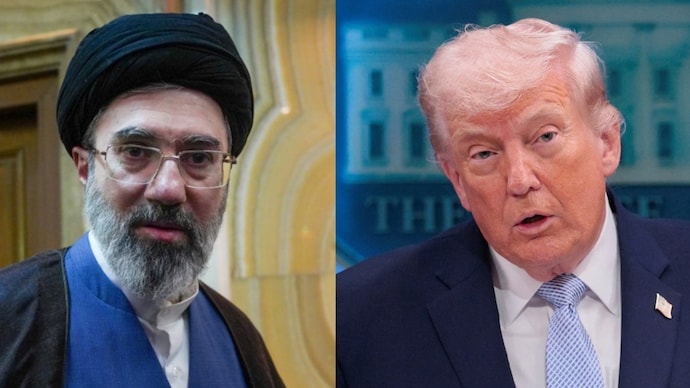
As US President Donald Trump ramps up pressure on Iran to agree to a ceasefire deal, Tehran on Tuesday said that diplomatic and indirect channels of talks with Washington were not closed, Tehran Times reported. Earlier, initial reports suggested that Iran had ruled out talks with the US after Trump warned that "a whole civilisation will die" if Tehran failed to secure a ceasefire deal by Tuesday, 8 pm ET or 5:30 am IST (Wednesday).
Trump has been pushing Iran to reach an agreement, including the reopening of the Strait of Hormuz, whose closure has disrupted global shipping routes and crude supplies following the war which began on February 28, and entered its sixth week with no signs of ending.
Trump has given Iran until Tuesday, 8 pm in Washington – 5:30 am (Wednesday) in India – to end its blockade of Gulf oil, or he will destroy every bridge and power plant in Iran. Tehran responded saying it would retaliate against US allies in the Gulf, whose desert cities would be uninhabitable without power or water.
Tensions spiked dramatically after Trump today warned Iran of devastating consequences, saying that its civilisation could be wiped out by day's end, raising the prospects of a possible nuclear attack on the Islamic Republic.
"A whole civilisation will die tonight, never to be brought back again. I don’t want that to happen, but it probably will. However, now that we have complete and total regime change, where different, smarter and less radicalised minds prevail, maybe something revolutionarily wonderful can happen. Who knows? We will find out tonight, one of the most important moments in the long and complex history of the world," he wrote on Truth Social.
Fatemeh Mohajerani, spokesperson for the Iranian government, said that no threat can shake Iran’s deeply rooted civilisation, which "draws strength from the legacy of Cyrus the Great and Islamic spirituality."
"Safeguarding national security remains the government’s top priority and all matters are being handled with the utmost vigilance and care," Mohajerani added.
Iran responded to Trump with a warning of severe retaliation, threatening to target US allies across the Gulf. Officials said key cities in the region, heavily dependent on power and desalinated water, could become uninhabitable if such strikes were carried out.
As Trump's deadline approached, US-led strikes intensified across Iran, hitting railway and road bridges, an airport and a petrochemical facility. The strikes also targeted Kharg Island, the country’s primary oil export hub, which Trump had publicly suggested could be seized.
HORMUZ REMAINS STICKING POINT
Iran’s proposed 10-point plan, reported by Islamic Republic News Agency, calls for a permanent end to the conflict rather than a temporary ceasefire. The proposal includes lifting sanctions, rebuilding infrastructure damaged in US-Israeli strikes and establishing a new framework to regulate transit through the Strait of Hormuz, a crucial global energy route.
Trump reinforced his ultimatum in an expletive-laden Truth Social post, warning Iran to reopen the strait or face severe consequences. Iranian officials dismissed the remarks as signs of desperation, with some describing the rhetoric as erratic.
Once an open international passage handling roughly a fifth of the world’s oil and liquefied natural gas shipments, the strait has effectively been closed by Iran to most foreign vessels since US and Israeli strikes began on February 28.
Meanwhile, Pakistan, which has been acting as a key intermediary in the Iran-US talks, has continued to relay messages between Washington and Tehran, but the US stance remains unchanged, a source told Reuters.
The source added that if Trump follows through on his threat to target Iran’s power grid, Tehran could retaliate by plunging Gulf states, including Saudi Arabia, into widespread blackouts, a warning already conveyed to Washington through Qatar.
IRAN MILITARY WARNS OF TARGETING US BIG TECH FIRMS
In a strongly-worded statement, Ebrahim Zolfaghari, spokesperson for the Khatam al-Anbiya Central Headquarters, warned that any US attack on Iran’s power infrastructure would trigger a massive response. He said Iran would target energy, communication and technology infrastructure linked to Israel and companies in the region with American ties.
Khatam al-Anbiya serves as Iran’s top operational command, coordinating between the Islamic Revolutionary Guard Corps and the regular armed forces.
Zolfaghari's remarks follow earlier warnings by Iran’s Revolutionary Guards, who had threatened to target US-linked firms operating in the Middle East, including Apple, Google and Meta, signalling a widening conflict that could extend beyond military targets into economic and technological domains.
As US President Donald Trump ramps up pressure on Iran to agree to a ceasefire deal, Tehran on Tuesday said that diplomatic and indirect channels of talks with Washington were not closed, Tehran Times reported. Earlier, initial reports suggested that Iran had ruled out talks with the US after Trump warned that "a whole civilisation will die" if Tehran failed to secure a ceasefire deal by Tuesday, 8 pm ET or 5:30 am IST (Wednesday).
Trump has been pushing Iran to reach an agreement, including the reopening of the Strait of Hormuz, whose closure has disrupted global shipping routes and crude supplies following the war which began on February 28, and entered its sixth week with no signs of ending.
Trump has given Iran until Tuesday, 8 pm in Washington – 5:30 am (Wednesday) in India – to end its blockade of Gulf oil, or he will destroy every bridge and power plant in Iran. Tehran responded saying it would retaliate against US allies in the Gulf, whose desert cities would be uninhabitable without power or water.
Tensions spiked dramatically after Trump today warned Iran of devastating consequences, saying that its civilisation could be wiped out by day's end, raising the prospects of a possible nuclear attack on the Islamic Republic.
"A whole civilisation will die tonight, never to be brought back again. I don’t want that to happen, but it probably will. However, now that we have complete and total regime change, where different, smarter and less radicalised minds prevail, maybe something revolutionarily wonderful can happen. Who knows? We will find out tonight, one of the most important moments in the long and complex history of the world," he wrote on Truth Social.
Fatemeh Mohajerani, spokesperson for the Iranian government, said that no threat can shake Iran’s deeply rooted civilisation, which "draws strength from the legacy of Cyrus the Great and Islamic spirituality."
"Safeguarding national security remains the government’s top priority and all matters are being handled with the utmost vigilance and care," Mohajerani added.
Iran responded to Trump with a warning of severe retaliation, threatening to target US allies across the Gulf. Officials said key cities in the region, heavily dependent on power and desalinated water, could become uninhabitable if such strikes were carried out.
As Trump's deadline approached, US-led strikes intensified across Iran, hitting railway and road bridges, an airport and a petrochemical facility. The strikes also targeted Kharg Island, the country’s primary oil export hub, which Trump had publicly suggested could be seized.
HORMUZ REMAINS STICKING POINT
Iran’s proposed 10-point plan, reported by Islamic Republic News Agency, calls for a permanent end to the conflict rather than a temporary ceasefire. The proposal includes lifting sanctions, rebuilding infrastructure damaged in US-Israeli strikes and establishing a new framework to regulate transit through the Strait of Hormuz, a crucial global energy route.
Trump reinforced his ultimatum in an expletive-laden Truth Social post, warning Iran to reopen the strait or face severe consequences. Iranian officials dismissed the remarks as signs of desperation, with some describing the rhetoric as erratic.
Once an open international passage handling roughly a fifth of the world’s oil and liquefied natural gas shipments, the strait has effectively been closed by Iran to most foreign vessels since US and Israeli strikes began on February 28.
Meanwhile, Pakistan, which has been acting as a key intermediary in the Iran-US talks, has continued to relay messages between Washington and Tehran, but the US stance remains unchanged, a source told Reuters.
The source added that if Trump follows through on his threat to target Iran’s power grid, Tehran could retaliate by plunging Gulf states, including Saudi Arabia, into widespread blackouts, a warning already conveyed to Washington through Qatar.
IRAN MILITARY WARNS OF TARGETING US BIG TECH FIRMS
In a strongly-worded statement, Ebrahim Zolfaghari, spokesperson for the Khatam al-Anbiya Central Headquarters, warned that any US attack on Iran’s power infrastructure would trigger a massive response. He said Iran would target energy, communication and technology infrastructure linked to Israel and companies in the region with American ties.
Khatam al-Anbiya serves as Iran’s top operational command, coordinating between the Islamic Revolutionary Guard Corps and the regular armed forces.
Zolfaghari's remarks follow earlier warnings by Iran’s Revolutionary Guards, who had threatened to target US-linked firms operating in the Middle East, including Apple, Google and Meta, signalling a widening conflict that could extend beyond military targets into economic and technological domains.

