Exclusive: Pak's victory claims crumble as Lashkar leaders admit Op Sindoor losses
What Pakistan projected as victory in Operation Sindoor has now turned into an extraordinary public confession of the damage inflicted by Indian strikes and the deep links between terror groups and the Pakistani state.
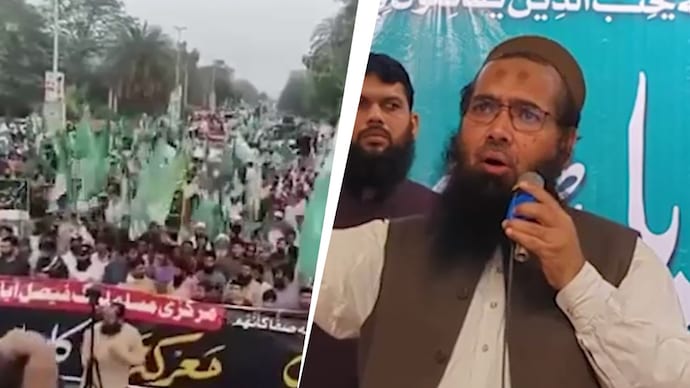


Pakistan’s narrative of a "victory" in Operation Sindoor has collapsed in public after top Lashkar-e-Taiba (LeT) operatives were caught admitting to heavy losses caused by Indian strikes and openly acknowledging the presence of Pakistan’s military and state officials at funerals of terrorists killed in the operation.
Videos of recent gatherings of Lashkar terrorists in Pakistan, exclusively accessed by India Today TV, show senior terror leaders speaking publicly about the extent of damage inflicted during the Indian strikes carried out between May 7 and May 10 under Operation Sindoor. The statements, made during so-called "victory rallies" organised across Pakistan, appear to contradict Islamabad’s official claims that Indian attacks caused little impact.
In one of the videos, senior LeT terrorist Saifullah Khalid is seen addressing a rally in Faisalabad on May 8. While the event was organised to celebrate what Pakistan described as a victory against India, Khalid ended up revealing the devastation caused to the Lashkar headquarters at Muridke.
"Today, I am with those martyrs, brothers of Faisalabad. It was May 8 last year when we were collecting the remains, scattered pieces, and rags of our martyrs from Markaz Taiba Muridke," Khalid told the gathering.
The statement is a direct admission of the scale of destruction caused at Muridke, the Lashkar headquarters long associated with terror operations against India.
Another explosive revelation came from Hafiz Abdul Rauf, a top Lashkar commander and caretaker of the Muridke headquarters, whose speech appeared to confirm the close coordination between Pakistan’s establishment and terror groups.
Speaking at a gathering, Rauf publicly admitted that senior Pakistan Army officers, bureaucrats and political representatives attended funeral prayers of terrorists killed during the strikes.
"I led the funeral prayers. The Corps Commander was also present. I don’t even know how many people were there. The Chief Secretary, IG Punjab, MNS, MP, everyone came. They said this is not a matter of any group, it is a matter of the state. This attack is not on Muridke, it is an attack on Pakistan," Rauf said.
The remarks lay bare the nexus between Pakistan’s security establishment and terror outfits operating from its soil. India has repeatedly accused Pakistan of providing state backing to terror organisations such as Lashkar-e-Taiba, allegations Islamabad has consistently denied.
Rauf’s comments also amounted to the first public confirmation by a Lashkar leader that he personally led funeral prayers for terrorists killed during Operation Sindoor, while senior Pakistani officials and military officers were present.
In another video from the gathering, Rauf admitted that Pakistan failed to stop Indian drones that penetrated deep into the country during the operation.
"The next day, drones arrived on the 8th. Islamabad, Peshawar, Lahore, drones spread across Pakistan like a shadow, and we could not intercept them," he said.
The terror commander further spoke about strikes on key Pakistani military installations.
"On the night of the 9th, we were attacked again. Attacks occurred everywhere, including Noor Khan, Shorkot, Rahim Yar Khan and Bahawalpur," he said.
The mention of Noor Khan, Shorkot and Rahim Yar Khan airbases is notable, as Pakistan had earlier downplayed reports of attacks on strategic military sites during the operation.
Rauf also referred to Pakistan Army leadership invoking religious symbolism during the conflict.
"The Field Marshal recited verses of Badr and prayed, 'O Allah, if they are wiped out, who will worship you?'" he said.
The revelations from the terror leaders stand in contrast to Pakistan’s official narrative promoted through sections of its media, which projected the operation as a strategic success against India.
Pakistan’s narrative of a "victory" in Operation Sindoor has collapsed in public after top Lashkar-e-Taiba (LeT) operatives were caught admitting to heavy losses caused by Indian strikes and openly acknowledging the presence of Pakistan’s military and state officials at funerals of terrorists killed in the operation.
Videos of recent gatherings of Lashkar terrorists in Pakistan, exclusively accessed by India Today TV, show senior terror leaders speaking publicly about the extent of damage inflicted during the Indian strikes carried out between May 7 and May 10 under Operation Sindoor. The statements, made during so-called "victory rallies" organised across Pakistan, appear to contradict Islamabad’s official claims that Indian attacks caused little impact.
In one of the videos, senior LeT terrorist Saifullah Khalid is seen addressing a rally in Faisalabad on May 8. While the event was organised to celebrate what Pakistan described as a victory against India, Khalid ended up revealing the devastation caused to the Lashkar headquarters at Muridke.
"Today, I am with those martyrs, brothers of Faisalabad. It was May 8 last year when we were collecting the remains, scattered pieces, and rags of our martyrs from Markaz Taiba Muridke," Khalid told the gathering.
The statement is a direct admission of the scale of destruction caused at Muridke, the Lashkar headquarters long associated with terror operations against India.
Another explosive revelation came from Hafiz Abdul Rauf, a top Lashkar commander and caretaker of the Muridke headquarters, whose speech appeared to confirm the close coordination between Pakistan’s establishment and terror groups.
Speaking at a gathering, Rauf publicly admitted that senior Pakistan Army officers, bureaucrats and political representatives attended funeral prayers of terrorists killed during the strikes.
"I led the funeral prayers. The Corps Commander was also present. I don’t even know how many people were there. The Chief Secretary, IG Punjab, MNS, MP, everyone came. They said this is not a matter of any group, it is a matter of the state. This attack is not on Muridke, it is an attack on Pakistan," Rauf said.
The remarks lay bare the nexus between Pakistan’s security establishment and terror outfits operating from its soil. India has repeatedly accused Pakistan of providing state backing to terror organisations such as Lashkar-e-Taiba, allegations Islamabad has consistently denied.
Rauf’s comments also amounted to the first public confirmation by a Lashkar leader that he personally led funeral prayers for terrorists killed during Operation Sindoor, while senior Pakistani officials and military officers were present.
In another video from the gathering, Rauf admitted that Pakistan failed to stop Indian drones that penetrated deep into the country during the operation.
"The next day, drones arrived on the 8th. Islamabad, Peshawar, Lahore, drones spread across Pakistan like a shadow, and we could not intercept them," he said.
The terror commander further spoke about strikes on key Pakistani military installations.
"On the night of the 9th, we were attacked again. Attacks occurred everywhere, including Noor Khan, Shorkot, Rahim Yar Khan and Bahawalpur," he said.
The mention of Noor Khan, Shorkot and Rahim Yar Khan airbases is notable, as Pakistan had earlier downplayed reports of attacks on strategic military sites during the operation.
Rauf also referred to Pakistan Army leadership invoking religious symbolism during the conflict.
"The Field Marshal recited verses of Badr and prayed, 'O Allah, if they are wiped out, who will worship you?'" he said.
The revelations from the terror leaders stand in contrast to Pakistan’s official narrative promoted through sections of its media, which projected the operation as a strategic success against India.

