
When ethanol blending increases, these car parts will need to be changed
Higher ethanol blends don't just affect your car's fuel economy—they can also take a toll on key mechanical components. Here are the parts that are likely to feel the effects first.
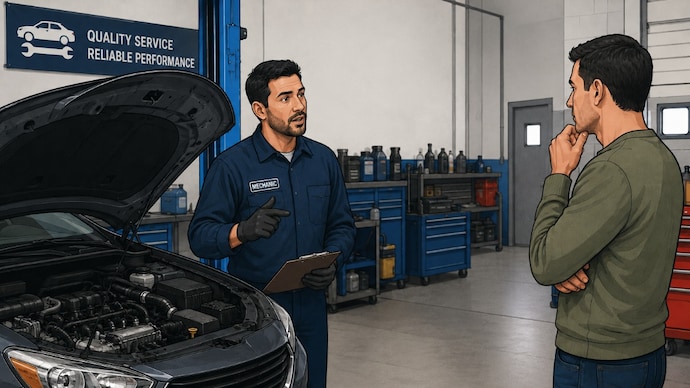

Higher ethanol blends don't just affect your car's fuel economy—they can also take a toll on key mechanical components. Here are the parts that are likely to feel the effects first.
With the introduction of E20 fuel, automakers and fuel suppliers are taking significant steps toward reducing emissions and improving energy security. While E20 offers environmental benefits, ethanol's unique chemical properties can affect various components within a vehicle's fuel system, especially in vehicles that were not originally engineered for higher ethanol blends. As the blending increases, cars and motorcycles that are not made to handle those levels will witness wear and tear on components. Here is the list of components that can get affected.
Fuel pump: Increased stress and wear
The fuel pump is responsible for delivering fuel from the tank to the engine. Ethanol has lower lubricating properties than pure petrol, which can increase friction and wear in fuel pumps not designed for ethanol-rich fuels. In older vehicles, prolonged exposure to E20 may accelerate the deterioration of pump internals, reducing the component's lifespan.
Fuel injectors: faster deterioration
Fuel injectors precisely spray fuel into the combustion chamber. Ethanol acts as a solvent, cleaning accumulated deposits from fuel lines and tanks. While this cleaning action can be beneficial, it may initially loosen debris that travels through the fuel system and reaches the injectors. Over time, moisture absorbed by ethanol can also contribute to corrosion in injector components that are not designed for ethanol exposure.
Fuel lines and hoses: Materials not ready for this kind of exposure
Fuel lines and hoses transport fuel throughout the vehicle. Older rubber compounds and certain plastics can react negatively to ethanol. Continuous exposure to E20 may cause these materials to harden, soften, crack, or become brittle. Such deterioration can eventually lead to fuel seepage or leaks.
Seals, O-rings, and gaskets: Risk of degradation
Small sealing components play a critical role in preventing fuel leaks. Ethanol can interact with non-compatible elastomers, causing them to swell, shrink, or lose flexibility. When seals degrade, the fuel system may become vulnerable to leaks, pressure loss, and reduced efficiency.
Fuel tank: Corrosion concerns
One of ethanol's most significant characteristics is that it is hygroscopic in nature. In older metal fuel tanks, this absorbed water can contribute to corrosion over time. Ethanol may also loosen rust, varnish, and sediment that have accumulated inside the tank over years of use.
Fuel filter: Increased loads, lesser life
The fuel filter serves as the first line of defence against contaminants. Because ethanol cleans deposits from the tank and fuel lines, filters may initially capture more debris than usual. This can lead to faster clogging and may require earlier replacement, particularly in older vehicles with significant fuel-system deposits.
Taken together, vehicles that are not E20-compliant could face a range of reliability and durability challenges over time. Anticipating increased demand, many service centres have already begun stocking replacement components designed to withstand higher ethanol blends. Some manufacturers are also exploring conversion kits that replace vulnerable fuel-system parts with stronger, ethanol-resistant components capable of handling E20 fuel and beyond.
However, these upgrades will come at an additional cost to owners. More importantly, such retrofitted parts are unlikely to be covered under standard or extended warranty programmes. Despite the expense, upgrading critical components may prove worthwhile, as it can help prevent premature wear, fuel-system failures, and unexpected breakdowns. For owners of older, non-compliant vehicles, a proactive component upgrade could be far less costly than dealing with a major roadside failure later on.
Subscribe to Auto Today Magazine