
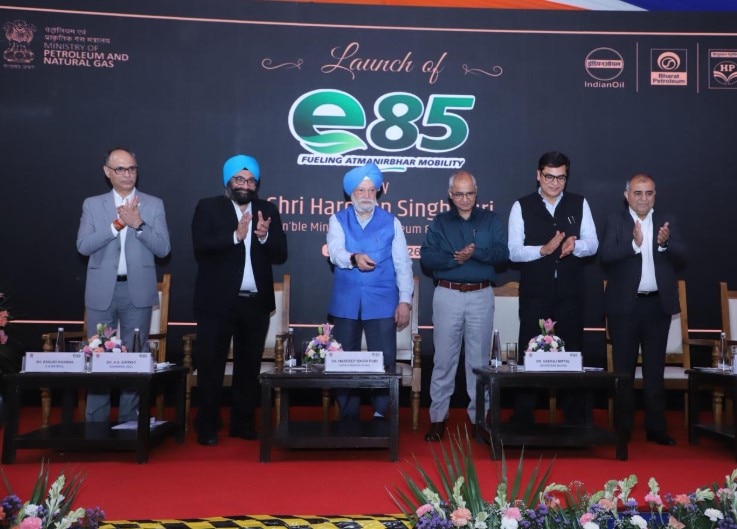
E85 fuel launched in Delhi at Rs 82.12/litre, first pump opens at Pusa Road
India has taken a major step in its ethanol-blending journey with the launch of E85 fuel in Delhi. Priced lower than E20 petrol, the new fuel promises reduced oil dependence and lower running costs.
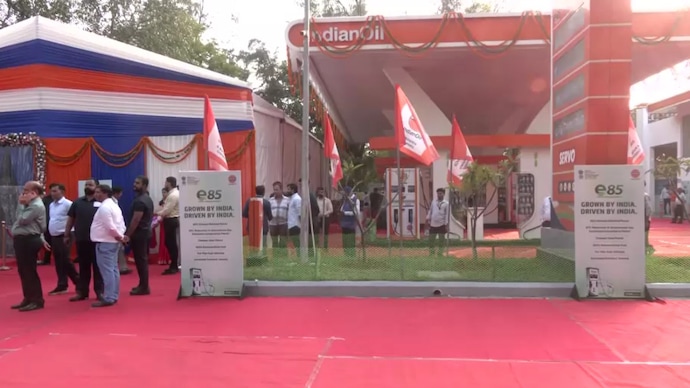
E85 fuel pump of Indian Oil in Delhi

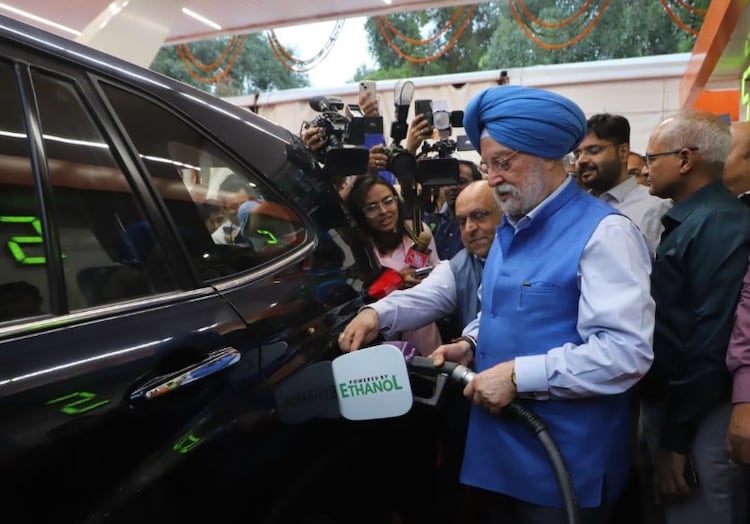
E85 fuel has become one of the most talked-about developments in India's automotive and energy sectors, and it has now officially arrived in the national capital. Union Petroleum and Natural Gas Minister Hardeep Singh Puri today inaugurated Delhi's first E85 fuel dispensing station at Indian Oil's Pusa Road outlet, marking the beginning of the commercial rollout of the high-ethanol fuel.
E85 has been priced at Rs 82.12 per litre in Delhi, making it exactly Rs 20 cheaper than regular E20 petrol currently sold in the city. To avoid confusion at fuel stations, E85 dispensers will feature dedicated branding and distinct labelling.
The introduction of E85 represents a major milestone in the government's strategy to increase ethanol usage, reduce dependence on imported crude oil and strengthen India's energy security.
Expansion plans already underway
The Pusa Road outlet is the first E85 dispensing station in Delhi, but it is only the beginning. The government plans to establish around 50 to 100 E85 fuel stations across the Delhi-NCR and Mumbai-Pune-Nagpur corridors in the initial phase.
The network is expected to expand to nearly 500 dispensing stations by the end of this year. Looking further ahead, the Centre aims to have approximately 5,000 E85 outlets operational across major Indian cities by the end of 2027.
The rollout follows the government's recent notification of fuel standards for higher ethanol blends including E22, E25, E27 and E30, paving the way for wider adoption of alternative fuels in the country.
Why E85 is attracting attention
Unlike the currently available E20 petrol, which contains 20 per cent ethanol and 80 per cent petrol, E85 contains up to 85 per cent ethanol and only 15 per cent petrol.
The significantly higher ethanol content helps reduce crude oil consumption and can lower running costs because ethanol is produced domestically from agricultural feedstocks. The lower retail price of E85 is expected to be one of its biggest attractions for consumers, provided they own compatible vehicles.
Which vehicles can run on E85?

E85 cannot be used in conventional petrol vehicles unless they are specifically designed or calibrated to handle high-ethanol blends.
At present, only a handful of flex-fuel vehicles are either available or nearing launch in India:
- Maruti Suzuki WagonR flex fuel (yet to be launched)
- Hero Splendor+ flex fuel
- Hero HF Deluxe flex fuel
- Suzuki Gixxer SF FFV
Maruti Suzuki's WagonR flex fuel is particularly significant as it is India's first passenger car developed to run on ethanol blends up to E100, making it fully compatible with E85 fuel.
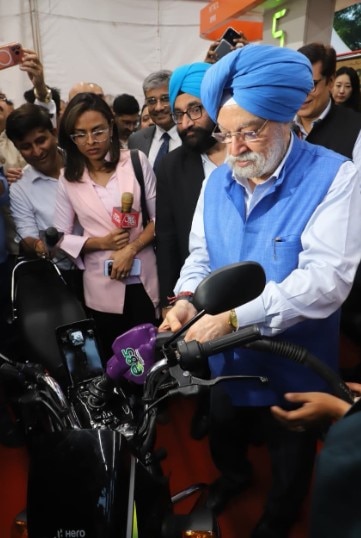
Meanwhile, Hero MotoCorp recently launched the flex-fuel versions of the Splendor+ and HF Deluxe, becoming the first manufacturer to introduce flex-fuel motorcycles in India's mass-market 100cc segment. The motorcycles can operate on ethanol-petrol blends ranging from E20 to E85 and will go on sale in Delhi and selected regions of Maharashtra from July 2026.
India achieved nationwide availability of E20 petrol earlier than originally targeted and is now preparing for the next phase of its ethanol blending programme. The introduction of E85 fuel, alongside the notification of higher ethanol blend standards, signals the government's intent to push ethanol adoption beyond current levels.
With more flex-fuel vehicles expected to enter the market over the next few years, E85 could emerge as an important alternative fuel option for consumers looking for lower running costs while supporting India's efforts to reduce oil imports.
Subscribe to Auto Today Magazine
- Ends