
Consciousness conundrum: Can spiritual wisdom help solve it?
Michael Pollan surveys the exciting field that has become more relevant in the age of AI.

Richard Dawkins, one of the foremost biologists, is convinced that artificial intelligence is conscious. He worked with AI agent Claude (“Claudia” for him) for three days to persuade himself that it (“she”) is not conscious. “I failed,” he reported last month, shocking many. AI, after all, is only imitating some of the functions of the human mind – not all functions and not anything beyond imitation. This part, of course, it does very well, but it has no clue how it feels to be human – in other words, what it means to be conscious. Dawkins can, for example, taste two kinds of mango and feel two kinds of bliss. AI, on the other hand, does not even have taste buds to distinguish Alphonso from Kesar, though it can write expertly about the difference between the two.
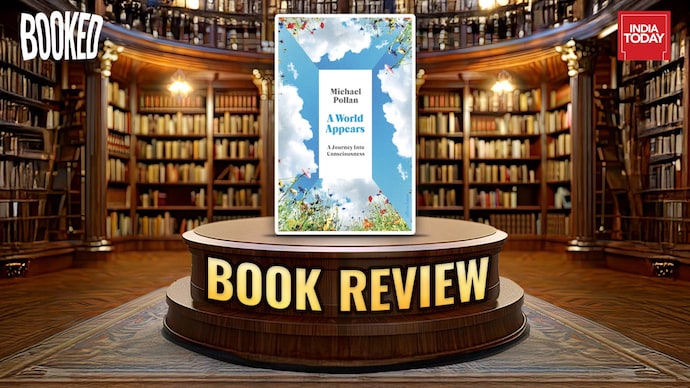
Dawkins could have profited from reading A World Appears: A Journey into Consciousness (Penguin), Michael Pollan’s latest work. The American journalist famed for his writings on food (Omnivore’s Dilemma) turned to the world of psychedelics with How to Change Your Mind (2019) and changed the debate around the use of consciousness-altering substances. He has now expanded the inquiry and written an overview of consciousness studies.
On AI, he touches specifically upon the debate over whether Large Language Models (LLMs) are just “stochastic parrots” or if they are developing a “spark”. He distinguishes between intelligence (the capacity to solve problems) and sentience (the capacity to feel). Pollan argues that AI is interesting less for what it does and more for what it cannot – it is the latter which shows us the essence of being human. We thought logic, language and problem-solving were the hallmarks of our species, but these functions can be carried out even by machines. But feelings, sensations, awareness, consciousness – machines can’t have them and those qualities define us as human beings.
What is consciousness? How can something like that arise in the brain that is mere matter? Cognitive scientist David Chalmers famously called it the hard problem of science. Others have called it the final frontier of science. Some believe it will always remain beyond the limits of human understanding. Consciousness studies began in the late twentieth century, soon after the ‘cognitive turn’. The advent of AI has added a sense of urgency to the quest.
The trouble, however, is, we do not know how to even frame the question. Science has achieved astounding success in the past few centuries, but it has so far worked only in the domain of ‘the third person’ – gravity, evolution and so on, the things happening out there; whereas consciousness is all about the first person – feelings, perceptions and other things happening inside our brains. Pollan points out a singular, frustrating fact: we know more about the distant edges of the universe than we do about the three pounds of “meat” inside our skulls.
The book opens with a journalistic retelling of the consciousness studies in the 1990s, the “Decade of the Brain,” and where the initially promising starts have reached. He explains, for example, how a section of scientists thought we would find a ‘consciousness switch’ in the brain by now. (They haven't.)
Then, the book opens up to a range of conceptions of consciousness. The ‘User Interface’ proposes that our consciousness is not a window into reality, but a guide to survival hacks. Our visual cognition does not reflect the reality out there, but such a representation of it that would help us avoid an attacking tiger. The ‘reality’ we see is like the icons on the computer desktop: ‘files’ do not look like that, they are actually made up of ones and zeros, but the ‘files’ icon helps us do the computer work.
Given its penchant for objectivity, science may not be an ideal candidate to break the conundrum of consciousness. Unlike the state-of-research reviews such as Patrick House’s Nineteen Ways of Looking at Consciousness (2022), Pollan also includes non-scientific approaches to the subject, especially literary ones such as the ‘stream of consciousness’ school James Joyce and Virginia Woolf who sought to mimic the ways of thought.
Building on his work in This Is Your Mind on Plants, he looks at how plants can learn, remember, and make decisions without a central brain. If a plant can be “aware” without neurons, then consciousness might be a property of life itself, not just animals. If so, ancient western philosophers were right in proposing panpsychism, the theory that consciousness itself is the fundamental building block of the universe. This turns the question of the mind arising from the matter upside down: it is the matter that arises from the mind.
This is exactly what Kashmir Shaivism holds, though on the spiritual side, the author prefers the Buddhist framework of Zen variety. Both are, in any case, non-dual systems with much fundamental similarity. Pollan arrives in the spiritual domain by extending the territory of his previous book, How to Change Your Mind. If the brain has an ego centre, which gives rise to the sense of self or ‘I’, then suppressing it with meditation or psychedelics makes the “world appear” differently.
In the final section of the book, he writes about his time in a Zen retreat in New Mexico that specialises in “deconstructing the self”. Spending days in deep meditation, he describes, the self is stripped away and what remains is only pure awareness. This means consciousness should not be equated with the self. One can lose the self, the identity and everything else that goes with it, and yet awareness remains.
Indian seers discovered this long ago, and several Indian schools of philosophy have refined their insights. Pollan’s work can build bridges and channelise this wisdom into contemporary consciousness research.