
From Messi to mounting lawsuits: Inside the collapse of Byju's empire
A Singapore court sentenced Byju Raveendran to six months in jail for contempt over asset-related orders. The ruling sharpens focus on Byju's steep fall from a $22 billion edtech darling to a company facing debt, lawsuits and insolvency proceedings.
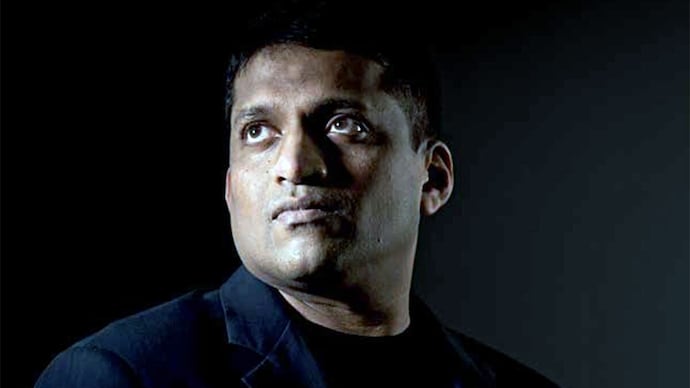

There was a time when Lionel Messi became the global ambassador of Byju's, a move that showed just how big India’s most celebrated edtech startup had become.
The company’s logo appeared on the Indian cricket team’s jersey. Global investors poured billions into the startup. Founder Byju Raveendran became one of the biggest faces of India’s startup boom.
Today, the same founder is facing a six-month jail sentence in Singapore.
The dramatic fall of Byju’s, once valued at $22 billion, is now being seen as one of the biggest collapses in India’s startup history.
What began as a fast-growing education technology success story slowly spiralled into delayed audits, mounting debt, angry investors, insolvency proceedings, cross-border lawsuits and accusations of fund diversion.
The latest setback came after a Singapore court sentenced Raveendran to six months in prison for contempt over disobeying court orders linked to his assets.
But the story of Byju’s collapse had started much earlier.
HOW BYJU’S BECAME INDIA’S BIGGEST EDTECH STAR
Founded in 2011 as Think & Learn Pvt Ltd, Byju’s rapidly grew by tapping into India’s massive demand for education and competitive exam preparation.
The timing worked perfectly.
As smartphones spread across India and online learning became mainstream, the company positioned itself as the future of education.
Then came the Covid-19 pandemic.
Schools shut down, students moved online and demand for digital education exploded. Investors rushed in with funding and Byju’s expanded aggressively across India and international markets.
The company acquired several firms including Aakash Educational Services, Great Learning and Epic in deals reportedly worth nearly $3 billion.
Its growth story looked unstoppable. The company launched massive advertising campaigns, signed celebrity endorsements and expanded globally at breakneck speed.
The appointment of Messi as a global ambassador became one of the clearest symbols of how ambitious the company had become.
LOAN THAT CHANGED EVERYTHING
The turning point came in November 2021 when Byju’s raised a massive $1.2 billion term loan from overseas lenders.
At the time, the deal was celebrated as proof that Indian startups had entered the global big league.
But that same loan later became the centre of the company’s crisis.
Lenders began questioning the company’s governance standards and transparency after delays in filing audited financial statements.
The situation worsened when the company’s FY21 financial results eventually revealed losses of around Rs 4,588 crore.
Investor confidence started weakening rapidly.
Then came one of the biggest warning signs.
Audit firm Deloitte resigned after citing delays in financial statements and communication issues. Later, BDO Global’s India affiliate also stepped down.
The exits triggered deeper concerns among investors and lenders about the company’s financial management.
ALLEGATIONS OF HIDDEN MONEY AND GLOBAL COURT BATTLES
By late 2022 and early 2023, relations between Byju’s and its lenders had collapsed.
According to the report, lenders accused the company of breaching loan conditions and later alleged that nearly $533 million linked to the loan had been moved without proper disclosure.
The legal battle soon spread across multiple countries.
US lenders launched cases in Delaware and New York courts while Singapore emerged as another major legal battleground.
Court filings reportedly alleged that more than $500 million had moved through multiple entities before ending up with a Singapore-based company connected to Byju’s operations.
The accusations intensified concerns around the company’s financial structure and governance practices.
The latest Singapore court ruling is linked to those broader disputes.
According to reports, a subsidiary of the Qatar Investment Authority pursued legal action tied to investments and asset transfers connected to entities linked with Raveendran.
The Singapore court later found that he had failed to comply with multiple orders linked to asset disclosures dating back to April 2024.
CRICKET DEAL TURNED INTO A CRISIS
The company’s troubles soon exploded in India too.
In July 2024, the Bengaluru bench of the National Company Law Tribunal admitted insolvency proceedings against Think & Learn Pvt Ltd.
Ironically, the trigger was unpaid dues of around Rs 158 crore owed to the Board of Control for Cricket in India.
The same cricket sponsorship deal that once symbolised Byju’s success had now become part of its insolvency crisis.
The company attempted to settle the dispute, but lenders opposed the move and the matter escalated into a wider fight over control of the company and its assets.
THE BATTLE FOR AAKASH
One of the biggest fights now centres around Aakash Educational Services, considered Byju’s most valuable asset.
Byju’s had acquired Aakash in 2021 for nearly $1 billion to strengthen its hybrid education strategy.
But as insolvency proceedings intensified, Aakash proposed a rights issue to raise fresh capital.
Byju’s strongly opposed the move, arguing that the fundraising could sharply dilute its ownership stake.
According to the report, the company’s stake could potentially fall from around 25.75% to below 5% if the dilution proceeds fully.
That would mean Byju’s risks losing control over what was once seen as its crown jewel.
EMPLOYEES, INVESTORS AND THE STARTUP ECOSYSTEM
As legal and financial troubles mounted, operational problems also became impossible to hide.
Employees complained about delayed salaries and layoffs spread across teams.
Several board members resigned while investors openly criticised management decisions and governance practices.
The company’s valuation collapsed dramatically.
From a peak valuation of $22 billion, some investors reportedly marked down the company to around $1 billion or even lower.
Forbes eventually reduced Raveendran’s net worth to zero.
A CAUTIONARY TALE FOR INDIA’S STARTUP BOOM
Byju’s collapse is now being viewed as more than just the fall of one startup.
The company’s rise and decline has increasingly become a cautionary tale about aggressive expansion, debt-fuelled growth, weak governance, and the risks of scaling too quickly.
The startup grew at extraordinary speed, but it also borrowed heavily, expanded aggressively and spent massively during the global funding boom.
When growth slowed after the pandemic and investors became more cautious, the cracks widened quickly.
Today, the company that once promised to transform global education is fighting legal battles across multiple countries.
And the founder once celebrated as the face of India’s startup revolution is now facing jail time in Singapore.