
Sensex, Nifty opening: Will stock market rise or fall today?
Stock markets are set for a weaker open as rising crude, higher US yields and Iran tensions weigh on sentiment. Persistent foreign selling, elevated volatility and key technical levels are keeping traders cautious.
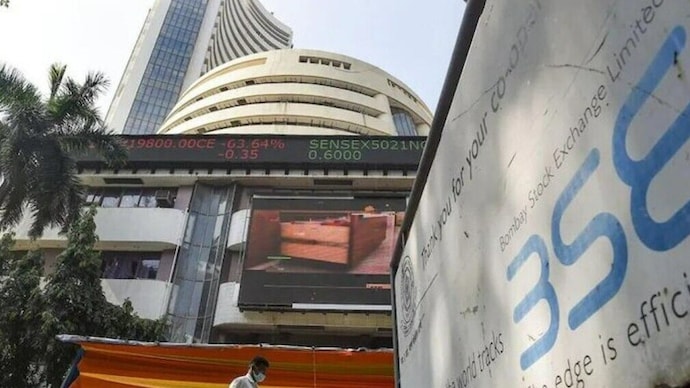

Stock markets are expected to open lower on Wednesday as rising oil prices, higher US bond yields and fresh concerns around the Iran conflict continued to weigh on investor sentiment globally.
GIFT Nifty futures were trading at 23,417 at around 7:13 am IST, indicating that the benchmark Nifty50 could open below Tuesday’s closing level of 23,618.
Aakash Shah, Technical Research Analyst at Choice Equity Broking Private Limited, said Indian markets are likely to open on a cautious note due to weak global cues.
“Indian equity markets are expected to open on a cautious negative note, with Gift Nifty trading at 23,431 down by 133 points,” Shah said.
He added that investors remain worried due to rising bond yields and continued geopolitical uncertainty.
The weak opening signals come after US President Donald Trump renewed threats against Iran, saying the United States may still need to strike the country again.
Trump said he was only an hour away from ordering an attack before deciding to postpone it. His comments added to concerns around the ongoing Iran conflict, which has already pushed crude oil prices higher and increased nervousness in global financial markets.
GLOBAL MARKETS UNDER PRESSURE
Asian markets fell around 0.6% on Wednesday as investors reacted cautiously to rising geopolitical tensions and higher bond yields in the United States.
At the same time, the yield on the 30-year US Treasury bond climbed to its highest level since 2007, reflecting growing worries over inflation and global economic uncertainty.
Higher US bond yields usually attract money into dollar assets and reduce investment flows into emerging markets such as India.
The ongoing Iran war, which began in late February, has also kept crude oil prices elevated. This has become a major concern for India because the country imports nearly 85% of its crude oil needs.
Higher oil prices increase import costs, pressure the rupee and raise inflation risks for the economy.
FOREIGN INVESTORS CONTINUE TO SELL
Foreign institutional investors remained net sellers on Tuesday.
According to provisional data, foreign investors sold Indian shares worth Rs 2,457.49 crore during the session.
Overall, foreign investors have pulled out nearly USD 23 billion from Indian equities so far this year, already crossing last year’s record outflow levels.
Analysts say persistent foreign selling is one of the key reasons why Indian markets have remained under pressure in recent weeks.
Apart from global developments, investors will also closely track quarterly earnings from companies across sectors.
Market participants are expected to remain stock-specific as companies continue reporting financial results.
NIFTY STILL TRADING IN A WEAK RANGE
According to Shah, the Nifty50 erased early gains in Tuesday’s trade because of profit booking in the final hours of the session.
The index remains stuck within the broader 23,300–23,800 range that has been seen over the past few sessions.
Technically, Shah said the market structure still remains weak.
“The Nifty formed a small bearish candle with an upper wick on the daily chart, indicating hesitation and selling pressure at higher levels amid ongoing consolidation,” he said.
Shah added that the index continues to trade below all major moving averages, which are still trending downward.
Momentum indicators are also signaling weakness.
The Relative Strength Index (RSI) stood at 44.7, while the MACD indicator continued to show bearish signals, suggesting that buying strength in the market remains weak.
KEY LEVELS TO WATCH FOR NIFTY
Shah said the Nifty needs to move decisively above 23,800 for sentiment to improve.
If the index manages to cross that level, it may move towards 24,000 and later 24,250.
On the downside, 23,300 remains an important support level. If the market slips below this zone, selling pressure could increase further.
India VIX, which measures market volatility and is often called the fear gauge, fell 4.87% to 18.67.
Even though volatility eased slightly, Shah said the VIX still remains elevated.
According to analysts, the volatility index needs to fall clearly below 18 for investors to regain stronger confidence in the market.
BANK NIFTY ALSO UNDER PRESSURE
The banking index also remained weak on Tuesday.
Bank Nifty declined 0.24% and continued to trade below important moving averages.
Shah said the banking index formed a small bearish candle, showing pressure at higher levels and lack of strong buying support.
Momentum indicators for Bank Nifty also remained weak, with RSI around the 40 mark and MACD staying below important levels.
Immediate support for Bank Nifty is placed around 52,800–52,200, while resistance is seen near 54,600–55,000.
Overall, analysts believe Indian markets may continue to remain volatile in the near term because of rising crude oil prices, concerns around the Iran conflict, higher US bond yields, weak foreign investment flows, and pressure on the rupee.
Investors are expected to stay cautious until there is more clarity on global developments and crude oil prices.
(Disclaimer: The views, opinions, recommendations, and suggestions expressed by experts/brokerages in this article are their own and do not reflect the views of the India Today Group. It is advisable to consult a qualified broker or financial advisor before making any actual investment or trading choices.)