
8th Pay Commission: What happened at the Cabinet Secretary-led NCJCM meeting
At the NCJCM meeting on May 11, employee unions placed pay, pension, healthcare and staffing demands before senior government officials. The discussion gained added weight as it ran alongside 8th Pay Commission consultations and prompted directions on several pending issues.
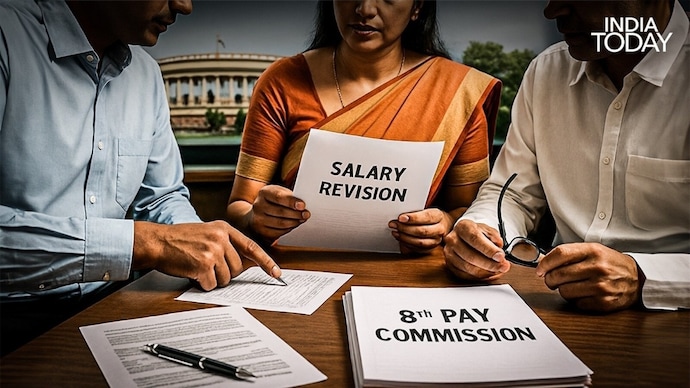

The 49th meeting of the National Council-Joint Consultative Machinery (NCJCM) was held on May 11, 2026 under the chairmanship of Cabinet Secretary TV Somanathan, where employee unions and government officials discussed a wide range of issues related to salaries, pensions, recruitment, promotions, allowances and service conditions of central government employees.
indiatoday.tech has been continuously reporting on developments linked to the 8th Pay Commission, including employee demands, union consultations and salary-related discussions.
The meeting assumes significance as it comes in the middle of ongoing consultations under the 8th Pay Commission, which has already begun discussions with employee unions and staff associations across the country.
According to documents shared by the Staff Side of the NCJCM, senior officials present at the meeting included the Chairman of the Railway Board, Secretary Expenditure, Secretary Personnel, Secretary Department of Posts, Secretary Education, Secretary Health and officials from multiple ministries and departments.
The Staff Side was represented by leaders including Shiva Gopal Mishra, Secretary Staff Side, M. Raghavaiah, Dr N Kanniah, Guman Singh, J.R. Bhosle, C. Srikumar and several other employee representatives.
The meeting also coincided with the Diamond Jubilee year of the JCM Scheme, which completed 60 years in 2026.
STAFF SIDE FLAGS IRREGULAR NCJCM MEETINGS
Before discussions on agenda items began, employee representatives raised concerns regarding the functioning of the NCJCM mechanism itself.
The Staff Side pointed out that under the JCM framework, three ordinary meetings are supposed to be held every year. However, it said only 49 meetings had taken place in 60 years.
“After 2016 no meeting of the Department Council JCM of Ministry of Defence has taken place,” the Staff Side said in the document.
Employee representatives urged the Cabinet Secretary to ensure that regular meetings are held so that staff grievances can be resolved in a time-bound manner.
The Staff Side also raised concerns over increasing court cases on service matters and alleged that several ministries continue to file appeals and review petitions even after court rulings, leading to delays and employee hardship.
8TH PAY COMMISSION ISSUES DISCUSSED
The Staff Side informed the Cabinet Secretary that it had already submitted its memorandum to the 8th Pay Commission covering several issues including:
- minimum pay,
- fitment factor,
- rate of increment,
- promotion policy,
- allowances,
- pension-related issues,
- advances and facilities,
- withdrawal of NPS and UPS,
- and demands of existing pensioners.
The Staff Side also requested the government to maintain regular interaction with employee unions during the functioning of the 8th Pay Commission.
MEDICAL REIMBURSEMENT AND HEALTHCARE ISSUES RAISED
One of the major agenda items discussed was full reimbursement of medical treatment expenses incurred by central government employees under CGHS and CS(MA) Rules.
Employee representatives argued that non-reimbursable items should also be included under reimbursement provisions and pointed out that hearing aid reimbursement rates had not been revised for more than 12 years.
The Cabinet Secretary directed that the issues raised by the Staff Side may be examined and a decision taken within three months.
The meeting also discussed:
- reimbursement of dental implants and dentures,
- reimbursement of Children Education Allowance for children admitted in PM Shri Kendriya Vidyalayas,
- and establishment of additional CGHS wellness centres.
The Staff Side demanded implementation of Parliamentary Standing Committee recommendations on pension enhancement every five years and increase in Fixed Medical Allowance (FMA) for pensioners to Rs 3,000 per month.
FAMILY PENSION AND OPS ISSUES
Several pension-related issues were also raised during the meeting.
The Staff Side demanded revision in the definition of “family” to include widowed-dependent daughters-in-law for claiming family pension.
The Cabinet Secretary directed DoPT to examine the issue in consultation with the Law Ministry.
The unions also argued that family pension should not be reduced to 30% of the notional pay of the deceased employee or pensioner. The Cabinet Secretary said the matter could be referred to the 8th Pay Commission.
Employee representatives also raised issues related to implementation of pension coverage under CCS Pension Rules for employees linked to vacancies notified before December 22, 2003.
The Staff Side argued that employees recruited against vacancies released before the cut-off date should be brought under the Old Pension Scheme (OPS).
PROMOTION DELAYS AND PAY FIXATION ISSUES
The Staff Side raised concerns over delays in promotions across departments.
According to employee representatives, some industrial employees in the Military Engineer Service were facing delays of three to five years in promotions because Departmental Promotion Committees (DPCs) were not being conducted on time.
The Cabinet Secretary directed that strict instructions may be issued by DoPT to ministries regarding timely promotions.
The meeting also discussed pay fixation benefits under FR-22 for employees promoted after availing benefits under the Modified Assured Career Progression (MACP) scheme.
The Cabinet Secretary directed authorities to examine the Staff Side’s views and, if required, refer the matter to the 8th Pay Commission.
OUTSOURCING, MANPOWER SHORTAGE AND CONTRACT WORKERS
The Staff Side strongly raised concerns regarding increasing outsourcing and manpower shortages in government departments.
“Many Departments including the Railways, workload and new projects are increasing day by day, however additional manpower is not sanctioned,” the document stated.
The unions alleged that departments were increasingly resorting to outsourcing and privatisation instead of filling vacancies through permanent recruitment.
Employee representatives also sought regularisation of casual, contingent and outsourced workers and raised concerns related to the rights of contract workers to form unions.
The Staff Side said details could be submitted where DoPT instructions regarding regularisation of casual workers were not being implemented.
COMPASSIONATE APPOINTMENT ISSUES
Compassionate appointments emerged as another major issue during the meeting.
The Staff Side demanded removal of the 5% ceiling on compassionate appointments and argued that the quota should be brought in line with the Railways model.
Employee representatives also raised concerns that vacancies in higher posts were not being considered while calculating compassionate appointment quotas.
The issue of an alleged ban on compassionate appointments in the Ministry of Defence was also discussed.
The Staff Side claimed that families of deceased employees had been facing financial difficulties because compassionate appointments had not taken place for the last five years in some defence establishments.
The Cabinet Secretary stated that compassionate appointments could not be stopped and directed Defence officials to examine the matter.
WRONGFUL RECOVERY OF PAYMENTS
Another major issue discussed was recovery of alleged “wrongful or excess payments” from employees and pensioners years after the payments were made.
The Staff Side alleged that employees were being harassed despite Supreme Court judgments and DoPT instructions.
The unions requested delegation of powers to waive recovery of amounts exceeding Rs 2 lakh to the concerned ministries and departments.
The Cabinet Secretary directed that strict instructions may be issued to ministries to follow existing DoPT rules.
OTHER ISSUES DISCUSSED
Several other employee concerns were also raised during the meeting, including:
- night duty allowance for defence civilian employees,
- exemption of travelling allowance portion of kilometre allowance from income tax for railway running staff,
- implementation of arbitration awards,
- recognition of service associations,
- regional recruitment of non-gazetted staff,
- revision of ward entitlement for pensioners,
- and implementation of provisions of the Maternity Act for women central government employees.
The Staff Side also raised concerns regarding AIIMS employees, alleging that DoPT instructions related to spouse posting were not being implemented in some AIIMS institutions, forcing many women employees to resign due to family-related compulsions.
The National Council-Joint Consultative Machinery (NCJCM) is a formal platform for dialogue between the central government and employee unions on service conditions, salaries, pensions and staff welfare issues.
The JCM Scheme was established in 1966 and has now completed 60 years.
The Staff Side described the platform as an important mechanism for maintaining industrial harmony and resolving grievances of central government employees and pensioners.