
8th Pay Commission: Govt employees push for 5-year pay hikes. Is it practical?
As part of its exclusive 8th Pay Commission coverage, indiatoday.tech spoke to union leaders demanding salary revisions every five years. We also asked experts whether such a move would help employees or strain government finances further.
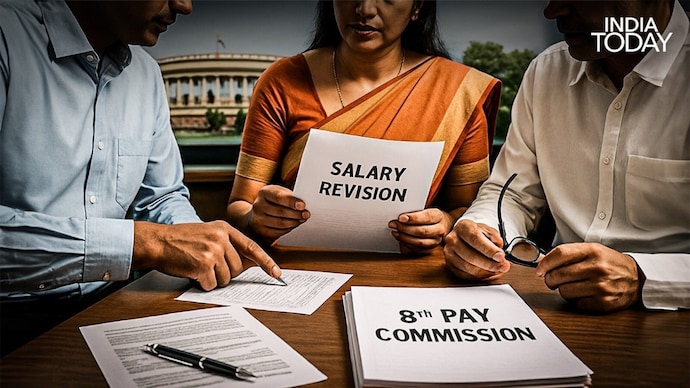

Government employees are pushing for a major change in how their salaries are revised, with a demand to cut the Pay Commission cycle from 10 years to five. indiatoday.tech has exclusively learnt that this proposal was raised during recent consultation meetings with the 8th Pay Commission.
The discussions took place in Delhi between April 28 and April 30, where employee representatives argued that the current system no longer keeps pace with inflation and rising living costs.
“The five-year demand for the wage of government employees should be met. There are many reasons for this,” said Shiva Gopal Mishra, Secretary (Staff Side), National Council-Joint Consultative Machinery (NC-JCM).
“If we take it for ten years, then in the ten-year wait, our entire price index will increase a lot. Because of inflation, wages decided ten years in advance lose their real value,” he told indiatoday.tech.
Employee groups say the gap between revisions is now too wide compared to the rest of the economy.
“In the private sector, there is a change in wages in just three years. But government employees have to wait for ten years,” Mishra said.
They also point to sectors like banking and public sector undertakings, where wage revisions typically happen every five years.
“Salary doubles in 10 years. That is too slow”
For many employees, the issue is not just inflation, but how slowly salaries grow under the current system.
“If an employee was appointed in January 2016 at a basic salary of Rs 18,000, then after 10 years, the salary becomes only around Rs 37,000,” said Dr Manjeet Singh Patel, National President of the All India NPS Employees Federation and National Mission for Old Pension Scheme Bharat.
“Being only doubled in 10 years is very slow compared to the private sector,” he said.
According to Patel, a five-year cycle would make government pay more competitive.
“If the pay commission is provided within five years, then the salary of government officials will be able to increase competitively,” he said.
HOW PRACTICAL IS THIS DEMAND?
Experts say the demand may sound reasonable, but the financial implications are significant.
“For states, on average salaries and pensions make up more than 40% of their revenue receipts,” said an industry expert who wished to remain anonymous.
“For the Union government too, salaries and pensions together form a substantial part of expenditure,” he said.
A shorter Pay Commission cycle could increase pressure on government finances.
“What happens over time is that more and more government budgets get consumed by salaries and pensions, leaving less room for development and investment,” the expert said.
“If more and more of the budget goes towards salaries and pensions, then governments either have to cut spending elsewhere or increase taxes.”
“There is no such thing as a free lunch. Ultimately, the taxpayer pays for it,” he added.
THE BIGGER DEBATE
The discussion is not just about salaries. It also raises questions about job security and performance.
“The taxpayer also has to work hard every day. If private-sector workers do not deliver results, they can lose their jobs,” expert said.
Government jobs, in contrast, continue to offer higher stability. “The conversation cannot only be about increasing salaries. There also has to be discussion around accountability and public service delivery,” he said.
He also pointed to research showing that government employees in India are relatively well-paid compared to the country’s income levels.
“At some point, the question has to be asked what citizens are getting in return for the taxes they are paying,” he said.
Despite fiscal concerns, pushing back against such demands is not easy.
“It is always politically easier to agree to salary hikes because no government wants confrontation with employee groups,” the expert said.
Employee representatives have clarified that the Pay Commission itself cannot change the revision cycle, but want it to recommend the shift to the government.
For now, the demand has opened up a wider debate around inflation, salary competitiveness, taxpayer burden and the long-term cost of governance.
Whether a five-year cycle is adopted or not, the pressure to rethink how government salaries are revised is unlikely to fade anytime soon.