
Global woes persist as the Hormuz crisis takes a new turn
The current disruption caused by the closure of the Strait of Hormuz is three to five times larger than previous oil shocks.
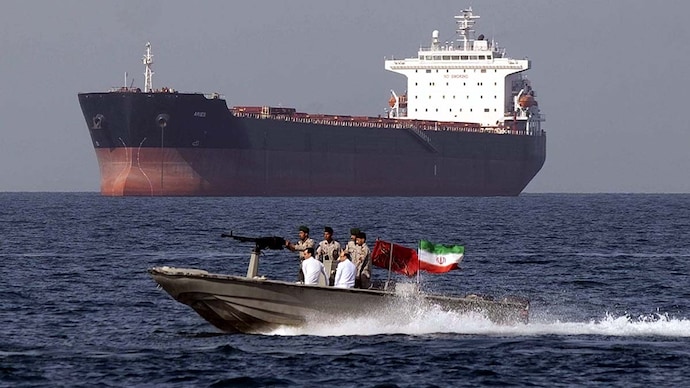

The ongoing Strait of Hormuz crisis has taken a new turn. US President Donald Trump has announced that the US Navy will blockade all vessels attempting to enter or exit this vital corridor.
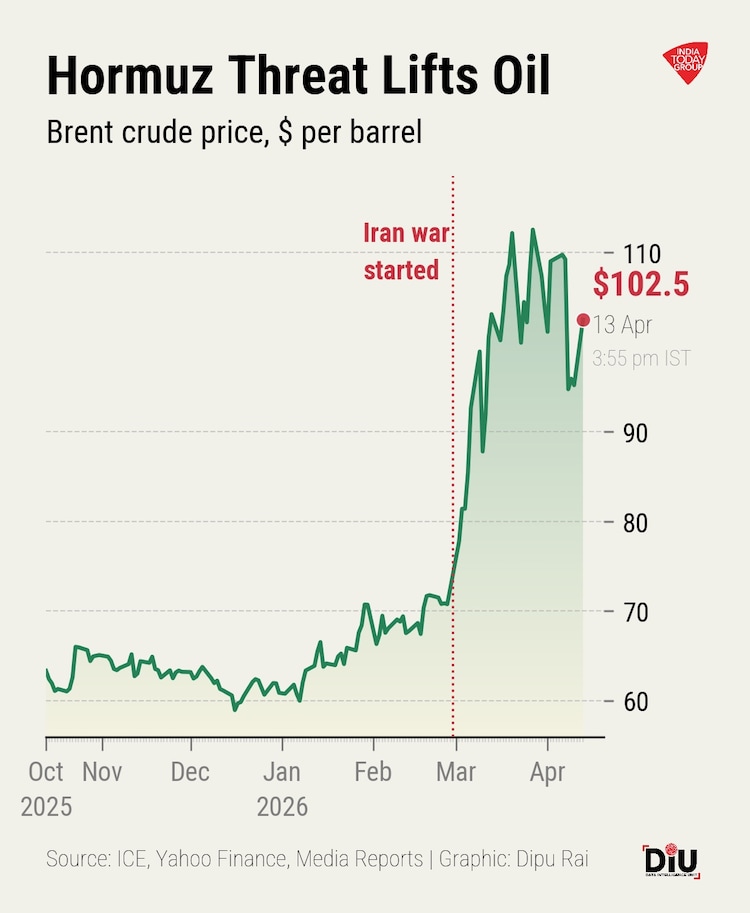
Following the announcement, traffic through the Strait of Hormuz reportedly came to a halt once again, after inching up slightly in the wake of the two-week ceasefire. Oil prices surged past the $100-per-barrel mark on Monday. Around 3 pm, while Nymex Crude was trading up eight per cent, Brent Crude was higher by seven per cent.
Analysts have warned that the United States’ latest move could further squeeze already dwindling supplies.
Since the war began, the number of ships passing through the narrow waterway between Iran and Oman has dropped to the low single digits. The number was closer to 125 vessels a day before the outbreak of the Middle East conflict on February 28.
Following the entry of the US Navy, Iran may struggle to maintain its daily flow of oil exports through Hormuz. The country is estimated to have been exporting nearly two million barrels per day in recent weeks.
Current oil shock five times larger
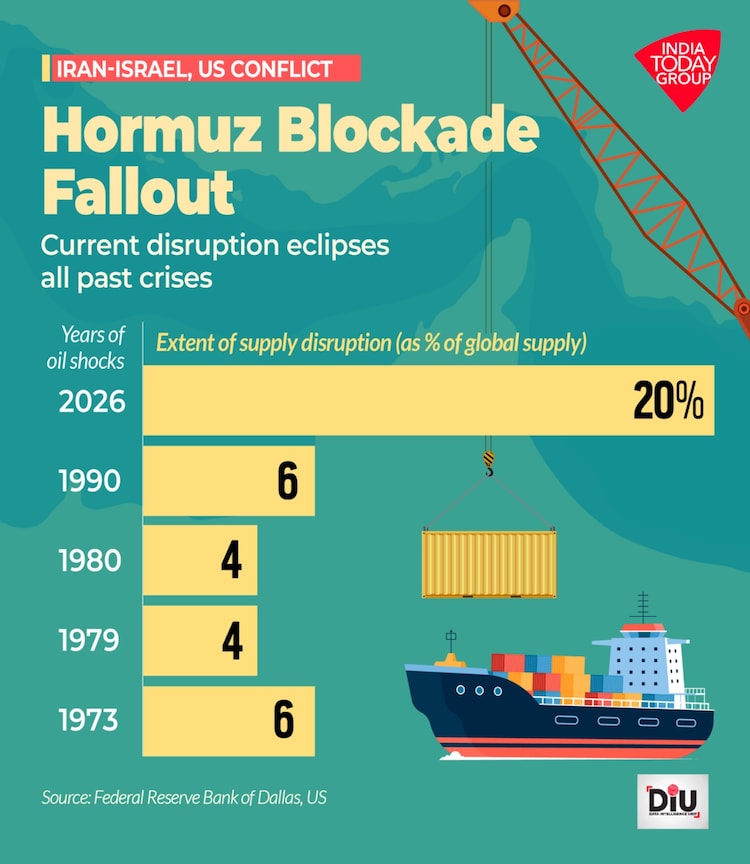
Analysts have warned that the current spell of supply disruption is far more severe than the oil shocks of the 1970s, 1980s, and 1990s. There have been four previous episodes of major supply disruption. According to a research paper by the Federal Reserve Bank of Dallas on oil shocks, in 1973 and 1990, only a little more than six per cent of global oil supplies were removed from the market. And in 1979 and 1980, it was only about four per cent.
“Today, we are concerned with a shortfall close to 20 per cent, making this geopolitical event three to five times larger,” the paper noted.
The paper estimates that a one-quarter closure of the Strait of Hormuz would push Nymex Crude to around $98 per barrel. If the disruption persists for two quarters, prices could rise to $115 per barrel.
In the event of a three-quarter closure, crude oil prices could climb to $132 per barrel. Rising oil prices would, in turn, fuel inflation and dampen economic growth.
Incidentally, previous episodes of oil shocks have mostly resulted in global recessions, with crude oil prices rising more sharply.
The war has already led Gulf countries to cut oil production by 10 million barrels per day. Despite higher output from Russia and Kazakhstan in March, global oil supply likely fell by eight million barrels per day in March.
The region has also seen a sharp decline in refined products. More than 3 mb/d of refining capacity in the region has already shut down due to attacks and a lack of viable export outlets, noted the International Energy Agency’s latest oil market report that came out last month.