
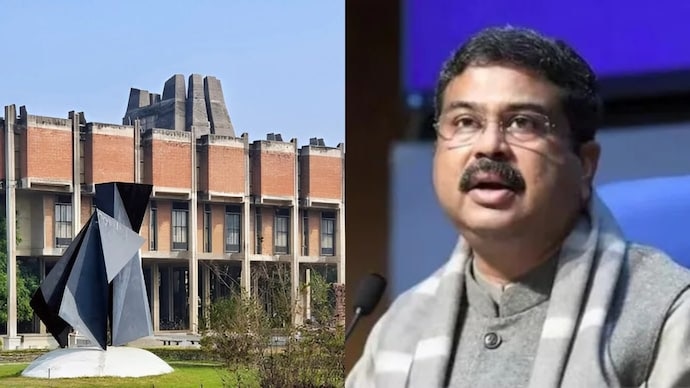
India's academic Avengers: When exam credibility comes under fire, CBSE turns to IITs
From SSC and CBSE to NEET UG and UGC NET, some of India's biggest examination crises pushed the country to look beyond education, turning to IITs, AIIMS experts, a former ISRO chief and even banks to restore trust.
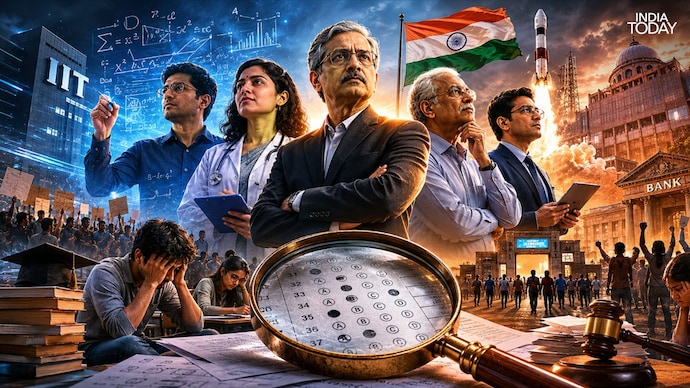
India’s academic Avengers: The times when India called in the 'experts'

New Delhi,UPDATED: May 25, 2026 16:50 IST
When India’s examination systems buckled under pressure, the rescue came from unlikely quarters.
Not classrooms. Not exam boards. But space scientists, IIT technologists, medical institutions and even banks, experts were brought in to stabilise critical systems and safeguard the aspirations of millions of students.
From portal crashes and result delays to entrance exam disruptions, these interventions exposed how deeply India’s education ecosystem now depends on technology, and how, in moments of crisis, the solutions have often come from beyond the traditional education framework.
From the SSC controversy and CBSE paper leak to the NEET UG 2026 paper leak and CBSE’s recent digital breakdowns, some of India’s biggest academic disruptions revealed vulnerabilities that went beyond examinations themselves.
They exposed cracks in technology, governance and preparedness.
And each time trust came under strain, an unusual pattern emerged: India repeatedly turning to experts to restore confidence in its education machinery.
CBSE PORTAL GLITCHES: WHEN DIGITAL FAILURES FORCED A TECHNOLOGY RESCUE
The latest crisis did not emerge from leaked papers or disputed results.
It came from the digital backbone itself.
CBSE is currently facing widespread complaints over portal disruptions linked to post-result services, answer-sheet access and re-evaluation processes.
Students and parents have reported login failures, payment issues, delayed transactions and server instability, exposing the pressures of running large-scale academic services in a digital-first ecosystem.
The response has been swift and unusually broad.
Experts from IIT Madras and IIT Kanpur have been brought in to stabilise systems, assess infrastructure gaps and recommend technological fixes.
But the intervention extends beyond technology.
Union Education Minister Dharmendra Pradhan and Finance Minister Nirmala Sitharaman have initiated an overhaul of CBSE’s payment architecture by bringing in four public sector banks, State Bank of India, Bank of Baroda, Canara Bank and Indian Bank.
The objective is to strengthen payment protocols, improve transaction reconciliation systems and enable automatic refunds.
The episode marks a broader shift: education crises are no longer confined to examination halls. They now extend to payment gateways, digital platforms and server ecosystems, where technology has become as critical as the examination process itself.
Professor Chandrashekar Ramanathan, Dean (Academics), IIIT-Bangalore, says the issues during the CBSE revaluation process are unfortunate but also indicative of the complexities involved in large-scale digital transitions.
As Ashish Dhawan, Managing Partner, NGS Global India, observes, “Building a digital platform is relatively easy; building trust in that platform is much harder, especially when students’ academic futures depend on it.”
Ramanathan notes that digitisation remains essential for scaling operations in a country like India, pointing to banking and finance as examples of sectors where digital systems have successfully transformed service delivery.
“For students repeatedly refreshing re-evaluation portals, payment failures are not minor technical issues, they feel like moments where their future itself has gone into buffering mode,” he says.
Dhawan also points to the unusual coalition formed during the crisis, noting, “There is something almost symbolic about IIT experts and public sector banks stepping in together, almost like India assembling an educational Avengers team to restore confidence in the system.”
On the way forward, he argues that examination systems may now need safeguards similar to financial infrastructure. “If banking systems are stress-tested before handling money, examination systems should be stress-tested before handling dreams, careers and the futures of millions of students,” he says.
He adds that large-scale digital interventions require careful planning, testing, validation and training before full-scale rollout. “Every small issue can get magnified into a large-scale problem when systems operate at population scale, as seen in the CBSE revaluation process,” he adds.
Ramanathan says expert interventions are likely to help resolve the present issues and suggests the experience could lead to the creation of standing expert committees to oversee major digital initiatives in education in the future.
WHAT HAPPENED WHEN SSC’S EXAM SYSTEM CAME UNDER SCRUTINY?
The SSC crisis of 2017–18 erupted amid allegations of paper leaks, technical glitches and controversies surrounding Computer-Based Tests (CBTs) in recruitment examinations. The spotlight quickly turned towards the TCS-led examination technology ecosystem powering SSC exams.
The controversy intensified after candidates raised concerns over exam security, technological reliability and transparency, triggering nationwide protests and demands for accountability.
In the aftermath, SSC replaced Tata Consultancy Services (TCS) with Eduquity as the vendor entrusted with conducting examinations. However, the episode also raised larger questions around vendor accountability, digital preparedness and oversight in high-stakes exams.
The crisis became an early reminder that technology alone cannot guarantee credibility unless backed by robust systems, safeguards and transparent implementation.
CBSE PAPER LEAK (2018): A WAKE-UP CALL FOR EXAM SECURITY
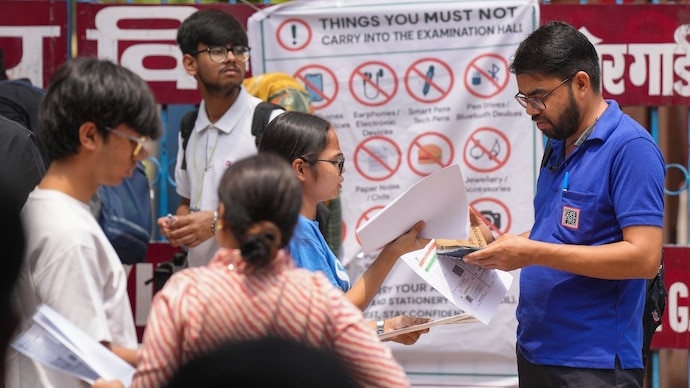
The leak of CBSE Mathematics and Economics papers in 2018 triggered nationwide concern and forced re-examinations. Beyond the immediate disruption, the episode exposed vulnerabilities in paper handling, confidentiality chains and exam-security mechanisms.
The fallout pushed authorities toward stronger security protocols and tighter controls over examination processes.
It was a turning point that underscored the need to modernise exam protection frameworks.
WHEN INDIA CALLED AN ISRO CHIEF FOR NTA REFORMS
The credibility crisis surrounding NEET UG and UGC NET in 2024 became one of the biggest stress tests for India’s examination ecosystem.
Questions over transparency, integrity and institutional preparedness placed the National Testing Agency (NTA) under unprecedented scrutiny.
The government’s response reflected the scale of the challenge.
A reform committee was constituted under K Radhakrishnan, former chairman of ISRO, bringing together experts from All India Institute of Medical Sciences (AIIMS) and IITs to recommend reforms to NTA.
The symbolism was striking.
When one of India’s largest entrance systems faltered, the country turned not to administrators alone, but to scientists and academic institutions known for precision, scale and systems management.
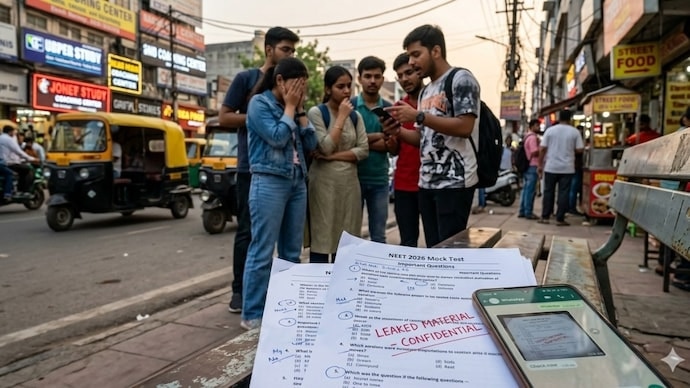
THE REAL TEST WAS ALWAYS THE SYSTEM
Paper leaks. Portal crashes. Payment failures. Credibility crises.
Each episode looked different. Yet together they revealed a common truth: India’s examination ecosystem was being forced to evolve faster than many institutions were prepared for.
And every time confidence faltered, the country assembled its own task force of specialists, scientists, engineers, educators, technology experts and institutional leaders.
Because in a nation where examinations shape millions of futures, the hardest test is not written by students.
It is ensuring that the systems built to evaluate them never fail their trust.
- Ends