
The story of India's first woman Naval officer to die in the line of duty
The story of Lieutenant Kiran Shekhawat, India's first woman Naval officer to make the supreme sacrifice, is one of courage, resilience, and service to the nation.
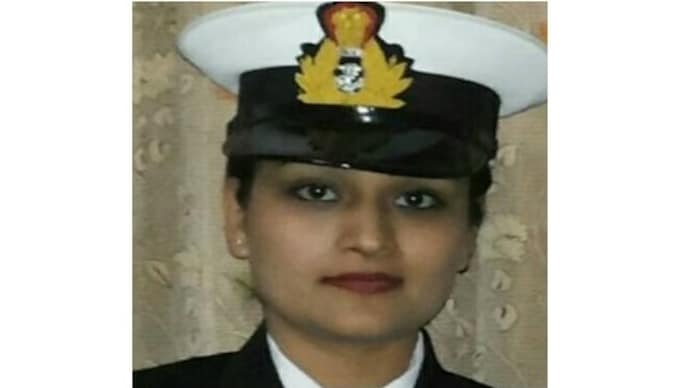

Lieutenant Kiran Shekhawat, a name that did not dominate headlines, yet one whose sacrifice secured a place in the history of India and its armed forces. She became the first woman officer of the Indian Navy to make the supreme sacrifice in the line of duty.
The year was 2015. On the night of March 24, a routine naval sortie from INS Hansa turned into tragedy. Shekhawat was part of the crew aboard a Dornier Do-228 aircraft when the aircraft first disappeared from radar and was later found wrecked deep in the Arabian Sea.
There were three officers on board, including Shekhawat. The pilot survived, but the two officers did not.
Four days later, on March 29, Lieutenant Kiran Shekhawat was cremated with full military honours at Khurthala in Haryana.
Draped in the Tricolour, she was given a final farewell by her family, fellow officers, and scores of citizens who had gathered to honour a life cut short in service of the nation.
THE JOURNEY THAT STARTED FROM MUMBAI
Kiran Shekhawat’s journey began in Mumbai, where she was born on May 1, 1988. The Indian Navy was not an unfamiliar world to her. Her father had served in the force for decades, and that environment shaped much of her early understanding of discipline, service, and duty.
A large part of her upbringing was spent in Visakhapatnam, a city where the Navy is not merely an institution but part of the landscape itself.
Growing up close to the naval ecosystem, surrounded by warships, uniforms, and stories of service, left a quiet but lasting imprint on her. For many children, such surroundings remain a distant fascination. For Kiran Shekhawat, they became a calling.
Shekhawat later enrolled at Andhra University, where she pursued a Bachelor of Science degree and graduated in 2008. Before entering uniformed service, she spent the initial phase of her professional life in the banking sector.
But the shift that would define her life came in 2010, when she was selected for the Indian Naval Academy, Ezhimala.
That marked the beginning of her life in uniform. She went on to join the Naval Observer School in January 2011, where she trained in aerial reconnaissance, navigation, and mission coordination.
In February 2012, after rigorous training, she earned her Observer’s Wings, officially becoming a Naval Observer.
Her career began with Indian Naval Air Squadron 311, where she served as a mission controller, handling reconnaissance operations and surveillance coordination.
She was later posted to INAS 310, the Cobras, based at INS Hansa in Goa, a squadron known for electronic warfare and advanced maritime surveillance.
Among colleagues, she had earned a reputation for steadiness and commitment. Many remembered her as the “Iron Lady”.
In January 2015, just months before her death, she became part of another significant chapter in India’s military history.
Shekhawat marched with the Indian Navy’s first-ever all-women contingent during the Republic Day Parade in New Delhi.
Today, her memory continues to live beyond official records and ceremonial tributes. The Lt. Kiran Shekhawat Foundation, established by her family, carries her name forward through social work and public service.
She was only 26.
At an age when many are still searching for direction, testing ambitions, or beginning to understand responsibility, Kiran Shekhawat had already chosen a life of service, and, in the end, gave that life to the nation.