
CBSE Business Studies paper analysis 2026: Direct questions, simple case studies
The CBSE Class 12 Business Studies exam 2026 was balanced and easy to attempt, with direct NCERT-based questions and simple case studies, allowing well-prepared students to score comfortably while still testing conceptual clarity.
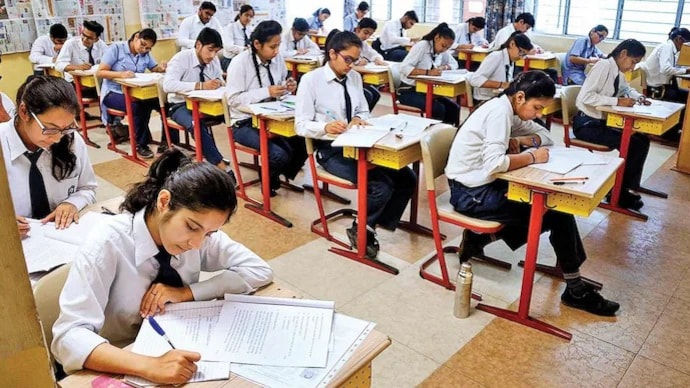

The CBSE Class 12 Business Studies (BST) exam 2026 was largely balanced, student-friendly and based closely on NCERT, according to teachers and subject experts.
Held on March 28, the paper was seen as one that gave students a fair chance to score well, especially those who had revised the textbook properly and practised sample papers and previous year case studies.
Teachers said the paper followed the usual CBSE structure, mixing direct theory-based questions with case-study questions that tested understanding and application.
According to Anu Bansal, PGT Business Studies and Economics at Satya School, Gurugram, the CBSE Class 12 Business Studies Board Examination 2026 was of moderate difficulty and followed a well-balanced, systematically structured pattern in line with CBSE guidelines and the NCERT framework.
She said the paper was entirely based on NCERT content, with no questions asked beyond the prescribed syllabus. A numerical question was included and was straightforward and easy to attempt.
The paper largely tested students’ conceptual understanding, application and reasoning skills. While the case study-based questions were slightly lengthy, they remained predictable and manageable for students who had prepared well.
DIRECT QUESTIONS MADE THE PAPER EASIER
According to experts, the paper included many familiar and expected areas from the syllabus.
Questions based on Fayol’s principles of management, features of planning, and other standard theory topics were seen as straightforward for students who had prepared regularly.
Ms Bhawna, Head of Department, Commerce, said the paper followed the classic CBSE pattern and balanced direct conceptual questions with application-based ones.
She noted that the multiple-choice questions (MCQs) were scoring, but students needed to be careful with terms and concepts. For example, some questions tested whether students could correctly identify the difference between terms such as Brand Mark and Trade Mark.
This meant the paper was not difficult in a broad sense, but it did require clear understanding of business terminology.
CASE STUDIES TESTED PRECISION, NOT CONFUSION
The case-study section was another important part of the paper.
Teachers said case studies such as ‘Priya Motors’ and ‘Freshju’ were of medium length and not unnecessarily confusing. However, they required students to read carefully and answer with accuracy and specific points from the case.
Mr Ashutosh, PGT Commerce, said the paper was moderate and well-balanced, and also followed the sample paper pattern. He said the exam was clearly NCERT-aligned and designed to test conceptual clarity rather than memorised writing alone.
Mr Udayraj Joshi, PGT Business Studies at Lancers Army School, described the paper as well-calibrated, saying it gave room to both average and strong students.
He said the direct questions helped students secure marks through basic preparation, while the case-based questions rewarded those who could apply concepts in real situations.
Teachers also noted that the paper had very few High Order Thinking Skills (HOTS) questions, which made it more accessible for the average learner.
Overall, experts believe that students who had read NCERT thoroughly, revised important chapters and practised previous year case studies should be able to score well.
In fact, teachers said a well-prepared student could comfortably aim for 85 to 90 per cent in the paper.
For most students, the BST exam appears to have ended on a positive note — with relief, confidence and, for many, a realistic hope of good marks.