
How Indo-Japanese collaboration is moving into critical technologies
Beyond traditional sectors such as automobiles, Japanese investments are increasingly looking at semiconductors, electric vehicles and start-ups
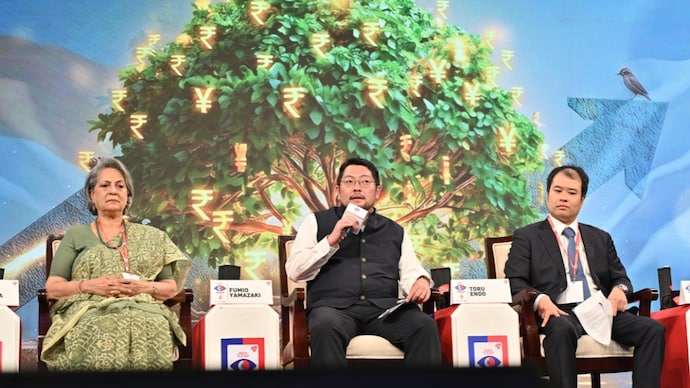

 Did you know that the word ‘rickshaw’—ubiquitous in India—is actually of Japanese origin? That bit of trivia popped up during the India Today Indo-Japan Conclave in New Delhi on May 22 in the context of how Indo-Japanese business relations, tracing back to the late 19th century, were poised to explore new opportunities.
There are 1,400 Japanese companies in India, and more than half of these are in the manufacturing sector, pointed out Fumio Yamazaki, the Minister of Economy and Development at the Embassy of Japan in India. He outlined two priorities: “One, make the manufacturing industry successful here in India; the other is economic security wherein, given today’s global situation, the strengthening of supply chain is primordial.”
“Last August, when Prime Minister Modi visited Japan, they prioritised five areassemiconductors, critical minerals, ICT, clean energy and pharma. And we see a very rapid development on semiconductors in Dholera in Gujarat and also Jagiroad in Assam,” he said, expressing the hope these industries will develop the way the automobile sector has.
Japan’s investment in India ranges from manufacturing to large-scale infrastructure projects that include metro rail networks in various cities, industrial corridors and high-speed rail. As Deepa Wadhwa, former Indian ambassador to Japan, noted: “We were also the first country to accept Japanese ODA (Official Development Assistance) in the ’50s; ODA has been a very important pillar of our economic relationship. The importance of this ODA is that, unlike other countries, the Japanese invest in areas of priority to India—and this has largely been in large, transformational infrastructure projects.”
The Japan Bank for International Cooperation (JICA), the world’s largest bilateral donor agency, has mobilized $16 billion in India in the past five years, pointed out Toru Endo, JBIC’s Chief Representative in New Delhi. A new facility called the Japan Strategic Investment Facility was set up last year to provide loans to strategic sectors such as semiconductors, pharmaceuticals, automobile and shipping, which require huge capex.
Endo, who is also on the semiconductor committee of the Japan Chamber of Commerce in India, said there are more than 160 Japanese companies on this panel. On this front, he suggested that the emerging Indian semiconductor ecosystem align with global regulatory standards on quality needs.
According to Wadhwa, India has attracted about $45 billion worth of investment from Japan over the past two-and-a-half decades. But that, she believed, is still an “underperformance given the size of the Indian economy”.
Japan’s investment commitment to India, which was 3 trillion in 2014 during Prime Minister Modi's first visit to Japan, has increased to 10 trillion (about $68 billion of private investment over the next 10 years) during Modi’s latest visit in 2025, Wadhwa noted. “So, the government has a role not as a catalyst but somehow to be able to activate this relationship because, of course, Japanese companies are there in large numbers in Southeast Asia. In India, there are about 1,400 companies compared to 30,000 in China. How do we get more companies to come in?” she asked.
Koichi Wakabayashi, Chairman of Mitsui & Co India, the Japanese conglomerate that has had a presence in India for the last 70 years, said its traditional focus on supporting Japanese companies for manufacturing and distribution has been expanding to Indian firms of late. “In the past couple years, we have increasingly shifted towards partnering with Indian local partner companies as a co-creator of value within India,” he said, adding that its recent investees include an EV truck and bus manufacturing company and a recycling solution business. “What we would like to do together with Indian local companies is not only expect a cash return from the investment but develop this ecosystem to co-create value.”
Sundeep Sikka, Managing Director and CEO, Nippon Asset Management, pointed out that the Nippon India Innovation Fund had invested in more than 350 start-ups in India. Start-ups, he said, had been missing in the portfolio and “in the last five years we are very happy that we’re contributing there also”. “India offers scale and talent. Japan offers precision and patient capital. And if you marry the two, you can build up a great business,” said Sikka.
EXPERT-SPEAK
Deepa Wadhwa, Former Indian Ambassador to Japan
* “Japan is and has been perhaps one of our most important development and investment partners over time.”
* “ODA (Official Development Assistance) has been a very important pillar of our economic relationship. The importance of this ODA is that, unlike other countries, the Japanese invest in areas of priority to India, and this has largely been in large, transformational infrastructure projects.”
Fumio Yamazaki, Minister of Economy and Development, Embassy of Japan in India
* “Last August, when Prime Minister Modi visited Japan, they prioritised five areassemiconductors, critical minerals, ICT, clean energy and pharma. And we see a very rapid development on semiconductors in Dholera in Gujarat and also Jagiroad in Assam.”
* “There are two key words. One is to make the manufacturing industry successful here in India, and another is economic security wherein, given today’s global situation, strengthening of the supply chain is primordial.”
Toru Endo, Chief Representative, Representative Office in New Delhi, Japan Bank for International Cooperation
* “In India, we have mobilised $16 billion in the past five years.”
* “Last October, we set up a Japan Strategic Investment Facility and under this, we can provide loans to very important strategic sectors such as semiconductors, pharmaceuticals, automobiles, shipping, etc. to support their huge capex requirement.”
Koichi Wakabayashi, Chairman, Mitsui & Co India
* “Traditionally, our investment in India was focused on supporting Japanese companies for manufacturing and distributionIn the past couple of years, we have increasingly shifted towards partnering with Indian local partner companies as a co-creator of value within India.”
* “Generally speaking, Japan-India collaboration should not be focusing on technology transfer, but what we’d like to do is connect innovation with real industrial use and link start-ups with the existing business ecosystems. What we are doing is to try to be a bridge between innovation and industrial scale.”
Sundeep Sikka, Managing Director and CEO, Nippon Asset Management
* “India offers scale and talent. Japan offers precision and patient capital. And if you marry the two, you can build up a great business.”
* “We have invested in more than 350 start-ups in IndiaStart-ups were missing and in the last five years, we are very happy that we’re contributing there also.”
Subscribe to India Today Magazine