
Exclusive: BTS' long-time producer Pdogg on ARIRANG, BTS 2.0, Grammys
In a rare exclusive interview with India Today, BTS' long-time producer Pdogg talks ARIRANG, the group's new era, solo journeys and evolving sound. He also spoke about the group's Grammys ambition.
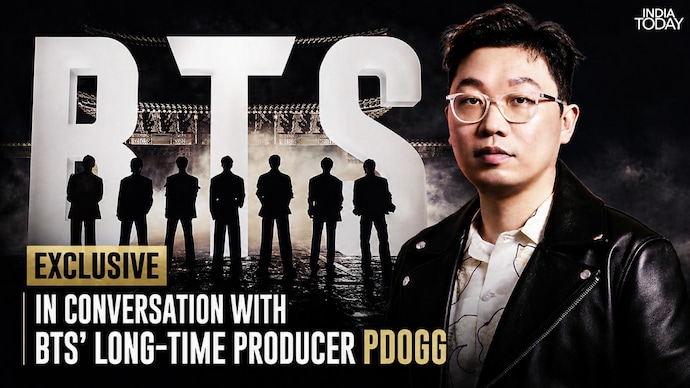
BTS' longtime producer Pdogg on ARIRANG, their evolution as world's biggest band. Photo credit: Pdogg, BIGHIT MUSIC, HYBE

Mumbai,UPDATED: May 1, 2026 00:04 IST
From a cramped studio in Seoul to sold-out stadiums across the continents, BTS (an acronym for Bangtan Sonyeondan) rise has been chronicled in headlines, charts, and fan chants. But behind the seismic shift in global pop— and the biggest band on the planet— is Pdogg aka Ho Weon Kang, their long-time producer. Known for being more or less elusive, he has been one of the biggest creative forces shaping the group’s sonic identity. He has been working closely with RM, Jin, SUGA, j-hope, Jimin, V, and Jung Kook since their earliest days along with HYBE Chairperson and Global Master Professional, Si-Hyuk Bang.
From early tracks like No More Dream and N.O to global hits including Spring Day, DNA, FAKE LOVE, and Dynamite, and most recently ARIRANG, Pdogg has helped translate the group’s evolving voice into music that transcends languages and borders. If BTS are often described as 21st-century global stars, Pdogg is the constant thread stitching together their past, present, and what increasingly looks like a more layered, experimental future.
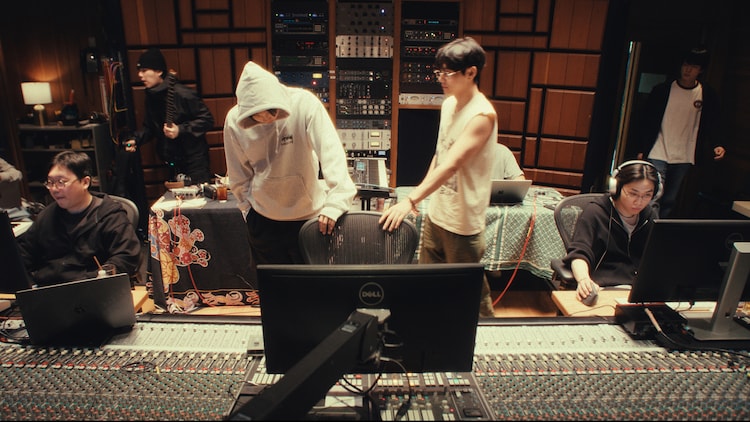
Now, as BTS step into a new chapter following their military service with the album ARIRANG and a global tour already underway, Pdogg, in a rare and exclusive interview with India Today, reflects on BTS 2.0. He takes us behind the scenes into the making of ARIRANG, and how the group has evolved sonically and individually since their early days and recent solo debuts. He also spoke about the group's Grammys dream and how his role within the group’s dynamic has evolved in the last decade.
Excerpts from the interview:
After nearly two decades with BTS, how did their solo journeys reshape your approach to the group and the sound of ARIRANG?
Through their solo projects, each member developed a much clearer sense of their own musical direction and identity. They also spent a lot of time thinking about how to use their voice more intentionally, which naturally expanded the range of what they could express. At the same time, bringing seven different stories and voices into a single track made the vocal production process more challenging than ever. Finding an approach that worked for everyone wasn’t easy.
Since it had been a while since we had worked on a full group album, there was definitely some trial and error along the way. But because the members were actively partaking in the process, we were able to find the right direction together.
ARIRANG is both experimental and culturally significant. What felt risky in bringing it into a modern-pop context?
We didn’t start by placing too much weight on the traditional aspect from the beginning. Because of the name “ARIRANG,” we knew it carried a certain meaning, so we explored a wide range of approaches together with the members. That included everything from sampling to reinterpreting it through live instrumentation in a more contemporary way. Rather than feeling a sense of pressure, the focus was on finding the right balance through ongoing open discussions and experimentation.
SWIM as the title track received mixed reactions. The members have shared their thoughts during the studio notes and documentary, but why did it feel like the right choice for you?
It’s natural for a track like SWIM to receive a range of reactions. From the beginning, it wasn’t a song that was meant to be immediately intuitive or familiar to everyone. Instead, we saw it as the clearest reflection of where the team is heading right now. In terms of both sound and structure, it steps slightly outside of what people might typically expect from BTS, so it can feel unfamiliar at first. But that was also exactly why it felt like the right choice.
It captures the message, emotion, and the transition the group is going through as they move into their next phase. To me, a title track isn’t necessarily about being the most accessible—it’s about most clearly representing where the team stands at this moment. In that sense, SWIM felt like the most honest choice for where the team is right now.
Comparing early BTS to ARIRANG, what's changed most in BTS' sound and was any track hard to place?
In the early days, the music was more focused on delivering a clear and direct message. Now, it feels like it has evolved into something that can hold a wider range of emotions and thoughts at once. What feels more important today is how each member’s state of mind and personal story naturally finds its way into the music. Rather than trying to define everything in a single direction, there’s more room for different layers to coexist.
When it came to sequencing the album, we didn’t approach it as building one fixed narrative. Instead, we stayed open to different possibilities, considering the mood and role of each track. So, rather than there being one particularly difficult song to place, the bigger challenge was finding the overall balance of the album as a whole.
How did you navigate the pressure of sampling something as symbolic as ARIRANG? The documentary showed members being concerned about it feeling forced or too patriotic.
From the beginning, we were very aware that working with something as symbolic as “ARIRANG” could lead to a wide range of reactions. Because of that, we didn’t try to define its meaning in a single, fixed way. Instead, we focused on how it could feel natural within the music and be received without feeling forced.
Throughout the process, we had many conversations about this with the members. We explored different approaches together—trying out various methods, discussing how certain expressions or tones might come across, and sharing our individual perspectives. At times, there were also opinions about needing to approach certain aspects more carefully. Through those discussions, we gradually adjusted the direction.
In the end, what felt most important was not to push a specific interpretation, but to leave room for listeners to experience it in their own way. Maintaining that balance was probably the most important part of the entire process.
How do you see BTS 2.0 – more open, flexible and member-driven? Unlike previous albums where each song is a continuation of a story they are telling, this feels more democratic.
I do think that in this project, the members’ opinions and choices were reflected more naturally than before. The process was really centred around sharing individual ideas and finding common ground within them.
Because of that, it may come across as more open or flexible compared to previous albums. However, I don’t see it as a complete shift away from what BTS has been doing. The overall flow and identity of the group are still very much there. To me, this feels less like a departure and more like a natural continuation of everything they’ve built so far.
Even with global producers like Diplo, El Guincho, and Kevin Parker, ARIRANG still feels very rooted in Korean identity. How do you define BTS' authenticity in ARIRANG amid global influence?
Before starting the project, we had a lot of conversations with the members about what we wanted to express and how we wanted to approach the music in terms of genre and style. Because of that, even while working with global producers, I think what the members wanted to say came through more clearly.
To me, authenticity isn’t defined by a specific style or approach—it’s about how naturally the artists’ thoughts and emotions are reflected in the music at that moment. In that sense, while the way it’s expressed may evolve, I believe the core of that authenticity continues, and in some ways, this album carries it even more strongly.
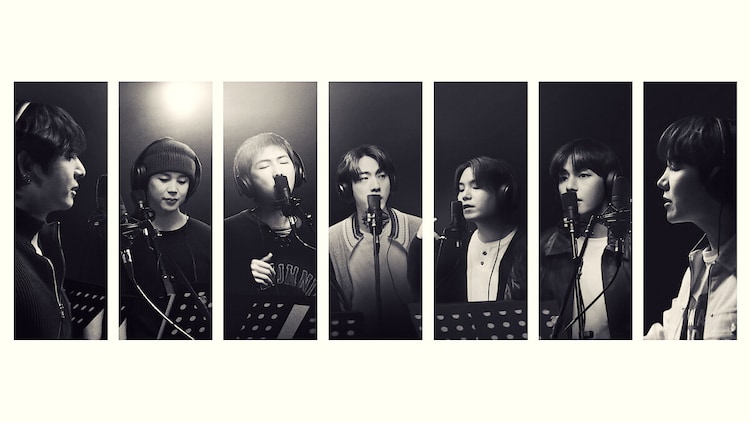
How do you balance what fans expect from each member with what the artists themselves want to try creatively?
Rather than drawing a clear line between the two, I tend to focus first on what each member most naturally wants to express at that point in time. I don’t necessarily see what fans expect and what the artists want to try as completely separate.
In many ways, those expectations come from the authenticity the members have shown over time. During the process, we share our thoughts openly and try to find a point where each member’s individuality is preserved, while still coming together cohesively as a group.
Each member has built a very different style through their solo work. While working on ARIRANG, when do you step in and back to guide the direction, and how do you now decide things like line distribution?
Ahead of the sessions, we spent about a month in the U.S. working on pre-sessions with various international songwriters. Once the members joined, we focused on understanding what each of them felt most comfortable with, and where they wanted to challenge themselves.
During the process, we kept communicating closely, but rather than stepping in too much, I tried to create an environment where things could develop naturally. As for line distribution, we approached it the way we usually do—having everyone record across the full track first, and then shaping it based on the overall flow of the song and how the different voices work together.
Since the members were actively involved throughout the process, we were able to test things in real time, which made the distribution feel more organic.
Do you ever worry that strong individual styles could pull the group in too many different directions, or do you see that as a strength? Was there a member who surprised you the most this time?
I see those strong individual styles more as a strength. Of course, there can be moments where it feels like things could pull in different directions, but rather than seeing that as a risk, I tend to focus on how those differences can come together to expand the group’s overall range.
In that sense, it’s less about limiting those individual styles and more about finding a way to bring them into one cohesive sound. As for this project, I felt that both V and Jin showed a noticeable expansion in their vocal range.
V, in particular, explored new possibilities by experimenting with rap and singing-rap, while Jin, through his solo tour experience, showed a clear growth in his vocal expression. He was able to deliver a level of nuance that went beyond what I had previously expected. Those changes added more depth and variety to the album overall.
During ARIRANG, how did you resolve any disagreement with the direction of a song or the creative theme of the album?
Different perspectives are an essential part of the process. What matters isn’t simply deciding which idea is right, but taking the time to understand what best serves the emotion and message of the song. Through those conversations, we try to understand each other’s perspectives, and gradually arrive at a point that everyone can agree on. That’s how we’ve continued to shape the work together.
You’ve guided BTS’ music over the years. Do you still see yourself in that role, or is it more of a collaboration now? What still challenges you? And, is Grammys something you are looking at next?
In the earlier days, my role was more about setting a direction and guiding it forward. Now, it feels much closer to building things together. As the members bring their own experiences and perspectives into the process, collaboration has naturally become a bigger part of how we work. That said, I still find myself constantly thinking about where the team is headed and how to keep that direction clear. Even after everything we’ve achieved, each project comes with new decisions to make, and that in itself continues to be a challenge.
As for something like the Grammys, I see it more as a possible outcome than a goal in itself. What matters more to me is how convincingly we can shape the work in front of us right now.
Personally, I tend to be more involved when it comes to refining the musical details and elevating the overall sound. And I see part of my role as making sure that the seven voices come together in a way that feels balanced within a single track.
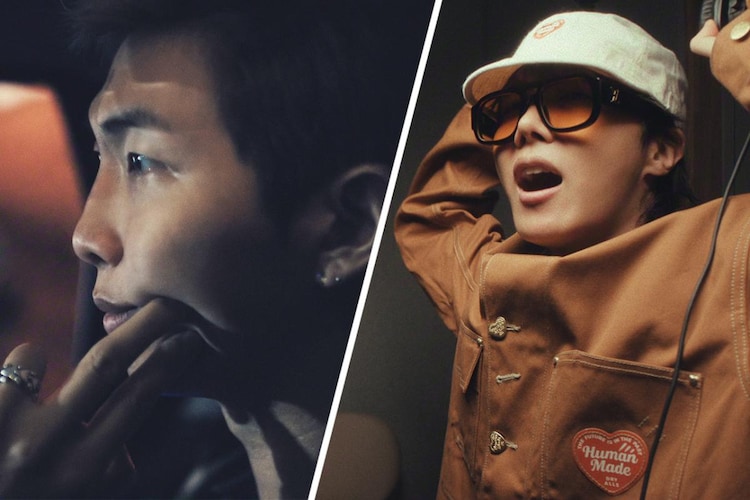
You spent nearly 20 years building BTS's sound from the inside. Since then, how have you changed as a producer, and your perspective on music?
When I first started working with BTS, I was focused on building a shared direction. Rather than trying to predict outcomes, I spent a lot of time thinking about what the members wanted to say and how we could express that through music. Now, that process feels more expanded. After each of them went through their own journeys and came back together, it became more important to understand what they had experienced and what perspectives they were bringing back. From there, the direction of the music began to form more naturally.
Through their solo work, especially around the period before and after their military service, each member has developed a clearer sense of their own musical identity. Because of that, bringing their voices together into a single piece has become a more layered and dynamic process.
Personally, my perspective on music has also changed. In the past, I focused more on results and completion. Now, I place more importance on the process - how the music is made and what meaning it carries along the way.
Lastly, you've spent your entire career making other people's voices the most important thing in the room. So what does your voice sound like, and is there a Pdogg album that the world will never hear?
As a producer, I see my role as helping someone else’s voice be heard more clearly. Because of that, it feels less important for my own voice to be at the forefront, and more important to shape the direction within the music. What matters most to me is how convincingly we shape the work in front of us right now. I do continue to work on my own ideas, but I’ve never really felt a strong need to present them as a separate body of work.
For now, it still feels more important for me to fully play my role within the team’s music. But if there comes a time when things naturally come together, I think my own voice might take shape in a different way.
PS: Pdogg shares production credits on 11 out of 14 tracks featured on ARIRANG. He is also seen in Netflix's BTS: THE RETURN documentary, jamming and ideating with BTS members.
ARIRANG has a total of 14 songs and is already touted to be one of the top contenders for Grammy nominations next year. The album is BTS’ first full album release in nearly four years, followed by an extensive world tour spanning across five continents, extending until 2027.
- Ends