
Where did the plot go wrong for Rajeev Khandelwal?
Rajeev Khandelwal has returned to TV as the host of Tum Ho Naa - Ghar Ki Superstar, a reality show that doesn't seem to do justice to his stature as a small screen superstar. The move brings back questions about why a widely praised actor never managed to convert acclaim into lasting commercial momentum.
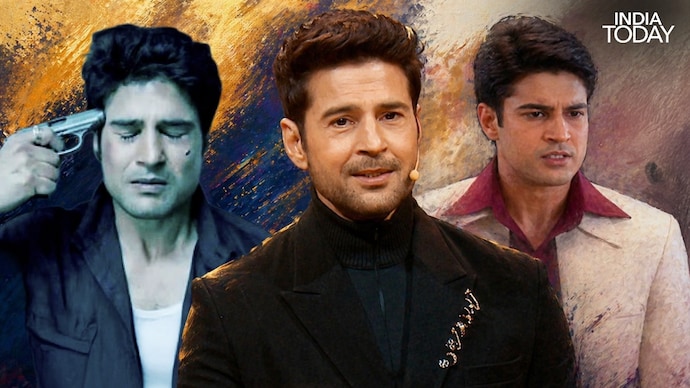

There is a version of Rajeev Khandelwal's career that could have gone very differently. A version where the man who made an entire generation of women fall in love with Sujal Garewal became one of Hindi cinema's most bankable leading men. A version where the critical praise for Aamir translated into the kind of sustained momentum that changes a career trajectory permanently. A version where the intensity he brought to Shaitan and Table No. 21 found the right commercial vehicle at the right time.
That version didn't happen. And now Rajeev Khandelwal is back on television, not as a brooding hero or a morally complex protagonist, but as the host of Tum Ho Naa - Ghar Ki Superstar, a reality show about homemakers. It is, by any measure, a long way from where he started.
Years later, as he returns to TV, the question resurfaces: where exactly did the plot go wrong – or did it at all?
The beginning was almost perfect
Khandelwal entered the industry in 2002 with Kya Hadsaa Kya Haqeeqat, but it was Kahiin To Hoga that changed everything. His Sujal Garewal redefined the romantic hero on Indian television – intense, brooding, wounded and unapologetically flawed – a character so thoroughly Mills & Boon that he could have stepped directly off the cover of a romance novel. He had the fandom, the ratings, and the kind of recall most actors spend decades chasing. And then, at the peak of it all, he walked away.
Leaving Kahiin Toh Hoga was perhaps the first big turning point. At a time when daily soaps guaranteed long-term stardom and financial stability, Khandelwal chose to step out rather than get typecast. It was a bold, almost rebellious move in an industry that thrives on consistency over risk. But the timing and the manner of the exit left a complicated legacy. Audiences who were devoted to the show because of him missed him badly.
He didn’t disappear, altogether. Shows like Time Bomb 9/11, CID, Left Right Left showcased his range. But the larger-than-life frenzy of Sujal was hard to replicate. Left Right Left was another hit. Captain Rajveer Singh Shikhawat gave him a different kind of heroism – disciplined, structured, military – and the show found its audience. And then his character was killed off. Again, an exit. He had said at the time that he left because he felt the character had reached a point of stagnation.
Bollywood came calling and almost delivered
Khandelwal made his film debut in 2008 with Aamir, which had all the right elements. The film was taut, intelligent, and Khandelwal carried it entirely on his own. Critics noticed. A Filmfare nomination for Best Male Debut followed. Here, finally, was the Bollywood breakthrough that his television stardom had promised. It set him apart as someone focused on performance rather than typical hero roles. Films like Shaitan, Soundtrack, and Table No. 21 only strengthened that image.
What followed should have built on that foundation. Shaitan in 2011 was another strong performance in a film that had plenty to say. Soundtrack in 2012 was a niche, performance-driven project that earned him real praise. Table No. 21 in 2013 gave him one of his most memorable screen moments. This cat-and-mouse thriller showed he could hold his own in genuinely demanding material.
But this is where things got tricky. Critics appreciated his performances, but that doesn't always translate at the box office. Films like Will You Marry Me?, Ishk Actually and Samrat & Co. didn’t make much impact, leaving him in a space where he was respected, but not quite seen as commercially bankable.
The commercial instincts that a mainstream Bollywood career demands are the ability to pick projects that balance artistic ambition with mass appeal, but it seemed to escape him consistently. His choices were either too niche to find a wide audience or too commercial to suit his strengths. He got stuck in that middle ground and struggled to break free.
The problem with being respected but not bankable
This has been the core challenge in Rajeev Khandelwal’s career, and it’s more common in Hindi cinema than people might admit. Some actors are always praised by critics but never quite get the big opportunities or long-term stardom. Khandelwal has been in that space for most of his film career.
It’s not about talent. Anyone who’s seen him in Aamir, Table No. 21 or even Kahiin To Hoga knows he’s a strong actor. The issue is timing and choices. The right roles didn’t always come his way, and even when they did, the films didn’t always work at the box office. And when that happens, the next big opportunity usually goes to someone else.
His TV comeback with Reporters in 2015 proved he could carry a serious, mature show. It was appreciated, but it didn’t change things for him in a big commercial way.
Rajeev Khandelwal as host
Shows like Sacch Ka Saamna, Juzz Baatt, and now Tum Ho Naa feel more like practical choices than creative ones. Hosting pays well, keeps you visible, and is less demanding than acting. But for someone with his talent, it also feels like a step away from the kind of work he once did.
That said, his story isn’t about failure. He has worked consistently and has never disappointed as an actor. If anything, his career shows how tough the industry can be for someone who doesn’t fit neatly into its boxes — too intense for mainstream roles, but not fully part of the indie space either.
What could have been different
Looking back, leaving Kahiin To Hoga, while brave, set a pattern. He often moved on just when things were working, before the audience was ready to let go. Whether that came from wanting to try new things or not wanting to be typecast, it cost him the steady momentum that most successful Bollywood careers need.
Actors who succeed commercially usually find something that works and stick with it. Khandelwal has done the opposite. He has kept reinventing himself. Each phase is interesting, but none has lasted long enough to build consistent success.
He’s back on television, and the audience that once loved Sujal Garewal still remembers him. As he steps back onto television with Tum Ho Naa - Ghar Ki Superstar, it doesn’t feel like a comeback but feels like another chapter in a journey that has always refused to follow the script.
Perhaps the real question isn’t where the plot went wrong, but whether Khandelwal ever intended to follow the expected plot in the first place.