
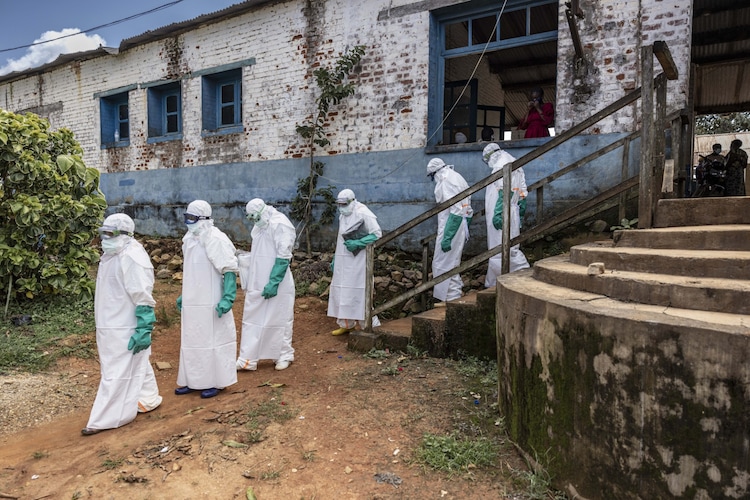
In Congo's conflict zones, Ebola is spreading faster than doctors can track
A rare Ebola strain is spreading through Congo's war-hit mining regions, where violence, weak healthcare and the lack of a vaccine or rapid test are making the outbreak harder to control.
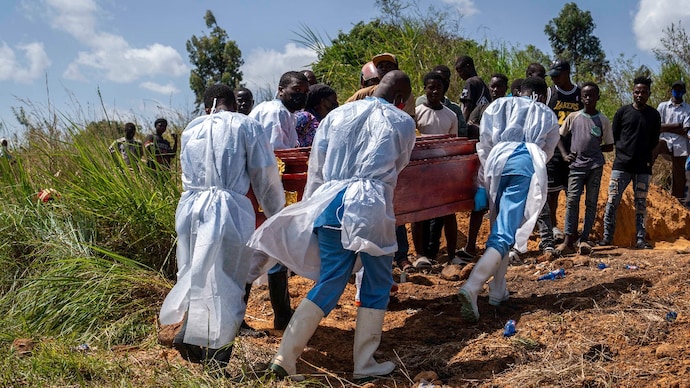
Health workers carry the coffin at the cemetery for the burial of a person suspected of having died from Ebola in Bunia, in the eastern Democratic Republic of the Congo. (Photo: AFP)

New Delhi,UPDATED: May 29, 2026 13:54 IST
A rare Ebola strain is spreading across conflict-hit Congo, where doctors are struggling without vaccines, rapid tests or proper treatment. Some cases have also been reported in nearby Uganda.
The World Health Organisation has said that experimental vaccines and treatments for the Bundibugyo virus should only be tested through proper clinical trials.
The global health body has suggested giving priority to three experimental drugs that may help treat the Bundibugyo strain of Ebola. These include MBP134, Regeneron’s maftivimab and the antiviral drug remdesivir made by Gilead Sciences.
WHO said these drugs, along with possible vaccines, should now be tested in proper clinical trials, so experts can collect more data on how safe and effective they are. The agency and outside experts have been working together to identify the most promising options.
At present, there is no approved vaccine, no specific treatment or cure and no rapid diagnostic test designed for the Bundibugyo strain of Ebola, making the outbreak especially difficult to control.
Some vaccine and treatment candidates have been identified that could be prioritised for testing in clinical trials.
A DANGEROUS OUTBREAK IN THE MIDDLE OF CONFLICT
The latest outbreak emerged in eastern Congo, a region that has already been devastated by years of armed conflict, displacement and weak healthcare systems.
WHO recently declared the outbreak a Public Health Emergency of International Concern, warning that the real scale of infections is much larger than official figures currently show.
According to WHO estimates, more than 1,000 confirmed and suspected cases have already been recorded in Congo, along with hundreds of deaths.
The actual numbers may be substantially higher, because the virus likely spread unnoticed for weeks before being identified.
Doctors say one major reason for the delay was that standard Ebola tests were designed to detect different strains of the virus and initially missed the Bundibugyo variant.
As a result, many patients were not diagnosed quickly enough.
DISEASE SPREADING THROUGH MINING AREAS
The outbreak’s epicentre is in Mongbwalu, a remote mining town in northeastern Congo located about 111 kilometres from Nyankunde.
The area is known for gold mining, with thousands of miners and traders working in difficult conditions using basic tools and machinery.
The virus has spread rapidly inside mining communities.
Healthcare facilities in the region are extremely limited, forcing many sick miners to travel long distances for treatment.
According to Dr. Charles Kashindi, a frontline fighter against the latest deadly Ebola outbreak at Nyankunde Hospital in Congo, some infected miners arrived at hospitals only after their condition had become critical.
One patient reportedly died just two hours after reaching a hospital, he told The Japan Times.
The region's difficult geography and ongoing violence are making medical response efforts even harder.
Eastern Congo has faced more than three decades of violence. WHO Director-General Tedros Adhanom Ghebreyesus has warned that Congo is facing a dangerous mix of war and disease that is making it extremely difficult to control the Ebola outbreak.
Armed groups, including the Rwanda-backed M23 rebels in North and South Kivu and an Islamic State-linked group in Ituri, continue to fuel violence in the region.
Tedros said, on May 27 in Congo, that the fighting is forcing large numbers of people to flee their homes and move into overcrowded camps, increasing the risk of the virus spreading further.
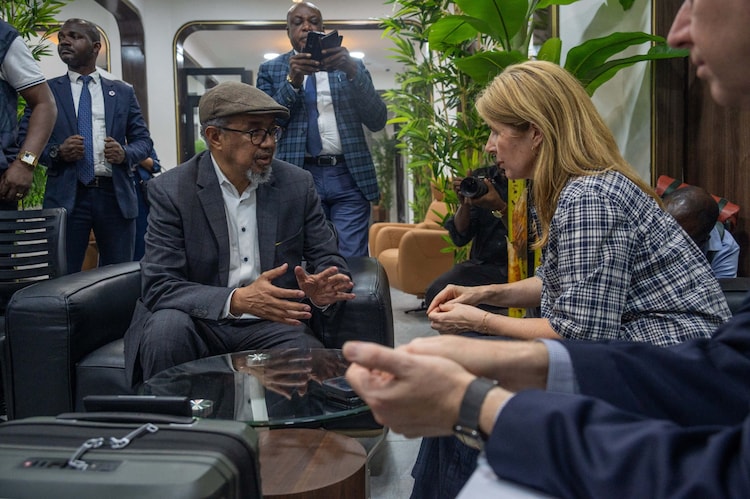
He added that attacks on healthcare centres are making it very hard for health workers to track patients and contain the outbreak.
“Frontline workers are risking everything,” he said, adding that it is nearly impossible to build public trust or isolate infected patients while violence continues.
The conflict has displaced millions of people, damaged healthcare infrastructure and created deep mistrust among communities.
“Conflict and displacement make everything harder,” he said, while appealing for a ceasefire. “No cause, no conflict, no grievance is worth condemning innocent people to death from a preventable disease.”
These conditions make controlling outbreaks extremely challenging.
HEALTH WORKERS AFFECTED
In remote clinics, nurses and doctors already struggling to manage malaria, measles and severe malnutrition are now dealing with Ebola patients as well.
Several healthcare workers treating infected people have also died.
WHAT IS THE BUNDIBUGYO STRAIN?
The Bundibugyo virus is a rarer strain of Ebola first identified in Uganda in 2007.
Ebola spreads through direct contact with infected body fluids such as blood, saliva, vomit or sweat.
Symptoms usually begin with fever, weakness, vomiting and diarrhoea. In severe cases, the disease can lead to heavy bleeding, organ failure and death.
Currently, there is no cure or approved vaccine specifically for this strain.
There is also no rapid test that can quickly confirm Bundibugyo infections, which experts say has delayed diagnosis and allowed the virus to spread further.
WHAT ABOUT INDIA?
India currently has no reported Ebola cases.
However, authorities are closely monitoring travellers arriving from affected African countries and have advised people to avoid non-essential travel to outbreak-hit regions.
The risk to India remains low at present, health authorities said, but surveillance is important because Ebola outbreaks can spread across borders if not controlled early.
- Ends