
Can you have mangoes if you have diabetes? Nutritionist explains
Can mango fit into a diabetic diet? Experts say yes if eaten mindfully. From portion control to smart pairings, here's how to enjoy mango without causing sudden spikes in blood sugar levels.
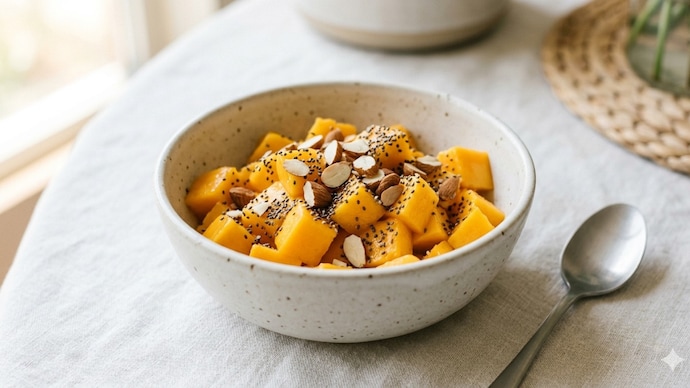

Mango season is irresistible, but if you have diabetes, the question is always the same: can you eat it safely? The answer isn’t a strict yes or no; it’s about balance, portion, and smart choices.
IS MANGO SAFE FOR PEOPLE WITH DIABETES?
Mango has a moderate glycaemic index (GI) of around 50–55, meaning it raises blood sugar gradually when eaten in controlled portions. It’s not off-limits, but it’s not unlimited either.
THE SCIENCE BEHIND MANGOES
Mangoes contain mangiferin, a bioactive compound studied for improving insulin sensitivity and reducing inflammation. So while it’s sweet, it also offers functional health benefits when consumed mindfully.
PORTION SIZE IS EVERYTHING
A safe portion for most people with diabetes is
80–100 grams (roughly 1/2 cup chopped) of chopped mango
Around 12–15 grams of carbohydrates
This helps keep blood sugar spikes manageable.
TIMING CAN MAKE OR BREAK YOUR BLOOD SUGAR
Avoid eating mango on an empty stomach; it can spike sugar quickly. Instead:
Eat it after a balanced meal
Or pair it with protein or healthy fats.
HOW TO EAT MANGO WITHOUT SPIKES
Pair with nuts or seeds
Keep portions small
Eat it whole, not as juice
WHAT TO AVOID
Mango shakes, desserts, or packaged juices
Pairing with refined carbs
Overeating, even if it’s “healthy”
“Diabetes doesn’t mean eliminating mangoes; it means learning how to include them wisely,” says Palak Nagpal, clinical nutritionist. “Portion control is crucial, and pairing mango with protein or fat can significantly reduce glucose spikes.”
She adds, “Eating mango after a meal rather than on an empty stomach helps slow sugar absorption and keeps blood glucose levels more stable.”
Highlighting moderation, she notes, “A small serving of mango can fit well into a diabetic diet if you’re mindful. The problem is rarely the fruit; it’s the quantity and the way we consume it.”
You don’t have to say goodbye to mangoes if you have diabetes. With mindful portions, the right timing, and smart pairings, you can enjoy this summer favourite without compromising your blood sugar control.