
Hypertension hits men hardest – but women not far behind
Experts say hypertension is rising across India, with younger adults increasingly affected and women often underdiagnosed. They warn that weak screening, low awareness and delayed treatment are widening cardiovascular risks.
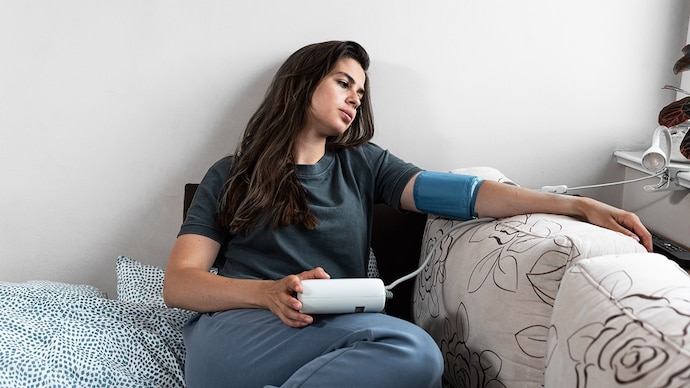

 Hypertension, often called the “silent killer”, is emerging as one of India’s biggest public health challenges, affecting millions across age groups and increasingly striking younger adults. While men continue to show higher prevalence rates, women are not far behind – and experts warn that hypertension among women remains underdiagnosed, misunderstood and poorly managed due to biological, social and systemic factors.
Data from the National Family Health Survey-5 (NFHS-5), carried out between 2019-2021 and the latest survey period for which large scale statistics IN India are available, underline the scale of the crisis.
The survey reported hypertension prevalence of 21.3 percent among women aged 15 to 49 years and 24 percent among men aged 15 to 54 years.
Also, on average, a whopping 49.5 percent of Indian men and 36.8 percent of women with hypertension – a risk factor for various life-threatening diseases – don’t have the disease under control despite taking medication, a secondary analysis of the NFHS figure found.
The WHO describes hypertension or high blood pressure, a leading cause of mortality, as the condition when the pressure in the blood vessels is too high – 140 mm HG (millimetres of mercury) systolic pressure and 90 mm HG diastolic pressure, or higher.
Systolic pressure is the pressure created as blood pumps out of the heart and into the arteries, while diastolic pressure is the pressure created as the heart rests between heartbeats. Normal blood pressure is less than 120/80 mm HG.
Overall, it is estimated 22 crore Indian adults have hypertension, a major risk factor for heart attacks and strokes, apart from several other diseases that quietly damage
Cardiologists say the growing burden is being fuelled by sedentary lifestyles, stress, obesity, unhealthy diets and poor sleep patterns.
Senior heart specialist Dr Anjan Siotia said hypertension remains one of the country’s most underestimated diseases because it can progress silently for years without obvious symptoms and has increased sharply over the past decade.
The sharpest rise is being seen among younger adults in the 30–40 age group, driven by lifestyle factors such as lack of exercise, obesity, stress and rising metabolic disorders.
RISK FACTORS IN WOMEN
Doctors say hypertension in women presents unique challenges because symptoms are often subtle or mistaken for other conditions. Unlike men, women frequently report non-specific symptoms such as fatigue, headaches, anxiety, poor sleep, palpitations or breathlessness.
“Women experience high blood pressure in different ways when compared to men and therefore are often misdiagnosed or not recognised as having hypertension in many cases within India,” said Dr Anil Mishra, director of cardiology at CK Birla and BM Birla Heart Hospital.
According to Dr Ameya Udyavar, cardiologist and cardiac electrophysiologist with P D Hinduja Hospital in Mumbai, many women may develop hypertension during pregnancy, while using oral contraceptive pills or following menopause.
But the symptoms related to the condition, said Dr Mishra, are often attributed to stress, hormonal fluctuations, menopause or lifestyle-related exhaustion, delaying diagnosis and treatment.
This delay can have serious consequences. According to experts, many women only discover they have hypertension after developing complications such as cardiovascular disease, stroke or kidney failure.
The problem is compounded by low awareness levels and deeply rooted social attitudes that continue to frame heart disease as predominantly a “man’s problem”.
Doctors say women also tend to prioritise family responsibilities over their own health, leading to fewer preventive health check-ups and delayed medical consultations.
As a result, routine blood pressure screening is often neglected until symptoms become severe.
Adding to the complexity are conditions unique to women that increase long-term cardiovascular risk.
These include polycystic ovarian syndrome (PCOS), now renamed as polyendocrine metabolic ovarian syndrome or PMOS, also, apart from pregnancy-induced hypertension, menopause and hormone-related changes.
Experts say such factors are still inadequately discussed during preventive healthcare consultations.
Dr Mishra pointed out that women’s heart and vascular health remains insufficiently understood even within parts of the healthcare system. Combined with poor public awareness, this creates a dangerous gap in early detection and treatment.
SCREENING GAP WIDENING
Public health specialists say the challenge now extends beyond diagnosis to long-term management and sustained control of hypertension.
Despite increased awareness campaigns in urban India, many patients discontinue medicines once symptoms improve, while others fail to monitor blood pressure regularly. In rural and semi-urban areas, limited healthcare access, financial constraints and lack of routine screening continue to hinder early detection.
Women face additional barriers in adhering to treatment plans. Many struggle to maintain regular follow-ups because of caregiving responsibilities, restricted mobility or lack of financial independence.
Mental stress and sleep deprivation – both recognised risk factors for hypertension – are also more common among women balancing domestic and professional demands.
Experts warn that uncontrolled hypertension significantly raises the risk of heart attack, stroke, heart failure and kidney disease. Yet the condition often remains invisible until a major medical emergency occurs.
Doctors are therefore calling for gender-sensitive screening strategies and stronger awareness campaigns that specifically address women’s cardiovascular health.
They stress that routine blood pressure monitoring should become a standard part of preventive healthcare for women across all age groups, especially during pregnancy and menopause.
Lifestyle interventions remain central to prevention and management. Physicians recommend regular physical activity, balanced diets low in salt and processed foods, stress reduction, adequate sleep and avoidance of tobacco and excessive alcohol consumption.
“Monitoring blood pressure frequently, managing stress, getting enough sleep, exercising, and being aware of risk factors specifically related to heart disease in women are very important,” Dr Mishra said, adding that early detection and timely intervention are crucial to preventing long-term complications.
With India already carrying one of the world’s largest burdens of cardiovascular disease, experts caution that hypertension can no longer be viewed merely as an ageing-related disorder or a predominantly male condition.