
Whey protein, plant protein, yeast protein: Which one should you pick?
"This or That" is a series by Health Wealth, where we compare the nutritional values of two seemingly similar foods and help you make informed choices.
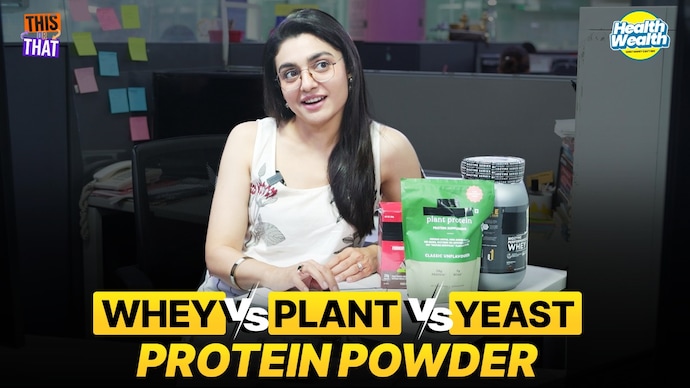

 Whey protein has been around for decades. Plant protein was developed for people who couldn’t digest whey, had ethical reasons related to animal product consumption, or wanted different cardiometabolic benefits. How do these compare to the new yeast protein, which is made in laboratories by fermenting yeast cells in a controlled environment? Let’s find out.
NUTRITION
Protein is made up of smaller building blocks called amino acids. There are 20 amino acids in total, and your body makes 11 of them. The other nine, which humans can't make, are called essential amino acids (EAAs). These are taken through diet and supplements.
A good protein powder should provide you with all nine EAAs.
On average, one scoop or one serving of whey protein gives you 25 to 28 grams of protein; plant protein has 22 to 26 grams of protein per serving, and yeast has 24 to 26 grams of protein per serving.
Whey protein is the OG. It’s a complete protein with a high Branched-Chain Amino Acid (BCAA) content.
Three of these EAAs, leucine, isoleucine, and valine, make up BCAAs. These are required for recovery from exercise and also for cognition, focus, and movement. BCAA in whey protein is usually between 15 and 18 grams per 100 grams. But this is not your standard serving size. One serving of protein powder is usually around 30-35 grams.
The composition of plant proteins varies by source. Beans and lentils usually lack some essential amino acids, but plant protein is complete if derived from soy. Plant proteins are usually blended from a few different sources to make them complete.
BCAA of plant protein is in the range of 10 to 16 grams per 100 grams.
In most cases, yeast protein is complete because it is produced in a controlled environment and temperature conditions. BCAA of yeast protein powders varies from 12 to 15 grams per 100 grams.
But, according to nutrition researcher Dr Seema Gulati, the focus is more on EAA rather than BCAA.
For whey protein, EAA is usually in the range of 36 to 38 grams per 100 grams.
For plant protein, this is a bit lower, around 26 to 30 grams per 100 grams.
For yeast protein, the range is wider depending on the fermentation process; it can be around 27 to 37 grams per 100 grams.
It is also important to note that protein doesn’t get absorbed as soon as you consume it. Absorption rate, which determines how much protein your body can use from what you are consuming, is a factor. But Dr Gulati suggests that instead of focusing on absorption rates per hour, it is more important to distribute about 20–30 g of high-quality protein across meals for optimal utilisation.
Protein utilisation can vary with age, dosage, muscle mass, and physical activity.
CALORIES
Many protein powders come with added sugars to give you a sweet taste, so the calories of sweetened products will be higher. Some variants also use zero-calorie sweeteners like sucralose and monk fruit.
We compared nutrition labels of some commonly available protein powder brands, and whey protein powders had calories ranging from 130 to 140 per serving.
Plant protein has around 120 to 150 calories per serving. And yeast protein brands have 120 to 140 calories per serving.
VERDICT
What is the Health Wealth verdict here? Which one should you pick: whey, plant, or yeast protein?
You should first check if you can meet your protein requirements through your food. If you can't, exploring protein supplements is the next step.
Whey protein is the gold standard for a reason. It is the best kind of protein supplement for those who can digest milk products.
"Whey protein remains highly effective for stimulating muscle protein synthesis due to its rich leucine content and high digestibility," Dr Gulati said.
According to the researcher, well-formulated plant proteins, particularly soy or blended sources, are highly relevant in the Indian context and can support cardiometabolic health and sustainability.
"Yeast-based proteins are a newer category with promising amino acid profiles, but long-term human evidence is still evolving," Dr Gulati said.