
Cricket is diplomacy too, and Japan has very much taken field
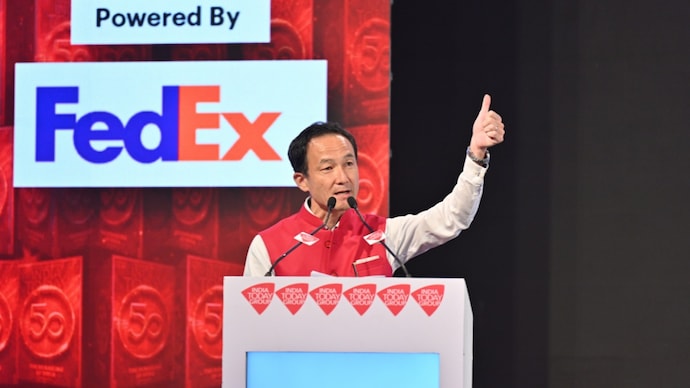
Noriaki Abe, Japan's Minister (Political) at the country's embassy in India, said at the Indo-Japan Conclave that sports is the most meaningful form of soft power

 When most people think about the soft power of Japan, what comes to mind are manga, anime, fashion, cuisine and technology. But of late, cricket is coming up as a major bridge between Japan and other countries.
Noriaki Abe, Japan’s Minister (Political) at the country’s embassy in India, said at the India Today Indo-Japan Conclave in New Delhi on May 22 that cricket was brought to his country in 1863 by the British community in Yokohama. By 1868, the first cricket club was set up, but later baseball became the dominant sport.
In the 1980s, Japanese students returning to their country helped reestablish cricket as a popular sport. In 1984, the Japan Cricket Association was established and it became a member of the International Cricket Council (ICC) in 1989. Cricket is not a peripheral sport anymore and there are 8,000 players and 14 high standard cricket grounds in the country.
The interaction was during the session ‘Soft Power: The New India-Japan Cultural Bridge’. Abe said the most fascinating aspect of cricket in Japan was that it is deeply cosmopolitan. Teams in Japan include players from India, New Zealand, Nepal, Bangladesh. Team Japan is blessed by this diversity as cricket plays a role in fostering communities across borders. He said that even though India and Japan enjoy close relations, the two countries have not yet played an international match, and hoped that this happens before 2027 when India and Japan commemorate 75 years of diplomatic relations.
Incidentally, cricket is not the only sport where India and Japan are working together. There is close cooperation in sports such as judo, rugby and swimming. In Gujarat and Odisha, Japanese coaches are supporting young players in rugby and similarly in Lucknow, Japanese coaches are providing support to Indian players in para judo.
Abe shared Japan’s vision of the Indo-Pacific region. Japan’s vision of a free and open Indo-Pacific is based on fundamental values of openness, free navigation, rule of law and respect for all nations large and small. He said cricket connects this geography very naturally, and wherever the Indian diaspora flourishes, cricket becomes a cultural anchor and sport becomes diplomacy without speech.
Abe said cricket would feature at the Asian Games in Nagoya in front of a Japanese audience this year and in 2028 would be played at the Olympics. Cricket is no longer a niche sport but part of a global sporting future.
EXPERT-SPEAK
* “Cricket in India is not merely a sport. It is woven into the emotional fabric of society.”
* “Children across Japan are taking up cricket with genuine passion and curiosity, and this is where India enters the story. For Japan, India is not just a cricket superpower but a source of learning inspiration and administration.”
* “India has built one of the world richest sporting ecosystems around cricket—in coaching, talent development, infrastructure, business and public enthusiasm. Cricket is emerging as a meaningful cultural bridge between Japan and India and perhaps as a unique asset of soft power diplomacy in the Indo-Pacific region.”
* “Japanese approaches to discipline and training are influencing Indian sport ecosystems. This represents something much larger than medals and rankings.”
* “Sport is the most meaningful form of soft power because of human connections that can be built only by shared efforts, resilience, humility team work, mutual respect and competitiveness,. These values matter not just in sport but in diplomacy as well.”
Subscribe to India Today Magazine