
How BJP is revving up for the Battle of 2024
A ground assessment of the party's opportunities and challenges in the states and the action plan for Lok Sabha seats it lost or barely won in 2019
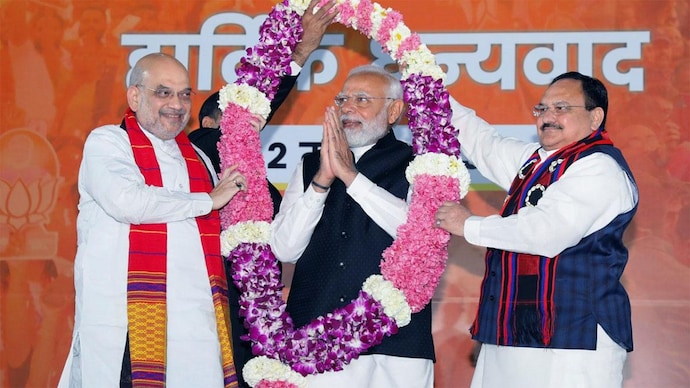

 Over the past decade, the BJP, under Prime Minister Narendra Modi and Amit Shah, has transformed itself into a formidable poll machinery. It has fine-tuned the blueprint for electoral success and setbacks do not appear to ruffle the party. Rather, the BJP is quick to learn from mistakes and amend its election strategies. Â
Even as the BJP is gearing up to defend its southern bastion of Karnataka, where elections will be held in May, the party hasn’t slowed down on restructuring of the organisation or outreach programmes in other parts of the country. The target is very clear: win the Lok Sabha election next year, and win it big. Â
The BJP’s target for 2024 is to grab 50 per cent of the vote share, something no party has achieved. The BJP is confident that given its organisational strength, this is doable. Here’s a SWOT analysis of how the BJP is placed for the upcoming state elections and the Battle of 2024. Â
KARNATAKAÂ
AdvantagesÂ
- Strong organisational structureÂ
- Bickering within rival Congress (D.K. Shivakumar vs Siddaramaiah) evident Â
- Pro-Hindutva sentiment in the stateÂ
- Making inroads into Vokkaliga and Kuruba vote basesÂ
- Roughly 60 new faces fielded Â
- B.S. Yediyurappa, former chief minister and the tallest Lingayat leader in the state, is leading the assembly poll campaign
  ChallengesÂ
- Chief minister Basavaraj Bommai failed to emerge as a regional satrap or increase party’s hold over the Lingayat communityÂ
- Deep factionalism—former CM Jagadish Shettar and former deputy CM Laxman Savadi left the partyÂ
- Corruption allegations, anti-incumbencyÂ
- OBC narrative in questionÂ
- Congress raking up local issues, avoiding direct attacks on PM ModiÂ
JAMMU & KASHMIRÂ
AdvantagesÂ
- Consolidation of the Hindu vote in JammuÂ
- Post-delimitation, a BJP-led alliance could make some headway in KashmirÂ
- Ghulam Nabi Azad’s exit has weakened the Congress. His fledgling outfit may split the anti-BJP voteÂ
- Opposition leaders like Omar Abdullah and Mehbooba Mufti have announced they may not contest the polls unless J&K’s special status is reinstatedÂ
ChallengesÂ
- If Gupkar Alliance contests the polls, it will consolidate the Opposition voteÂ
- Kashmiri Muslims remain peeved with the BJP over abrogation of Article 370 and downgrading of Kashmir into a Union territoryÂ
- BJP lacks cadre base in the Kashmir ValleyÂ
RAJASTHANÂ
AdvantagesÂ
- Pro-Hindutva sentimentÂ
- PM Modi commands appealÂ
- Anti-incumbency against chief minister Ashok Gehlot and CongressÂ
- BJP’s tribal outreachÂ
- The appointment of C.P. Joshi as BJP state unit chief, along with rejig of party organisation, uplifted cadre’s moodÂ
ChallengesÂ
- Indecision over letting former CM Vasundhara Raje lead the poll campaign
- Impact of social sector schemes of the Ashok Gehlot government Â
- BJP leadership’s backing of Union minister Gajendra Singh Shekhawat may not sync with the mood of state leaders Â
MADHYA PRADESHÂ
AdvantagesÂ
- Hindutva agendaÂ
- PM Modi’s appealÂ
- BJP’s hold over major OBC communitiesÂ
ChallengesÂ
- Factionalism in state unitÂ
- BJP has accommodated too many Congress turncoatsÂ
- Corruption scandals during BJP reign Â
CHHATTISGARHÂ
AdvantagesÂ
- Outreach to tribal communityÂ
- Consolidation of OBC base with appointment of Arun Sao as state unit chiefÂ
- Anti-incumbency, corruption allegations against Congress governmentÂ
Challenges
- Indecision on former CM Raman Singh’s leadership and no clear alternativeÂ
- Party’s inability to aggressively challenge the Bhupesh Baghel government on issuesÂ
TELANGANAÂ
Advantages Â
- PM Modi’s appealÂ
- Outreach among OBCsÂ
- Hyper-Hindutva narrative working in urban centresÂ
- Restructuring of party   Â
ChallengesÂ
- Absence of a tried and tested organisational structureÂ
- Hindutva appeal limited to urban centresÂ
- Infighting between BJP old timers and entrants from other parties Â
- Other Opposition parties, such as Congress and TDP, still big in rural parts of the stateÂ
ODISHA
AdvantagesÂ
- The organisational structure has been strengthened in the rural areas and extends across the state now
- BJP has two faces from Odisha in the Union cabinet—Dharmendra Pradhan and Ashwini Vaishnaw
- Party has capitalised on the decline of Congress in the state
ChallengesÂ
- BJP lacks a leader who can be projected as an alternative to chief minister Naveen PatnaikÂ
- The BJP leadership doesn’t want to electorally hurt the Biju Janata Dal much, in return for indirect support extended in Parliament on crucial billsÂ
- BJP organisation needs to be restructured to build appeal among tribal and OBC communitiesÂ
LOK SABHA SEATS ON WATCH
Last May, the BJP had identified for special focus 144 Lok Sabha constituencies where it lost or barely won in 2019. The party deployed 25 Union ministers in these constituencies for a SWOT analysis. A majority of these seats are in six states—Punjab, West Bengal, Maharashtra, Uttar Pradesh, Bihar and Kerala. Following the split with Janata Dal (United) and the political realignment in Maharashtra, the party added 16 seats to the list.Â
The BJP aims to win more than half of these seats in 2024. Among the Union ministers put in charge of the outreach are Piyush Goyal, Dharmendra Pradhan, Narendra Tomar, Giriraj Singh, Mansukh Mandaviya, Smriti Irani, Anurag Thakur, Sanjeev Balyan, Jitendra Singh and Mahendra Nath Pandey. They are tasked with building local leadership in these constituencies, gathering demographic data and overseeing implementation of the Modi government’s social sector schemes there. Based on surveys and data, the ministers have already earmarked the party’s weak presence in 130,000 booths across these constituencies. Â
In January this year, the BJP launched a plan to hold public rallies in these clusters—to be addressed by Modi, Shah and party chief J.P. Nadda. Here’s a state-wise assessment of the party’s plan:
BIHARÂ
Total LS seats: 40Â
BJP*: 17Â
Focus seats: 16Â
StrategyÂ
- Deploy former Bihar deputy CM Sushil Modi back in the state to take on Nitish KumarÂ
- Corner Rashtriya Janata Dal (RJD) on corruptionÂ
- Rework alliance with Chirag Paswan faction of Lok Janshakti Party (LJP) and Mukesh Sahani’s Vikassheel Insaan Party (VIP), besides attracting the Kushwaha caste Â
- Party appointed Kushwaha leader Samrat Choudhary as BJP state unit chiefÂ
- Outreach among Pasmanda (extremely backward) Muslims Â
ChallengesÂ
- With the RJD, JD(U) and Congress in the ruling alliance, there is a strong chance of emergence of a Kurmi-Yadav-Muslim voting blocÂ
- Results of the ongoing caste census in Bihar could disrupt caste equations in the stateÂ
- If rivals amass Muslim and OBC votes, it will hurt the BJP
PUNJABÂ
Total LS seats: 13Â
BJP*: 2Â
Focus seats: 9Â
StrategyÂ
- Build the party in rural areasÂ
- Poach leaders from Congress, Akali Dal and integrate them into party frameworkÂ
- Build bridges with Sikh organisationsÂ
ChallengesÂ
- Residual anger in electorate over the now-repealed central farm lawsÂ
- BJP unable to distance itself from allegations of corruption and misuse of power against leaders joining the party from the Congress and Akali DalÂ
- BJP cadre unhappy with the inductions from other partiesÂ
- BJP isn’t seen as an alternative in PunjabÂ
- Rise of radical elements in rural PunjabÂ
MAHARASHTRAÂ
Total LS seats: 48Â
BJP*: 23Â
Focus seats: 18Â
StrategyÂ
- Establish BJP as the sole custodian of Hindutva politicsÂ
- Project Eknath Shinde’s Shiv Sena faction as the real SenaÂ
- Strengthen entry into rural pockets with more penetration into institutions there, including cooperativesÂ
ChallengesÂ
- An aggressive BJP may unite MVA (Maharashtra Vikas Aghadi) constituents Â
- Shinde faction of Shiv Sena untested electorallyÂ
- Limited tenure to turn around party’s fortunesÂ
KERALAÂ
Total LS seats: 20Â
BJP*: 0Â
Focus seats: 5Â
StrategyÂ
- Work with Christian groups that have alienated from the CongressÂ
- Bring new leadership in the state, especially in youth organisationsÂ
ChallengesÂ
- RSS has a deep network in the state but is unable to transfer votes to the BJPÂ
- Party’s leader and cadre presence on the ground weakÂ
WEST BENGALÂ
Total LS seats: 42Â
BJP*: 17Â
Focus seats: 15Â Â Â
StrategyÂ
- Position BJP as sole opposition to Trinamool Congress (TMC)Â
- Take Hindutva, nationalism narratives to the rural areasÂ
- Reach out to the Bengali ‘bhadralok’ segment in urban centresÂ
ChallengesÂ
- Exodus from party towards TMC could increase as elections approachÂ
- Breakdown in organisational structure in parts of the stateÂ
- Factionalism in state unitÂ
UTTAR PRADESHÂ
Total LS seats: 80Â
BJP*: 64Â
Focus seats: 20Â
StrategyÂ
- Outreach to Jatav and Yadav communities (support base of Bahujan Samaj Party and Samajwadi Party, respectively) and JatsÂ
- High-decibel coverage of centrally sponsored welfare schemesÂ
- Build a ‘controlled’ Hindutva narrativeÂ
- Timely construction of Ram temple in AyodhyaÂ
- Wooing Pasmanda MuslimsÂ
ChallengesÂ
- Hindutva stance dissuades Muslims from backing partyÂ
- Anti-incumbency against second-term BJP MPsÂ
- Party’s no-dynasty rule and norm of retiring leaders over 70 years of age have caused some uncertainty among cadreÂ
(*LS seats won by BJP in 2019)Â
Subscribe to India Today Magazine