
How India's richest civic body has got a woman as its head for the first time
IAS officer Ashwini Bhide has been appointed as commissioner of the Brihanmumbai Municipal Corporation, joining two other women, the mayor and leader of the Opposition, at the top in the civic body
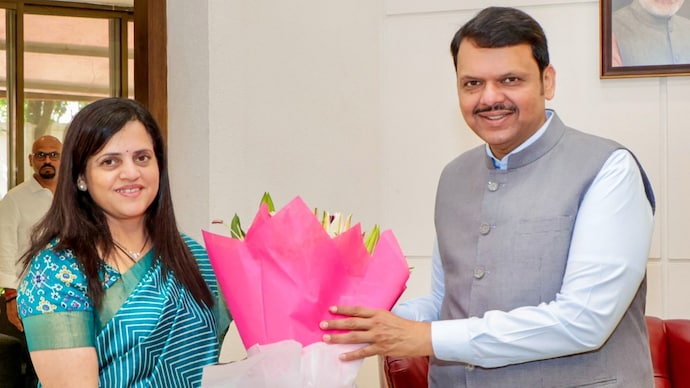

 Mahila raj has begun in the Brihanmumbai Municipal Corporation (BMC), which is the richest civic body in India. It got its first woman chief with senior IAS officer Ashwini Bhide being appointed as the city’s municipal commissioner replacing Bhushan Gagrani, who retired on March 31. Bhide, Ritu Tawde of the BJP as mayor and Kishori Pednekar of the Shiv Sena (Uddhav Balasaheb Thackeray) as the leader of the Opposition now form the triumvirate in the civic body.
While the names of bureaucrats like Dr Sanjay Mukherjee, commissioner, Mumbai Metropolitan Region Development Authority (MMRDA), and additional chief secretaries Milind Mhaiskar and Asim Kumar Gupta were also in the reckoning, Bhide, who was the additional chief secretary in chief minister Devendra Fadnavis’ office, made the cut as head of BMC, which has an annual budget of Rs 81,000 crore.
The 1995-batch IAS officer from the Maharashtra cadre hails from the Sangli district. The 55-year-old Bhide holds an MBA degree and a master’s in English literature, and has worked as an assistant district collector in Kolhapur, the chief executive officer in the Nagpur and Sindhudurg Zilla Parishads, additional metropolitan commissioner in the MMRDA, managing director of Mumbai Metro Rail Corporation Ltd from 2015-20 and as additional municipal commissioner in the BMC. Incidentally, her husband Dr Satish Bhide, a medico-turned IAS officer, had been a joint commissioner in the BMC, but later quit the service to join the private sector.
Officers who have worked with Bhide describe her as an aggressive go-getter and someone who focuses on execution of projects. Bhide is widely credited for the execution of the Metro-3 or the ‘Aqua Line’ that runs from Colaba to SEEPZ. But, during the tenure of the Fadnavis-led government from 2014-19, there was a controversy over locating the car shed for the project in the Aarey Milk Colony, which required the felling of over 2,600 trees in the green lung of an increasingly concretised city. Bhide stoutly defended the decision and even stood up to critics of the move on social media.
A few hours after the Bombay High Court dismissed petitions against the tree felling for the car depot in October 2019, the authorities began chopping down trees, a decision that led to massive protests from environmentalists and the undivided Shiv Sena, which was part of the Fadnavis regime. Shiv Sena leader Aaditya Thackeray had come out against the decision. The tree cutting was seen as a move to cock a snook at the Thackerays. Officials had claimed that Aarey did not fall into the textbook definition of a forest. After the Uddhav Thackeray-led Maha Vikas Aghadi (government was formed in 2019, Bhide was sidelined. She was, however, brought back to the BMC during the Covid-19 pandemic.
As the civic chief, Bhide will have several challenges on hand. One is to tackle rampant corruption at the ward level that affects delivery of services to the people. She also needs to check rampant illegal hawking across the city. Ironically, while the city has commissioned or is in the process of constructing a 337-km metro railway network, the state of the civic bus service run by the Brihanmumbai Electricity Supply and Transport Undertaking, once described as the best in India, continues to slide, affecting the mobility of the working classes, who cannot afford expensive options like the metro. The BEST is a civic-run undertaking and needs a massive infusion of funds to improve quality of services. The city is also seen as becoming increasingly hostile towards the poor and middle classes, with growing gentrification, lack of open and recreational spaces, poor walkability and inadequate access for the disabled.
The BMC has its genesis in 1807, when a Court of Petty Sessions comprising two magistrates and a Justice of Peace, was formed. The BMC was created in 1865 and the controversial yet intelligent Arthur Crawford was appointed as the first commissioner. In 1872, a regular corporation was formed with 64 members, with the electoral comprising taxpayers. In 1922, rent payers were also given voting rights with the taxpayers, and elections with adult franchise were held for the first time in 1948. From 1950, the jurisdiction of the civic body was expanded to include the suburbs as well. Till then, suburbs like Bandra had their own municipal body, while Goregaon had a gram panchayat. Stalwarts like M.G. Pimputkar, J.B. D'Souza, B.G. Deshmukh, D.M. Sukhtankar, Jamshed G. Kanga and Sadashivrao Tinaikar have been at the helm of the municipal body.
The BMC was under the control of the municipal commissioner-cum-administrator after the tenure of the previous elected house expired in 2022. Gagrani and his predecessor I.S. Chahal held that post.
Subscribe to India Today Magazine