
How VFX firm philmCGI breathed real life into 'Dhurandhar' films in tight deadlines
Co-founder Anand Bhanushali and VFX studio head Sanjay Rajan share how philmCGI upped its game to capture director Aditya Dhar's vision on screen

 As Dhurandhar: The Revenge revels in box-office glory, director Aditya Dhar has taken to Instagram to thank his key technical collaborators on this cinematic journey. Unsurprisingly, Dhurandhar has begun its awards sweep in the technical categories, which includes visual effects. Creative animation and VFX studio philmCGI has already got two trophies in its cabinet of what will be likely more.
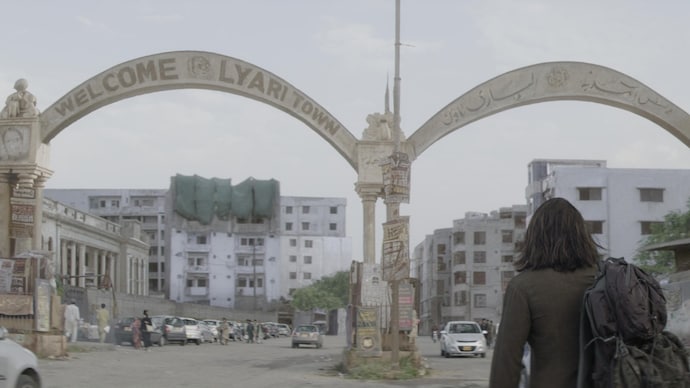
The Pune and Thrissur-based company was one of the major VFX studios that Dhar relied on to create the world of Karachi’s Lyari as well as make the umpteen action sequences more robust. To make Lyari compelling, the studio says it enhanced the environment through “set augmentation and refined compositing much of this work had to align precisely with live-action plates, requiring frame-level accuracy to ensure the environment felt grounded and cohesive”.
Over the past two decades, philmCGI has delivered over 80 projects, spanning more than 7,500 VFX shots across titles such as Jubilee (Amazon Prime), Black Warrant (Netflix), Pathaan and Thug Life, and collaborated with filmmakers and production houses both in India and abroad.
In an exclusive interview to INDIA TODAY, Anand Bhanushali, philmCGI managing director and co-founder, and Sanjay Rajan, head of VFX studio, detail the process of collaborating with Dhar—how they worked round the clock to meet the release deadline and how, as the Dhurandhar films show, the best visual effects are those invisible to the eye.
Q. How and when did the collaboration with Aditya Dhar begin?
Anand Bhanushali: The association with B62 Studios (owned by Aditya Dhar and his brother Lokesh) began when we were briefly working on an untitled work with Dhar around 2018-19. Unfortunately, it didn’t take off. We had seen Uri: The Surgical Strike and were very impressed with Aditya’s style of direction. Things finally clicked when Dhurandhar was going on floor and B62 reached out to us for VFX.
Sanjay Rajan: It was early 2025. They had finished their first schedule in Thailand. Around March-April, they were starting the second schedule. Our VFX supervisor visited the set during it.
Q. It’s a mammoth project. How long did the work go on for the two parts? Give us a sense of the scale of work.
Bhanushali: Dhar’s vision was big. The normal process is that the shoot gets done, editing happens, then the VFX production bids are done. We somewhere knew that the shoot is getting over by May [2025]. Post-edit is when we started talking about VFX. At the time, we didn’t know it’d be a 7.5-hour-long film (two parts).
Rajan: We started R&D in the early stages and knew what was coming and what we needed to do. There was intense preparation because the timeline was tight. The release date was never going to change. Dhar was clear on what he needed. Matching VFX to real-life shoot is one of toughest things to do. A chunk of the work was the extension of Lyari area itself.
Bhanushali: For us, it always starts with research, especially when it comes to matching geography or timeline/period. You start gathering material, such as images of the era and time and place. We looked at a lot of references of Lyari and Karachi, how the buildings look, what the architecture is.
Time wise, it was three months of intense work on Part I. Of the 1,000-plus VFX shots, 900 went into the film. Part II was two-and-a-half months, with 650-700 shots. We were very nervous working on timelines. Everybody knew one had to take the help of multiple studios. We have worked hard on integrating AI-based workflow into the pipeline. Roughly 80-90 VFX artistes worked on Dhurandhar.
Q. It’s a film where the VFX seamlessly blends in.
Bhanushali: For us, if you are able to identify VFX, we haven’t done a great job. It has to be a value-add to the storytelling. It shouldn’t be overwhelming to an extent where it looks like it’s done to add grandeur to the project. Dhar wanted the VFX to be going with his style and vision of the film. He was particular about detailing—for instance, the gunfire flashes had to be as per the gun type, such as pistol, M16 and AK-47.
Q. How far has the VFX scene come in India? Are our filmmakers no longer going abroad for it? Is artistic prowess growing?
Bhanushali: VFX has become an inseparable part of filmmaking. A major change has been that India has loads of talent. If one were to do a Dhurandhar in three months, we have the talent pool available for it.
India is also one of the biggest destinations for international work. A lot of the latter is done here, whether it is the same company having a set-up here or Indian companies working with international counterparts. It has helped enhance our creative eye. I see a massive upgrade in understanding VFX in India. It seeps into domestic work as well.
There’s also great acceptance of VFX with directors, DOPs (directors of photography) and art directors. We call it the Quad approach. It’s very important and has enabled us to deliver seamless and invisible VFX on time.
It’s where four main people—VFX director, DOP, art director and the director—convene for brainstorming sessions on the script, breaking it down to minute details of sequences. How will these be shot? How much on-shoot set will be built? Then the camera language, the lighting, the mood. How will the VFX be planned for shoots? There is a lot of exchange of ideas to make sure the shoot is planned; there’s a lot of pre-production work so that the shooting and work thereafter go smooth and as planned. This way producers also save money that would otherwise be pumped into VFX. Quality is visible if you pre-plan.
Q. What’s next for philmCGI?
Bhanushali: We are looking for more challenging work, things we haven’t done before. In the pipeline are big features that are CGI (computer-generated imagery) heavy. Recognition is what we all want, and we are getting that from Dhurandhar.
Subscribe to India Today Magazine