
In CM Samrat Choudhary's lesson for errant Bihar private schools, a political subtext
Choudhary, who often invokes 'sushasan', is taking on sectors seen to have little accountability. Yet his order on schools needs sharp on-ground eyes
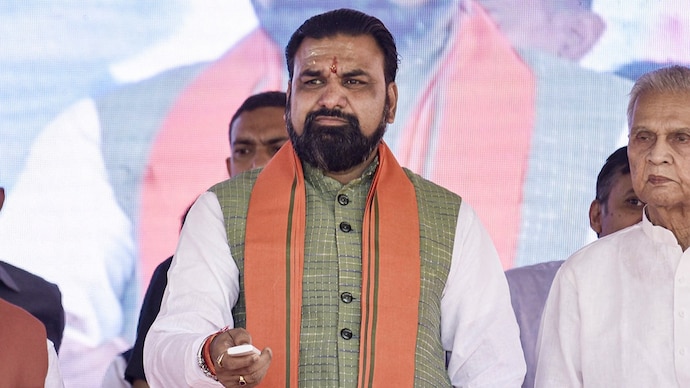

 Bihar chief minister Samrat Choudhary, on May 12, issued what is arguably one of the government’s strongest public interventions yet against the sprawling and largely unregulated private school sector. In a sharply worded directive aimed at enforcing “transparency and accountability”, he announced on social media platform X that arbitrary fee hikes, coercive charges and financial exploitation of parents by private schools won’t be tolerated.
The order seeks to directly address a grievance that has simmered for years: the growing sense among parents that private education has turned into an unchecked commercial enterprise.
According to the chief minister’s directive, all private schools will now be required to publicly disclose their complete fee structures through notice boards, websites and other public platforms. The government has also barred schools from forcing parents to purchase books and uniforms from designated vendors—a practice that invites allegations of cartelisation and inflated pricing.
Equally significant is the instruction that students cannot be barred from examinations, denied results or excluded from academic activities merely because fees is unpaid. Choudhary has warned that schools violating these directives could face penalties and legal action, with district administrations and the education department tasked with monitoring compliance.
Bihar has over 25,000 private schools, many of which emerged over the past two decades as the middle classes increasingly lost faith in government-run education. Across the state, from Patna and Muzaffarpur to district headquarters and expanding semi-urban clusters, English-medium private schools became symbols of aspiration.
But alongside that expansion came mounting complaints. Parents routinely allege that schools collect money under a bewildering range of heads: development fees, smart-class charges, annual fees, activity fees, examination charges and maintenance costs, many of them poorly explained and often revised arbitrarily. For families with two or three school-going children, the beginning of an academic session frequently resembles a financial crisis.
Yet exorbitant fees is only one part of the problem. The major complaints against Bihar’s private schools include the allegation that more than 10,000 institutions are operating without proper recognition, widespread violations of Right to Education (RTE) norms, poor infrastructure, absence of basic amenities such as toilets and playgrounds, and the hiring of underqualified teachers on extremely low salaries.
In many smaller private schools, particularly in district towns and peri-urban areas, classrooms function in cramped rented buildings with minimal oversight. Teachers are often paid a fraction of what their counterparts in government institutions receive while parents continue to bear steadily rising costs in the name of quality education.
The directive is as much a political statement. Choudhary, who has repeatedly invoked “sushasan”, seems keen to position himself as a leader willing to confront sectors that have operated with little accountability. Education, particularly private education, offers a politically potent terrain: almost every urban and semi-urban family in Bihar has some stake in it.
The directive also builds upon earlier action by the Patna administration. Last month, Patna district magistrate Dr Tyagarajan S.M. had issued instructions against arbitrary fee collection by private schools. The district administration warned that excessive charges in the name of tuition, development fees and annual levies would not be allowed. District education officers and sub-divisional officers were instructed to ensure that schools did not raise fees without approval. The administration also activated complaint-monitoring mechanisms, directing that fee-related grievances from parents be investigated immediately.
According to the Bihar Private Schools (Fees Regulation) Act, 2019, the state has the authority to cap the fee structure of private schools. Yet the question remains whether Bihar’s latest push can move beyond announcements and administrative messaging. This is because the private school sector is seen as an entrenched ecosystem with commercial interests, political connections and deep social influence. Previous attempts at regulation have often weakened once the initial administrative momentum faded. Parents, meanwhile, frequently hesitate to formally complain, fearing retaliation against their children.
That is why many education observers believe that mere instructions, public warnings and promises of action may not substantially alter realities on the ground. What Bihar requires, they argue, is sustained and effective intervention—rigorous inspections, transparent audits of fee structures, verification of school recognition status, enforcement of RTE compliance and regular monitoring of infrastructure and staffing standards.
For now, however, Choudhary’s directive has unmistakably pushed the issue of private school accountability into Bihar’s political mainstream. In a state where education is increasingly intertwined with economic anxiety and social aspiration, the battle over school fees and regulation may prove to be far more than an administrative issue—it may become a defining governance test.
Subscribe to India Today Magazine