
Why Akhilesh Yadav's break with I-PAC in run-up to UP polls is a curious move
Consultants like I-PAC are deeply embedded in poll management, and the Samajwadi Party must now balance their absence with renewed focus on grassroots campaigning
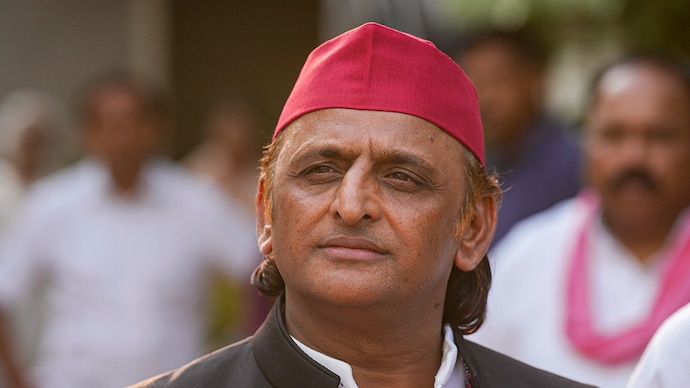

 Akhilesh Yadav’s announcement that his Samajwadi Party (SP) will no longer be working with I-PAC (Indian Political Action Committee) set off speculation about whether the decision was influenced by the West Bengal assembly polls handing a defeat to the Trinamool Congress, a party advised for long by the election consultancy firm.
Akhilesh, however, indicated that the parting of ways with I-PAC had to do with wider political and organisational challenges facing the SP in the run-up to the Uttar Pradesh assembly elections next year. He said at a media conference last week that the SP couldn’t afford I-PAC financially and dismissed talk of this being linked to any recent election setbacks or strategy failures.
“Yes, we had an association. They worked with us for a few months. But we are unable to continue because we do not have that kind of funding,” Akhilesh said, adding in a lighter vein that instead of expensive political strategists, the SP may now rely on a “pandit” for advice.
The comments came while Akhilesh was targeting the BJP and the Election Commission over “vote ki dakaiti” (robbery of votes), alleging that elections were increasingly being influenced by a “multi-layered election mafia”. Referring to the poll results in Bengal, he claimed what the Trinamool Congress faced had been experienced by his party as well.
But beyond the rhetoric, the remarks on I-PAC offer a glimpse into how the Opposition is preparing for the next round of major elections as well as their claimed limitations in competing with the BJP’s mammoth political machinery.
Over the past decade, I-PAC has emerged as the country’s most prominent election management firm. The organisation, initially associated with poll strategist-turned-politician Prashant Kishor, has worked with parties across the political spectrum—from the BJP to the Congress and regional heavyweights. Its role usually goes beyond advertising. In Bengal, for example, I-PAC is known to have helped the Trinamool Congress with booth-level data analysis, voter surveys, messaging, candidate feedback and digital outreach.
Such expansive involvement in a poll campaign would invariably require massive funds, especially in a huge state like Uttar Pradesh, which has a 403-member legislative assembly and sends 80 MPs to the Lok Sabha.
This is why Akhilesh’s remarks are significant. Unlike the ruling BJP, which has a strong organisational structure and access to far greater resources, Opposition parties struggle to sustain expensive election campaigns. Akhilesh’s public admission about financial constraints is unusual in Indian politics, where parties rarely discuss funding in the open.
The timing of the split with I-PAC is also important since the SP, with its allies, is the principal challenger to the BJP in Uttar Pradesh. It has been rebuilding its social coalition after mixed electoral performances in recent years.
At the same time, reports about uncertainty in the SP-I-PAC relationship had been circulating for months. Sources had earlier indicated that the consultancy had presented campaign ideas and strategy plans to the SP leadership, but the discussions did not translate into a long-term formal arrangement.
There may have been other complications too. I-PAC has lately been under scrutiny, with its director Vinesh Chandel arrested by the Enforcement Directorate (ED) for alleged financial irregularities linked to coal smuggling in Bengal. Political observers believe the controversy may have contributed to the SP’s decision.
The developments also reflect a broader shift in Indian politics where professional campaign firms have become deeply embedded in election management. Akhilesh acknowledged this while taking a swipe at the growing poll consultancy ecosystem. He remarked that there was no shortage of companies offering everything under the sun, from surveys and social media campaigns to negative political messaging.
Still, the SP’s decision suggests that despite the rise of data-driven campaigns, traditional political mobilisation remains central, especially for regional parties with limited resources. For Akhilesh, the challenge now is to balance modern election management with grassroots politics.
Subscribe to India Today Magazine