

India boosts defence spending after Operation Sindoor, ranks fifth globally
SIPRI said India's military spending rose to $92.1 billion in 2025 after Operation Sindoor. The increase came amid wider global growth in defence outlays, led by Europe and Asia and Oceania.
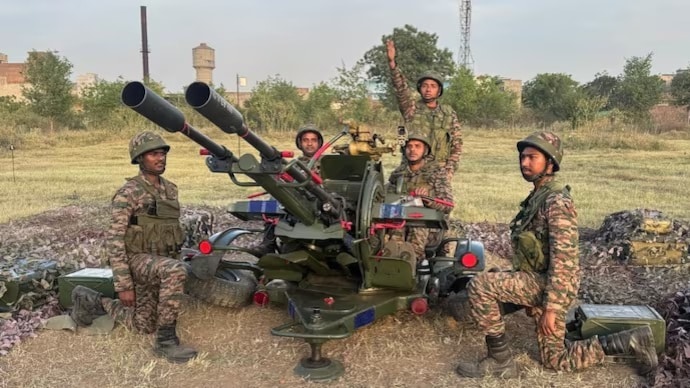


India’s military spending rose by 8.9 per cent to $92.1 billion in 2025, making it the world’s fifth largest military spender, according to new data published by the Stockholm International Peace Research Institute on April 27, 2026. The report said global military expenditure reached $2,887 billion in 2025, up 2.9 per cent in real terms from 2024, marking the 11th consecutive year of increase.
The SIPRI data showed that while military spending fell in the United States, it rose sharply in Europe and Asia and Oceania. India’s increase came in a year that saw its action against Pakistan and its terror hubs after the Pahalgam attack in May 2025. Since then, there has been an aggressive procurement drive, especially for drones, counter-drone systems, air defence systems and other modern military platforms. Pakistan’s military spending also rose by 11 per cent to $11.9 billion.
US, RUSSIA AND CHINA ACCOUNTED FOR 51 PERCENT OF GLOBAL TOTAL
The report said the top three military spenders, the United States, China and Russia, together accounted for $1,480 billion, or 51 per cent of the global total. In 2025, US military spending stood at $954 billion, down 7.5 per cent from 2024. SIPRI said the fall was mainly because no new financial military assistance for Ukraine was approved during the year, unlike the previous three years when a total of $127 billion was cleared. At the same time, the United States increased investment in nuclear and conventional military capabilities to maintain dominance in the Western Hemisphere and deter China in the Indo-Pacific, which the report said were key goals of the new National Security Strategy.
The report also said the 2025 data showed US spending falling during the year, but fresh data for 2026 was expected to show a steep rise in US military expenditure due to the US-Iran war. Europe was the main contributor to the global increase in military spending in 2025, with expenditure in the region rising 14 per cent to $864 billion. SIPRI said spending by Russia and Ukraine continued to grow in the fourth year of the war in Ukraine, while rearmament by European NATO members led to the sharpest annual growth in Central and Western Europe since the end of the Cold War.
RUSSIA SPENDING INCREASED BY 5.9 PERCENT
Russia’s military spending increased by 5.9 per cent to $190 billion in 2025, giving it a military burden of 7.5 per cent of GDP. Ukraine, the seventh largest military spender in 2025, raised its expenditure by 20 per cent to $84.1 billion, or 40 per cent of GDP. The 29 European NATO members together spent $559 billion in 2025, and 22 of them allocated at least 2.0 per cent of GDP to defence, according to SIPRI’s methodology. Germany was the largest military spender in the group, with spending up 24 per cent year-on-year to $114 billion. Its military burden crossed the 2.0 per cent mark for the first time since 1990 and reached 2.3 per cent of GDP in 2025. Spain’s military spending rose 50 per cent to $40.2 billion, taking its military burden above 2.0 per cent of GDP for the first time since 1994.
MIDDLE EAST EXPENDITURE ESTIMATED $218 BILLION IN 2025
Military expenditure in the Middle East was estimated at $218 billion in 2025, just 0.1 per cent higher than in 2024. SIPRI said that apart from Israel, most major spenders in the region for which data was available increased their spending. Israel’s military expenditure fell by 4.9 per cent to $48.3 billion, reflecting lower intensity in the war in Gaza during 2025 after the ceasefire agreement with Hamas in January 2025. Even so, Israel’s spending remained 97 per cent higher than in 2022. Trkiye’s military spending rose by 7.2 per cent to $30 billion, partly driven by its military operations in Iraq, Somalia and Syria. Iran’s spending fell for the second straight year, down 5.6 per cent to $7.4 billion in 2025. The report said the real-term decline was due to annual inflation of 42 per cent, even though spending rose in nominal terms.
In Asia and Oceania, military expenditure totalled $681 billion in 2025, up 8.1 per cent from 2024, the largest annual increase since 2009. China, the world’s second largest military spender, increased expenditure by 7.4 per cent to $336 billion, marking the 31st consecutive year-on-year rise as it continued its military modernisation drive. SIPRI said a renewed campaign against corruption in military procurement did not appear to have constrained spending. Japan’s military expenditure rose by 9.7 per cent to $62.2 billion, equal to 1.4 per cent of GDP, the highest share since 1958. Taiwan’s spending increased by 14 per cent to $18.2 billion, or 2.1 per cent of GDP, the largest annual rise since at least 1988, amid intensifying military exercises around the island by the People’s Liberation Army.
The SIPRI report showed that military spending rose across key regions in 2025, with India’s outlay increasing to $92.1 billion amid Operation Sindoor and a wider global rise in defence expenditure. While the United States remained the largest military spender despite a yearly decline, Europe and Asia and Oceania recorded strong growth, pushing global expenditure to a new high.