

When IIMs took to academic roasting with paper-leak questions after CAT cancellation
Months after the 2003 CAT question paper's leak forced the cancellation of the premier exam, the IIMs returned with a re-test featuring questions that mirrored the mechanics of the scandal itself. The now-legendary 'mastermind' CAT question is remembered by CAT aspirants as a rare moment which many call 'academic roasting'.
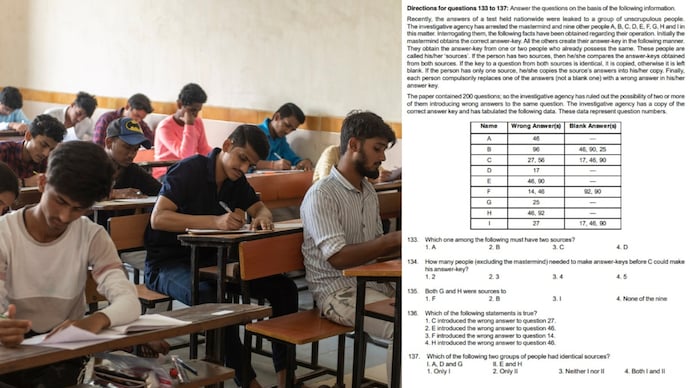


Through India's countless competitive exams, paper leaks leave behind outrage, cancellations, announcement of new ones, and broken trust. But in 2004, the Indian Institutes of Management (IIMs), which conducts the Common Admission Test (CAT), responded to one of India's most infamous entrance exam scandals with something few would have expected.
Months after CAT was rocked by a massive paper leak scandal in November 2003, the IIMs responded with difficult Logical Reasoning and Data Interpretation (LRDI) questions in the February 2004 re-test, which directly mirrored the mechanics of the 2003 leak itself.
Decades later, as debates around the sanctity of competitive exams have returned to the national spotlight amid reports of alleged irregularities in the May 3 NEET-UG 2026 exam, the 2003 CAT paper leak and the subsequent questions by the IIMs, offer a lesson in institutional wit.
Chandigarh-based UPSC mentor and founder of Sleepy Classes, Shekhar Dutt, said this is what "academic roasting literally means".
"Such was the heartbreak that they even included a question on the Mastermind and the process it followed to make the leak undiscoverable," Dutt said on X.

The CAT scandal of 2003 had shaken the credibility of India's premier management entrance examination after the paper was leaked and sold across the country. Over 1.27 lakh aspirants were affected, forcing the IIMs to cancel the exam for the first time in their history. A re-test was conducted months later in February 2004.
And, what made the 2004 CAT re-test legendary was the LRDI questions built around the "mastermind" who leaked the answer keys through a network of accomplices.
Over the years, CAT preparation communities have begun calling it "academic roasting". Coaching institutes, YouTube explainers and CAT aspirant forums still discuss the set as one of the toughest and most creative LRDI questions ever asked in CAT history.
WHAT EXACTLY HAPPENED IN THE 2003 CAT PAPER LEAK?
The original CAT examination was conducted on November 23, 2003.
Just hours before candidates entered exam centres across the country, the Central Bureau of Investigation (CBI) informed IIM officials that the paper had allegedly been leaked, reported India Today Magazine in 2003.
The paper leak was the doing of one Ranjit Singh alias "Ranjit Don", described as a veteran operator in the exam cheating racket. The report stated that the CBI arrested him along with several associates from Delhi, while raids in Patna and Mumbai uncovered what investigators believed was a nationwide network involved in leaking professional entrance examinations.
The report noted that around 1.27 lakh students across 147 centres in 26 cities had appeared for the examination before the IIMs cancelled it. That was the first cancellation in CAT's history.
"Now people can say that IIM admission is a game of money," then Union HRD (now called Education) Minister Murli Manohar Joshi told India Today Magazine while speaking about the crisis of credibility facing the premier examination.
The 2003 paper came at a time when tensions already existed between the IIMs and the HRD Ministry over issues like autonomy, fees and common entrance examinations for admissions into the six premier management institutions.
WHY 2004 CAT RETEST BECOME LEGENDARY
The IIMs announced a retest to be held on February 15, 2004. By then, paranoia around another possible leak had reached extraordinary levels.
Multiple reports, including those cited later by CAT preparation portals, stated that senior faculty members personally monitored printing and transportation arrangements. Vijay Sherry Chand of IIM Ahmedabad spent the night before the exam guarding question papers at a Pune warehouse after receiving inputs about another possible leak attempt, The Times of India reported.
The retest acquired a mythical status among CAT aspirants and is still discussed in the exam forum.
"In 2003, the CAT exam was leaked. And that really shattered the confidence of IIMs in their abilities to conduct the exam properly," UPSC mentor Shekhar Dutt said. "They conducted a retest in Feb 2004, and it is considered the toughest CAT exam ever," Dutt added.

WHAT WAS THE FAMOUS 'MASTERMIND' CAT LRDI QUESTION?
The now-famous LRDI set began with the following line.
"Recently, the answers of a test held nationwide were leaked to a group of unscrupulous people."
The passage then introduced "the mastermind and nine other people, A, B, C, D, E, F, G, H and I," whose answer keys had allegedly been created using a chain of "sources".
The puzzling question then explained that if someone had two sources, they compared answers from both copies. Matching answers were copied, mismatches were left blank, and each person compulsorily inserted exactly one incorrect answer. Since the paper had 200 questions, investigators ruled out overlapping wrong answers.
Candidates were then asked to deduce relationships between the accomplices based on patterns of blanks and wrong responses.
The set mirrored the mechanics of the real-life scandal in 2003 that had forced the CAT retest in the first place.
The leak triggered major security reforms around the CAT examination process. The IIMs tightened question paper printing protocols, reduced information access for stakeholders and eventually shifted CAT to a computer-based format in 2009. As a result, the possibility of large-scale paper leaks was reduced. Now, more than two decades later, the 2003 scandal has once again surfaced amid the NEET-UG 2026 paper leak row. This is a story when one of India's premier institutions responded to a crisis with a puzzle which is still remembered by CAT aspirants.