

Fertiliser shortage could hit Tamil Nadu's food security: Vijay writes to PM
Vijay said the state faced major fertiliser shortages in April and May, urging the Centre to immediately restore supplies of urea, DAP and MOP for the Kharif season.
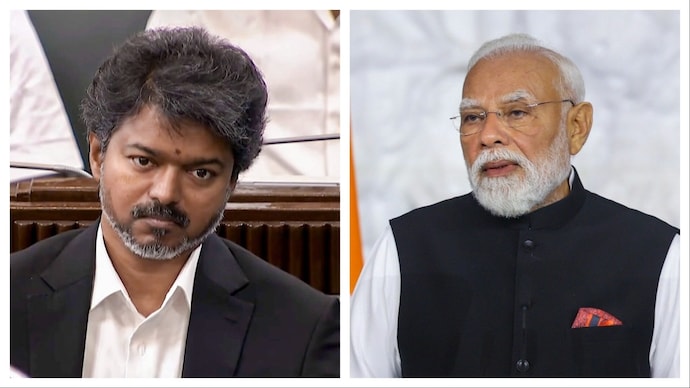


Chief Minister C Joseph Vijay has written to Prime Minister Narendra Modi seeking urgent intervention to ensure uninterrupted fertiliser supply to Tamil Nadu for the 2026 Kharif season, expressing concerns that shortages at this stage could threaten the state’s food security.
In his letter, Vijay said there had been a serious shortfall in the supply of key fertilisers during April and May, and asked the Centre to immediately restore the deficit and ensure future allocations.
He specifically sought supplies of urea, diammonium phosphate (DAP) and muriate of potash (MOP), which are critical for Kharif sowing.
"Kindly instruct the authorities concerned to supply the required quantity to meet the demand for the rest of Kharif, 2026, which is 3.83 lakh metric tonnes (MT) of urea, 1.05 lakh MT of DAP and 0.83 lakh MT of MOP," Vijay wrote.
The actor-turned-politician said a review of the state’s Agriculture and Farmers Welfare Department after he assumed office on May 10 showed manufacturers had failed to meet the Union government’s approved supply plan for April and May.
According to the figures cited in the letter, Tamil Nadu received 39,001 metric tonnes less urea than scheduled, along with a shortfall of 28,607 MT of DAP and 24,235 MT of MOP.
Vijay said the shortage comes at a crucial time as agricultural activity is intensifying across the state.
He noted that the India Meteorological Department (IMD) had forecast the southwest monsoon onset in the third week of May, and early showers had already generated strong enthusiasm among farmers to maximise cultivation.
"Shortage of fertilisers at this crucial juncture will prove costly for the food security of the state," he said, urging the PM to issue immediate directions to bridge the supply gap.
Highlighting Tamil Nadu’s agricultural dependence, Vijay said more than 40 percent of the state’s population relies on farming. He noted that 92 percent of farmers are small and marginal landholders with less than two hectares.
The state plans to cover 25 lakh hectares under Kharif cultivation this year, nearly 40 percent of its gross cropped area.
IRAN WAR IMPACTS FERTILISERS SUPPLY
The request comes as the Iran war and disruptions in the Strait of Hormuz have begun affecting fertiliser imports into India.
Hormuz is a major route for fertiliser shipments from Gulf producers, including Saudi Arabia, Qatar, the UAE and Oman, which supply a significant share of India’s imported urea and DAP.
Restricted shipping through the strait has already pushed up input prices in several agricultural states.
Field reports from Madhya Pradesh show farmers facing acute shortages, with urea reportedly selling far above official rates and DAP prices rising sharply.
As the Kharif season begins nationwide, Vijay’s letter underlines how the Middle East conflict is now directly affecting India’s farm supply chain — raising fears of broader disruptions to crop production and food prices if imports do not stabilise quickly.